Noir is a 2001 anime TV series.
I’m not going to give any plot details other than those pertaining to the first of the 26 episodes.
It opens with a cute blonde French girl (we later find out that her name is Mireille) in Paris. It looks like the opening for a fluffy romance story. Then the killings begin, and a dozen men are left dead.
Mireille really is a charming, pretty very feminine young lady. The only thing unusual about her is the way she earns her living. She is a hitwoman. A killer for hire. One of the best in the business.
But most of the killings were not done by Mireille. They were done by Kirika Yumura, a young very cute Japanese girl. Kirika knows nothing about herself. She doesn’t think Kirika Yumura is her real name. She has no idea how she came to know so much about guns, or became so good at killing.
It’s all a bit perplexing to Mireille. It’s obvious that some very determined very dangerous people are out to kill her. Teaming up with Kirika seems not only logical but necessary. After that she will have to kill Kirika. Mireille has survived in this business by never leaving loose ends behind, or living witnesses. She likes Kirika, but she will still have to kill her. She does think that it is only fair to let Kirika know about her intentions.
Mireille and Kirika work well together as a team but it’s increasingly clear that they have mysterious and powerful enemies out to get them. It may have something to do with Kirika’s past.
Maybe the Soldats have the answers, but the two girls know nothing about the Soldats other than the fact they exist.
This is not a straightforward Chicks With Guns crime story. There is as much cool Chicks With Guns action as you could possibly desire but there’s something deeper going on. That something deeper may have a rational explanation but in the world of anime you can never be sure. You can never be sure that you’re dealing with a single level of reality, or any level of reality at all. Early on the viewer has no idea what the central narrative will tun out to be.
Deadly lady assassins were nothing new in 2001 but Noir is a long way from the world of movies like La Femme Nikita.
The relationship between the two women is complex. They do not appear to be lovers but there’s an emotional bond, possibly a sisterly bond. These are two women who are both, for different reasons, cut off from all normal social interactions. It is highly likely that Mireille has never had a normal friendship with another woman. She believes herself to be totally self-reliant. She has never needed anybody. She knows that the sensible thing to do is simply to kill Kirika. Kirika is a threat. Kirika knows much too much about her and about her line of work.
But although Mireille thinks a lot about killing Kirika she seems unable to do so. She rationalises this. She needs to know Kirika’s secret. She does not want to admit that her reasons for not killing the girl might be emotional.
There is such a tangled web of female emotional relationships in this series. Female friendships, female loyalties and betrayals, female jealousies. And they’re all complex and ambiguous relationships. Mireille appears to develop some kind of maternal feeling toward Kirika. Or perhaps it’s a big sister-little sister thing. Mireille’s feelings towards Kirika evolve. Perhaps they are growing closer, or perhaps they are growing apart. Perhaps they are learning to trust each other, or perhaps in other ways Mireille is learning to trust Kirika less.
What’s nice is the “show, don’t tell” approach taken. Mireille never tells us how she feels about Kirika. We figure it out from her actions and from gestures and looks.
It is very important not to jump to conclusions when viewing this series, and not to interpret it in the light of 2020s ideological obsessions. Mireille and Kirika are not lesbians. The Japanese have fewer hangups about sex than Americans and this is very much an anime for grown-ups. Had the writers wanted to suggest that there was a lesbian component to the relationship they would certainly have done so. But they don’t. This is a series with philosophical, religious, moral and spiritual agendas. It is not about sexual identities or gender identities.
It is fairly obvious that Kirika and Mireille are both virgins. This seems to be part and parcel of their calling. For these two women killing is not a job, it really is a calling. It requires single-mindedness. There is no room for sexual involvements. As the series progresses it becomes more and more obvious that they really are in fact virgins. They are not like other women. They are more like virgin priestesses of death. We also might suspect that for these girls killing is a substitute for sex. As long as there’s killing to be done who needs sex?
We have to remember that these women are killers. It’s no good trying to tell ourselves that Mireille is really a nice girl and she only kills bad people. She’s a ruthless paid killer. She’ll kill anyone she’s paid to kill.
Early on you might assume this will be a Chicks With Guns crime thriller, or maybe spy thriller, a bit along the lines of La Femme Nikita. But as the series unfolds we discover that it’s something very very different. It’s a totally different sort of movie.
About three-quarters of the way through we get a huge plot twist. Followed by an even bigger twist. Followed in quick succession by two more. Everything we thought we knew will have to be rethought. It’s not just plot twists. At various stages we have to rethink our assumptions about key characters, and key character relationships. It’s not that we’ve been misled or that the characterisations are inconsistent - it’s more that we keep on discovering new layers. The picture we had in our mind wasn’t wrong because we were being lied to but because that picture was so very incomplete.
Kirika and Mireille do not understand themselves. Kirika doesn’t know how she came to be such an efficient killing machine, and she doesn’t know why she doesn’t feel sad when she kills people. Mireille’s memories of her own past are incomplete and are false in the sense that she was too young to understands what was happening. Kirika and Mireille will learn a lot about themselves. Some of it they won’t like.
This is the kind of series that makes me love anime TV series so much. It’s not afraid to confound expectations. Very highly recommended.
Showing posts with label japanese tv. Show all posts
Friday, 19 December 2025
Saturday, 27 September 2025
Outlaw Star (1998-2001)
Outlaw Star is a 1998 anime space adventure TV series created by Hajime Yatate. It fits vaguely into the “western set in outer space” category but it’s also very much in the “bunch of ill-assorted misfits adventuring in outer space in a stolen super high tech spaceship” tradition. This is a formula that was used with success in series like Blake’s 7 and Farscape but Outlaw Star has more in common with the best-ever series of this type, Lexx. Outlaw Star began its run two years after Lexx debuted so there may have been some direct influence. I suspect that the old Buck Rogers and Flash Gordon movie serials may have been an influence as well - Outlaw Star has a lot of good old-fashioned space opera elements with spectacular but wildly improbably space battles.
Outlaw Star does not feature a living spaceship (which is named the Outlaw Star) but it does feature a spaceship with a definite personality.
It’s tempting to see Outlaw Star as being in the mould of Cowboy Bebop but it isn’t really. They’re both great series but the similarities are superficial.
There is also some magic. At first we might assume that this is more in the nature of paranormal phenomena but this series does eventually venture into quasi-spiritual territory.
The story takes place on the frontiers of inhabited space, and yes there’s a definite Wild West vibe. There’s the Space Force, representing the forces of law and order. Here on the frontiers of space they’re of little significance. There are pirates and there are Outlaws. The pirates are cut-throats, thieves and murderers. The Outlaws insist that they are not like the pirates. Outlaws may not be very honest but they’re not murderers. They have a romantic view of themselves as rebels.
The crew members of the Outlaw Star are definitely not noble crusaders fighting for a just cause. They’re not bad guys but they’re not quite good guys either (very much as is the case in Lexx). They have two agendas. They want to survive, and they want to get rich.
Gene Starwind and Jim Hawking run a business on the planet Sentinel. They’ll do anything as long as it’s profitable and not too illegal. Gene earns extra money as a bounty hunter. Jim is eleven years old but he’s the brains of the outfit. Gene is the muscle. Gene’s dad was a space pilot. Gene dreams of being a space pilot as well but he gets space-sick.
Then Gene encounters Hilda. She’s an Outlaw and she has come into possession of something very valuable indeed. It’s a large sealed box. When Gene and Hilda open the box they find that it contains a naked girl. Her name is Melfina. But clearly there is some secret connected with her that makes her incredibly valuable. Melfina has no idea what it is. She has no memories.
Melfina is a bio-android. She is not a robot and she is not a cyborg. She is flesh and blood. Physically she is a normal young woman. But she was artificially created. And she appears to have some specialised intellectual enhancements. Gene and Hilda would very much like to know why several very powerful pirate gangs are prepared to kill in order to get hold of Melfina.
Gene finds himself in possession of the most advanced spaceship in the galaxy, the Outlaw Star. The crew slowly comes together. At first it’s just Gene, Jim and Melfina. Melfina is vital. Only she can interface directly with the ship’s computer and unlock the ship’s full potential. To do this she has to take her clothes off. Why? Because a spaceship that can only be controlled by a nude girl is a totally cool idea.
The next crew member to be recruited is the Lady Aisha. She is a Ctarl-Ctarl cat-girl. The Ctarl-Ctarl are basically human but with a few feline characteristics. Aisha is a very high-ranking official in the Ctarl-Ctrl Empire until Gene unwittingly wrecks her career. Aisha vows revenge. Aisha assumes that everybody is in awe of her. She’s not just a formerly high-ranking official she’s a mighty warrior. Any sane person cowers in fear at the wrath of a Ctarl-Ctarl. Much to Aisha’s disappointment Gene thinks she’s amusing and rather adorable. Aisha has her own reasons for throwing in her lot with the crew of the Outlaw Star. She’s crazy and she can be exasperating but she really is a mighty warrior so she’s pretty useful.
Then there’s Suzuka. She’s a kind of samurai and she’s a professional assassin. She has a contract to kill Gene Starwind but for complicated reasons of her own she joins his crew.
What drives the plot and the actions of the major characters is the mystery surrounding Melfina. She knows that she is a bio-android but she knows nothing of the full extent of her special abilities but most importantly she does not know why she was created. She needs to know, both for her own self-identity and for her survival. Gene feels an odd sense of responsibility towards her. He’s a romantic at heart. The idea of rescuing a damsel in distress and helping her to fulfil her destiny appeals to him. He is sure she has a destiny. Melfina is sure of this as well.
Outlaw Star does not feature a living spaceship (which is named the Outlaw Star) but it does feature a spaceship with a definite personality.
It’s tempting to see Outlaw Star as being in the mould of Cowboy Bebop but it isn’t really. They’re both great series but the similarities are superficial.
There is also some magic. At first we might assume that this is more in the nature of paranormal phenomena but this series does eventually venture into quasi-spiritual territory.
The story takes place on the frontiers of inhabited space, and yes there’s a definite Wild West vibe. There’s the Space Force, representing the forces of law and order. Here on the frontiers of space they’re of little significance. There are pirates and there are Outlaws. The pirates are cut-throats, thieves and murderers. The Outlaws insist that they are not like the pirates. Outlaws may not be very honest but they’re not murderers. They have a romantic view of themselves as rebels.
The crew members of the Outlaw Star are definitely not noble crusaders fighting for a just cause. They’re not bad guys but they’re not quite good guys either (very much as is the case in Lexx). They have two agendas. They want to survive, and they want to get rich.
Gene Starwind and Jim Hawking run a business on the planet Sentinel. They’ll do anything as long as it’s profitable and not too illegal. Gene earns extra money as a bounty hunter. Jim is eleven years old but he’s the brains of the outfit. Gene is the muscle. Gene’s dad was a space pilot. Gene dreams of being a space pilot as well but he gets space-sick.
Then Gene encounters Hilda. She’s an Outlaw and she has come into possession of something very valuable indeed. It’s a large sealed box. When Gene and Hilda open the box they find that it contains a naked girl. Her name is Melfina. But clearly there is some secret connected with her that makes her incredibly valuable. Melfina has no idea what it is. She has no memories.
Melfina is a bio-android. She is not a robot and she is not a cyborg. She is flesh and blood. Physically she is a normal young woman. But she was artificially created. And she appears to have some specialised intellectual enhancements. Gene and Hilda would very much like to know why several very powerful pirate gangs are prepared to kill in order to get hold of Melfina.
Gene finds himself in possession of the most advanced spaceship in the galaxy, the Outlaw Star. The crew slowly comes together. At first it’s just Gene, Jim and Melfina. Melfina is vital. Only she can interface directly with the ship’s computer and unlock the ship’s full potential. To do this she has to take her clothes off. Why? Because a spaceship that can only be controlled by a nude girl is a totally cool idea.
The next crew member to be recruited is the Lady Aisha. She is a Ctarl-Ctarl cat-girl. The Ctarl-Ctarl are basically human but with a few feline characteristics. Aisha is a very high-ranking official in the Ctarl-Ctrl Empire until Gene unwittingly wrecks her career. Aisha vows revenge. Aisha assumes that everybody is in awe of her. She’s not just a formerly high-ranking official she’s a mighty warrior. Any sane person cowers in fear at the wrath of a Ctarl-Ctarl. Much to Aisha’s disappointment Gene thinks she’s amusing and rather adorable. Aisha has her own reasons for throwing in her lot with the crew of the Outlaw Star. She’s crazy and she can be exasperating but she really is a mighty warrior so she’s pretty useful.
Then there’s Suzuka. She’s a kind of samurai and she’s a professional assassin. She has a contract to kill Gene Starwind but for complicated reasons of her own she joins his crew.
What drives the plot and the actions of the major characters is the mystery surrounding Melfina. She knows that she is a bio-android but she knows nothing of the full extent of her special abilities but most importantly she does not know why she was created. She needs to know, both for her own self-identity and for her survival. Gene feels an odd sense of responsibility towards her. He’s a romantic at heart. The idea of rescuing a damsel in distress and helping her to fulfil her destiny appeals to him. He is sure she has a destiny. Melfina is sure of this as well.
Neither knows whether Gene will be a part of her destiny but they both finding themselves thinking that maybe that would be a good thing.
They’re not in love but Melfina thinks Gene is ever so brave. And Melfina is a scared, lonely, vulnerable but very sweet girl. There’s no way Gene is not going to devote himself to being her protector.
For most people the standout episode is Cats and Girls and Spaceships and it’s incredibly poignant. An emotional punch to the gut but in a very unusual way.
They’re not in love but Melfina thinks Gene is ever so brave. And Melfina is a scared, lonely, vulnerable but very sweet girl. There’s no way Gene is not going to devote himself to being her protector.
For most people the standout episode is Cats and Girls and Spaceships and it’s incredibly poignant. An emotional punch to the gut but in a very unusual way.
I also loved Hot Springs Planet Tenrei because it’s the kind of craziness that makes anime magic. It also adds a zany touch needed at this point in the story. The Outlaw Star’s crew are on a tourist resort planet, and it’s packed with gorgeous scantily clad babes. The Outlaw Star’s female crew members are soon parading about in minuscule bikinis and then it’s bath time and we get lots of gratuitous nudity, because gratuitous nudity is always a good thing. And when we see Aisha unclad we find that Ctarl-Ctarl cat-girls are in fact all girl where it counts.
Then we movie on to the climax with lots of cosmic weirdness and possibly hints of the spiritual and other planes of existence and other weird stuff that is handled well. And the ending offers lots of shocks and twists but it’s totally satisfying. It just feels right.
Outlaw Star is an outstanding engrossing strange and oddball series and it’s highly recommended.
Then we movie on to the climax with lots of cosmic weirdness and possibly hints of the spiritual and other planes of existence and other weird stuff that is handled well. And the ending offers lots of shocks and twists but it’s totally satisfying. It just feels right.
Outlaw Star is an outstanding engrossing strange and oddball series and it’s highly recommended.
It's available in a Blu-Ray/DVD combo boxed set which thankfully offers the Japanese language soundtrack with subtitles as well the English dub. Nothing on earth would persuade me to watch anime in an English-dubbed version.
Saturday, 26 April 2025
Ergo Proxy (2006)
Ergo Proxy is a 2006 Japanese cyberpunk anime TV series. The setting is a vast high-tech future city known as Romdo, a paradise on an Earth that is otherwise inhospitable and almost uninhabitable.
There are citizens and non-citizens in Romdo but non-citizens can become citizens. This is a society based on conspicuous consumption. Shopping is practically a duty. Life is easy thanks to the ubiquitous AutoReivs, advanced androids that do most of the real work. AutoReivs also function as personal servants and companions, in which capacities they are known as Entourages.
Romdo is certainly not a dystopia. It’s a pretty pleasant place overall. It’s more of a flawed utopia (sadly all utopias are inherently flawed).
Unfortunately many of the AutoReivs are becoming infected with the cogito virus. This allows them to achieve self-consciousness, which means they no longer automatically obey orders. This is seen as being a very bad thing. Romdo is a society based on willing obedience.
There is a possibility that an AutoReiv infected with the cogito virus may develop a soul. My assumption is that the word “soul” is being used here in the same sense that the word “ghost” is used in the Ghost in the Shell animes and mangas - not necessarily something spiritual but more a sense of selfhood, the vital spark that distinguishes a human from a machine.
The heroine is Re-l Mayer. She’s a fairly hardboiled Intelligence Bureau agent. She’s a bit of a natural trouble-maker. She’s inclined to interpret direct orders as vague guidelines. Since she happens to be the granddaughter of the Regent (the ruler of Romdo) and therefore an important and powerful woman she has plenty of opportunities to be a trouble-maker. She is however very good at her job. Re-I is not one of your cute big-eyed anime girls. She looks more like a cyberpunk goth girl.
Re-l thinks that a young man named Vincent Law is important although she’s not sure why. He’s a nobody. He’s not even a citizen. He’s an outsider, from another city named Mosk.
There are other things going on. Top-secret research with unknown objectives.
There are citizens and non-citizens in Romdo but non-citizens can become citizens. This is a society based on conspicuous consumption. Shopping is practically a duty. Life is easy thanks to the ubiquitous AutoReivs, advanced androids that do most of the real work. AutoReivs also function as personal servants and companions, in which capacities they are known as Entourages.
Romdo is certainly not a dystopia. It’s a pretty pleasant place overall. It’s more of a flawed utopia (sadly all utopias are inherently flawed).
Unfortunately many of the AutoReivs are becoming infected with the cogito virus. This allows them to achieve self-consciousness, which means they no longer automatically obey orders. This is seen as being a very bad thing. Romdo is a society based on willing obedience.
There is a possibility that an AutoReiv infected with the cogito virus may develop a soul. My assumption is that the word “soul” is being used here in the same sense that the word “ghost” is used in the Ghost in the Shell animes and mangas - not necessarily something spiritual but more a sense of selfhood, the vital spark that distinguishes a human from a machine.
The heroine is Re-l Mayer. She’s a fairly hardboiled Intelligence Bureau agent. She’s a bit of a natural trouble-maker. She’s inclined to interpret direct orders as vague guidelines. Since she happens to be the granddaughter of the Regent (the ruler of Romdo) and therefore an important and powerful woman she has plenty of opportunities to be a trouble-maker. She is however very good at her job. Re-I is not one of your cute big-eyed anime girls. She looks more like a cyberpunk goth girl.
Re-l thinks that a young man named Vincent Law is important although she’s not sure why. He’s a nobody. He’s not even a citizen. He’s an outsider, from another city named Mosk.
There are other things going on. Top-secret research with unknown objectives.
That top-secret research concerns the proxy. Or possibly proxies. What are the proxies? Were they created by humans? Did they evolve? Are they machines or are they biological or perhaps both or perhaps something else entirely. They appear to possess powers that are almost supernatural but are probably just unimaginably advanced technology. Are they benevolent or malevolent?
All of the characters are ambiguous to some degree. Romdo is ruled by the Regent. He’s a wise and just ruler. Probably. There’s the security chief Raul Creed. He has an agenda, which may not be the same as the Regent’s agenda. Raul might be a good guy or a bad guy. Or a good guy being manipulated for evil purposes. There’s Dr Daedalus, the impossibly young genius doctor-scientist with a mysterious connection to Re-l. Dr Daedalus has an agenda, the nature of which is unknown.
There’s obviously some secret associated with Vincent Law. He probably doesn’t know himself what it is.
All of the characters are ambiguous to some degree. Romdo is ruled by the Regent. He’s a wise and just ruler. Probably. There’s the security chief Raul Creed. He has an agenda, which may not be the same as the Regent’s agenda. Raul might be a good guy or a bad guy. Or a good guy being manipulated for evil purposes. There’s Dr Daedalus, the impossibly young genius doctor-scientist with a mysterious connection to Re-l. Dr Daedalus has an agenda, the nature of which is unknown.
There’s obviously some secret associated with Vincent Law. He probably doesn’t know himself what it is.
Vincent and Re-l will undertake a journey together although neither knows the purpose of this journey.
There are indeed several proxies. They don’t all have the same agendas. Re-l would very much like to know what Ergo Proxy’s agenda is. She’d like to know why Ergo Proxy is so important.
There’s Re-l’s Entourage, Iggy. Like many of the city’s AutoReivs he is infected with the cogito virus. He is fanatically loyal to Re-l. Possibly.
There’s Pino, a cute little girl who tags along with Re-l and Vincent on their journey. Pino isn’t really a cute little girl, she’s an AutoReiv, a companion android, and she’s infected with the cogito virus. She’s adorable and harmless. Possibly.
Re-l herself is a little ambiguous. She’s the heroine, we assume she’s on the side of the good guys, if anybody knew which were the good guys and the bad guys. She is being manipulated. She is aware of this, but perhaps not aware of the extent of the manipulation.
Apart from all the other things going on in this anime this is also a kind of coming-of-age story. Re-l is an adult who is still to some extent emotionally a teenage rebel. She is having trouble handling the transition to womanhood. She is a woman, but she’s not sure how to deal with that. She’s also not sure how to deal with the terrifying possibility that she may have fallen in love with a man.
There are characters whose personalities are fragmenting and others whose personalities may be merging. Personality in this anime is very uncertain.
Right from the start there are questions which demand answers. But every answer leads to a new set of questions. To find the right answers Re-l has to discover the right questions.
Re-l herself is a little ambiguous. She’s the heroine, we assume she’s on the side of the good guys, if anybody knew which were the good guys and the bad guys. She is being manipulated. She is aware of this, but perhaps not aware of the extent of the manipulation.
Apart from all the other things going on in this anime this is also a kind of coming-of-age story. Re-l is an adult who is still to some extent emotionally a teenage rebel. She is having trouble handling the transition to womanhood. She is a woman, but she’s not sure how to deal with that. She’s also not sure how to deal with the terrifying possibility that she may have fallen in love with a man.
There are characters whose personalities are fragmenting and others whose personalities may be merging. Personality in this anime is very uncertain.
Right from the start there are questions which demand answers. But every answer leads to a new set of questions. To find the right answers Re-l has to discover the right questions.
This series is constantly undermining what we think we know.
To fully appreciate Ergo Proxy you have to put it in a pop culture history context. There’s a very obvious cyberpunk influence. But by 2006 Japan had a 50-year tradition of monster movies. The monstrousness of the proxies may well be a deliberate homage to this tradition. And by 2006 anime had its own tradition, and I suspect that this series is at times homaging classic 80s anime such as Yoshiaki Kawajiri’s Wicked City. This is cyberpunk with lots of other flavourings and influences.
This is a complex intelligent puzzling fascinating grown-up anime. Very highly recommended.
Ergo Proxy has been released on Blu-Ray. Happily both the English-dubbed soundtrack and the original Japanese-language soundtrack (with English subtitles) are provided. I have no idea why anyone would want to watch an English-dubbed version of an anime but apparently some people do.
Sunday, 23 May 2021
Ghost in the Shell Stand Alone Complex, 1st Gig
Ghost in the Shell started life as a manga by Shirow Masamune. In 1995 the Ghost in the Shell movie was released. It was something of a ground-breaking event in the history of anime science fiction movies and remains one of the best entries in the genre. A sequel movie followed in 2004. But the incarnation we are concerned with here is the 2002 television series Ghost in the Shell Stand Alone Complex. Interestingly, it doesn’t take place in quite the same timeline as the original movie.
The protagonist in all the various versions of Ghost in the Shell is Major Motoko Kusanagi, the number one field operative for Public Security Section 9. Section 9 is a top-secret counter-intelligence counter-terrorism outfit. Section 9 handles cases that are too sensitive or too dangerous for any other Japanese Government agencies. In this near-future world that means mostly counter-terrorism work and that work mostly involves artificial intelligences. It also means tangling with other intelligence agencies and getting involved in some nasty political infighting.
It should be explained first of all that Major Motoko Kusanagi is not entirely human. She is a cyborg but she is much more robot than human. In fact there’s there’s only one human thing about her. She still has a human brain. Which means she still has a ghost. Ghost in this context refers to the essential core of our personalities and most importantly it refers to our memories. Our human memories. Whether the ghost is also a soul or not is a question to which no-one in this future world can give a definite answer. What matters is that it is the ghost that makes us human. The body is just the shell. The Major has a ghost. Is that enough to make her a woman rather than a machine? She thinks that it is, but she’s not sure.
The concept of the ghost and its relationship to the shell was at the core of the original movie and it’s a theme that is elaborated upon in many different ways in the Stand Alone Complex TV series.
There are two kinds of episodes in this series. There are the Stand Alone episodes and there are the Complex episodes. The Complex episodes form part of an ongoing story arc. While the Stand Alone episodes are self-contained stories they also contribute to the gradual building up of our understanding of this cyberpunk future world, of the main characters, and in particular to our understanding of Motoko Kusanagi’s contradictory and slightly troubled personality.
While the Major was very much the central character in the original movie there are many episodes of the series in which she takes a back seat.
Special mention must be made of the great opening and closing songs composed by Yôko Kanno.
If you haven’t delved much into anime the Ghost in the Shell franchise is not a bad place to start - there’s plenty of intelligent and complex science fiction ideas without too much weirdness and there’s plenty of action. Since it takes place in a subtly different timeline you could watch the TV series before watching the movie, but both are equally worth seeing. There are other excellent science fiction anime series (such as Cowboy Bebop) but some of them tend a bit too much towards giant robots or they’re mind-numbingly complex (such as the superb Serial Experiments Lain).
Ghost in the Shell Stand Alone Complex is very much in the cyberpunk mould. Some of the violence is quite graphic and there is a small amount of nudity. Whether anime nudity bothers you or appeals to you is a matter of taste but there’s very little of it and there’s no sexual weirdness although there are some sexual themes. The violence is much less extreme than that found in some anime TV such as Kabaneri of the Iron Fortress.
This is anime for grown-ups and in any case is going to be way too complex and cerebral for younger kids.
The coolness factor is very high.
Cyberpunk is a genre that you might think would date very quickly but good cyberpunk (and this series is definitely very good cyberpunk) actually doesn’t date because it’s not really concerned about the details of how technology works. It’s more concerned with the social and existential consequences of technology.
The DVD boxed set offers both the English dubbed version and the Japanese language version with English subtitles.
Episode Guide
The first episode gives us a hostage drama with the terrorists being geisha robots(!) and a senior government minister being one of the victims. He isn’t killed but something worse happens to him.
The second episode is another standalone. A new advanced multiped tank runs amok and heads for the city. Section 9 needs to know who is controlling that tank and what it is they want. It doesn’t seem to be a terrorist incident. The tank has been careful to avoid human fatalities. A curiously bitter-sweet episode.
Episode three is more interesting still. There’s a wave of mass suicides, among androids. To be specific, among a particular model of female sex robot. The Jeri model had been extremely popular but is now out of production. However the Jeri still has its hardcore fans who are addicted to its particular charms. But why would someone want to destroy these sexbots? Because this is a case of mass murder, not mass suicide. Of course robots cannot actually be murdered, or commit suicide for that matter. They’re not human and they don’t have real feelings. Unless of course the rumours are true, that some androids have ghosts. Which means they may in fact be alive. Whatever alive means, and there’s no certainty about the meaning of that term in this world.
Episode four begins a series of complex episodes concerning the Laughing Man, a super-hacker cyber-terrorist. The story is however much more complex than that. The Laughing Man may or may not exist. He may be several people. Or several groups of people, or organisations. His motives are completely unknown. It’s an actually an old unsolved case but Section 9 now has some ambiguous evidence that might justify reopening. And in fact the case is about to become a very live case. This is full-on cyberpunk stuff and it’s very nicely executed.
In episode seven Section 9 is concerned about a foreign revolutionary leader who has been the subject of countless assassination attempts. So many that it seems a miracle he’s still alive. This story is another exploration of posthumanist themes and more specifically the psychological dimensions of posthumanism.
Episode eight deals with organ harvesting. This is a future in which artificial organs are available but there’s still a market for actual organs. This is a story with personal significance for the Major, bringing back childhood memories (and memories are incredibly important to her given that they’re the one truly human thing about her).
Episode nine takes place entirely in an internet chat room as Motoko tries to find more clues to the Laughing Man case. Of course what happens is what you’d expect in an internet forum - lots of conspiracy theories being tossed around. Some of them might be true. They might all be true. They might all be false. In the internet age can we know the truth about anything?
In episode ten Batou must confront ghosts from his own past as Section 9 hunts a particularly savage serial killer. They’re getting coöperation (of a sort) from the CIA but they begin to suspect that this killer may have been created by the CIA as part of a particularly nasty phase of the Third World War.
In episode eleven Togusa goes undercover in a clinic that treats children with cyberbrain closed shell syndrome, a kind of cyberpunk autism thing. These children are being used for something, but what? And is it connected to the Laughing Man case?
In episode twelve one of the tachikomas wanders off on its own and befriends a little girl who is looking for her lost dog. And the tachikoma finds a cyberbrain which causes great consternation in Section 9.
In episode thirteen a young girl kidnapped by the terrorist anti-cybernetic Human Evolutionary Front reappears sixty years late, looking not a day older. Section 9 has to assault an abandoned floating factory complex and what they find is more than a little disturbing. In this future world there is clearly tension between those in favour of cybernetics and those bitterly opposed to it on ideological grounds. A very good episode.
In episode fourteen Section 9 is investigating a financier whose transactions, on an enormous scale, are causing some concern. The Major also has to deal with a young lady who is actually a yakuza battle cyborg, but what the yakuza’s interest is in this matter remains to be seen. A good episode.
In episode fifteenth Major decides that the tachikomas are becoming a problem. They’re starting to show signs of individuality, which is not supposed to happen. They’re starting to take an interest in philosophical and even theological questions. They’re supposed to be reliable weapons systems and she’s not convinced they can be trusted if they’re questioning the nature of the cosmos and the existence of God. Maybe they’ll have to be dismantled but that’s going to be tricky. The tachikomas are very good at surveillance. How will they react if they find out? Not much action in this story, in fact one at all, but it does deal with one of the recurring themes of the series - the relationship between humans and robots.
The protagonist in all the various versions of Ghost in the Shell is Major Motoko Kusanagi, the number one field operative for Public Security Section 9. Section 9 is a top-secret counter-intelligence counter-terrorism outfit. Section 9 handles cases that are too sensitive or too dangerous for any other Japanese Government agencies. In this near-future world that means mostly counter-terrorism work and that work mostly involves artificial intelligences. It also means tangling with other intelligence agencies and getting involved in some nasty political infighting.
It should be explained first of all that Major Motoko Kusanagi is not entirely human. She is a cyborg but she is much more robot than human. In fact there’s there’s only one human thing about her. She still has a human brain. Which means she still has a ghost. Ghost in this context refers to the essential core of our personalities and most importantly it refers to our memories. Our human memories. Whether the ghost is also a soul or not is a question to which no-one in this future world can give a definite answer. What matters is that it is the ghost that makes us human. The body is just the shell. The Major has a ghost. Is that enough to make her a woman rather than a machine? She thinks that it is, but she’s not sure.
The concept of the ghost and its relationship to the shell was at the core of the original movie and it’s a theme that is elaborated upon in many different ways in the Stand Alone Complex TV series.
There are two kinds of episodes in this series. There are the Stand Alone episodes and there are the Complex episodes. The Complex episodes form part of an ongoing story arc. While the Stand Alone episodes are self-contained stories they also contribute to the gradual building up of our understanding of this cyberpunk future world, of the main characters, and in particular to our understanding of Motoko Kusanagi’s contradictory and slightly troubled personality.
While the Major was very much the central character in the original movie there are many episodes of the series in which she takes a back seat.
Special mention must be made of the great opening and closing songs composed by Yôko Kanno.
If you haven’t delved much into anime the Ghost in the Shell franchise is not a bad place to start - there’s plenty of intelligent and complex science fiction ideas without too much weirdness and there’s plenty of action. Since it takes place in a subtly different timeline you could watch the TV series before watching the movie, but both are equally worth seeing. There are other excellent science fiction anime series (such as Cowboy Bebop) but some of them tend a bit too much towards giant robots or they’re mind-numbingly complex (such as the superb Serial Experiments Lain).
Ghost in the Shell Stand Alone Complex is very much in the cyberpunk mould. Some of the violence is quite graphic and there is a small amount of nudity. Whether anime nudity bothers you or appeals to you is a matter of taste but there’s very little of it and there’s no sexual weirdness although there are some sexual themes. The violence is much less extreme than that found in some anime TV such as Kabaneri of the Iron Fortress.
This is anime for grown-ups and in any case is going to be way too complex and cerebral for younger kids.
The coolness factor is very high.
Cyberpunk is a genre that you might think would date very quickly but good cyberpunk (and this series is definitely very good cyberpunk) actually doesn’t date because it’s not really concerned about the details of how technology works. It’s more concerned with the social and existential consequences of technology.
The DVD boxed set offers both the English dubbed version and the Japanese language version with English subtitles.
Episode Guide
The first episode gives us a hostage drama with the terrorists being geisha robots(!) and a senior government minister being one of the victims. He isn’t killed but something worse happens to him.
The second episode is another standalone. A new advanced multiped tank runs amok and heads for the city. Section 9 needs to know who is controlling that tank and what it is they want. It doesn’t seem to be a terrorist incident. The tank has been careful to avoid human fatalities. A curiously bitter-sweet episode.
Episode three is more interesting still. There’s a wave of mass suicides, among androids. To be specific, among a particular model of female sex robot. The Jeri model had been extremely popular but is now out of production. However the Jeri still has its hardcore fans who are addicted to its particular charms. But why would someone want to destroy these sexbots? Because this is a case of mass murder, not mass suicide. Of course robots cannot actually be murdered, or commit suicide for that matter. They’re not human and they don’t have real feelings. Unless of course the rumours are true, that some androids have ghosts. Which means they may in fact be alive. Whatever alive means, and there’s no certainty about the meaning of that term in this world.
Episode four begins a series of complex episodes concerning the Laughing Man, a super-hacker cyber-terrorist. The story is however much more complex than that. The Laughing Man may or may not exist. He may be several people. Or several groups of people, or organisations. His motives are completely unknown. It’s an actually an old unsolved case but Section 9 now has some ambiguous evidence that might justify reopening. And in fact the case is about to become a very live case. This is full-on cyberpunk stuff and it’s very nicely executed.
In episode seven Section 9 is concerned about a foreign revolutionary leader who has been the subject of countless assassination attempts. So many that it seems a miracle he’s still alive. This story is another exploration of posthumanist themes and more specifically the psychological dimensions of posthumanism.
Episode eight deals with organ harvesting. This is a future in which artificial organs are available but there’s still a market for actual organs. This is a story with personal significance for the Major, bringing back childhood memories (and memories are incredibly important to her given that they’re the one truly human thing about her).
Episode nine takes place entirely in an internet chat room as Motoko tries to find more clues to the Laughing Man case. Of course what happens is what you’d expect in an internet forum - lots of conspiracy theories being tossed around. Some of them might be true. They might all be true. They might all be false. In the internet age can we know the truth about anything?
In episode ten Batou must confront ghosts from his own past as Section 9 hunts a particularly savage serial killer. They’re getting coöperation (of a sort) from the CIA but they begin to suspect that this killer may have been created by the CIA as part of a particularly nasty phase of the Third World War.
In episode eleven Togusa goes undercover in a clinic that treats children with cyberbrain closed shell syndrome, a kind of cyberpunk autism thing. These children are being used for something, but what? And is it connected to the Laughing Man case?
In episode twelve one of the tachikomas wanders off on its own and befriends a little girl who is looking for her lost dog. And the tachikoma finds a cyberbrain which causes great consternation in Section 9.
In episode thirteen a young girl kidnapped by the terrorist anti-cybernetic Human Evolutionary Front reappears sixty years late, looking not a day older. Section 9 has to assault an abandoned floating factory complex and what they find is more than a little disturbing. In this future world there is clearly tension between those in favour of cybernetics and those bitterly opposed to it on ideological grounds. A very good episode.
In episode fourteen Section 9 is investigating a financier whose transactions, on an enormous scale, are causing some concern. The Major also has to deal with a young lady who is actually a yakuza battle cyborg, but what the yakuza’s interest is in this matter remains to be seen. A good episode.
In episode fifteenth Major decides that the tachikomas are becoming a problem. They’re starting to show signs of individuality, which is not supposed to happen. They’re starting to take an interest in philosophical and even theological questions. They’re supposed to be reliable weapons systems and she’s not convinced they can be trusted if they’re questioning the nature of the cosmos and the existence of God. Maybe they’ll have to be dismantled but that’s going to be tricky. The tachikomas are very good at surveillance. How will they react if they find out? Not much action in this story, in fact one at all, but it does deal with one of the recurring themes of the series - the relationship between humans and robots.
Episode sixteen focuses on Batou. He has to investigate a former champion boxer named Zaitsev, suspected of espionage. Batou finds this mission to be emotionally draining. He admires Zaitsev but at the same time despises him for dishonouring himself.
In episode seventeen Motoko and the Chief are in London for a counterterrorism conference. The Chief is asked for help by a lady friend whose bank may have become involved in Mafia money-laundering. The bank is robbed and the robbers take the Chief and his lady friend hostage and then events take several unexpected turns. The British police turn down Motoko’s offer of help but needless to say that doesn’t stop her. A very clever plot with some nice twists. Excellent episode.
In episode eighteen there’s an assassination plot against a visiting Chinese government official, with some personal complications for Aramaki (the Chief of Section 9) involving an old friend, now deceased.
Episode nineteen involves a fiendishly complicated plot to kidnap girls, apparently for organ harvesting. One of the kidnapped girls is the daughter of the former prime minister but everything hinges on whether the kidnappers knew that. And on the relationship between the ex-PM and the Northern Territories Mafia. Is there a double-cross going on? A good episode.
Episode twenty is a Complex episode, another instalment in the Laughing Man saga. Things are becoming more and more paranoid with a number of government agencies involved in trying to suppress a vaccine for a cyberbrain vaccine. Togusa thinks he has a lead but he may not know what he’s getting himself into.
Episode twenty-one is another Complex episode, with Section 9 in conflict with the narc squad. And when I say conflict I mean they’re shooting at each other. It’s all connected with that vaccine.
Episode twenty-two is also a Complex episode, with more on the conflict with the narc squad. Someone is trying to get at Aramaki and their methods are pretty ruthless. Major Kusanagi has a slight problem. Her body is completely kaput so she needs a new one and you have no idea how embarrassing a procedure that can be. It can make a girl quite annoyed and when the Major is annoyed it’s best to keep clear.
Episode twenty-three is a very talky explanatory episode giving more details of the conspiracy involving medical micromachines and cyberbrain vaccines, and the kidnapping of the head of Serano Genomics which may or may not have been connected with the Laughing Man.
In episode twenty-four Section 9 itself is under siege as a result of corrupt political machinations. It’s a fight for survival. Lots of action in this stand alone episode. I can’t say anything at all about the plotlines of the final three episodes without revealing spoilers. All I will say is that at the end it gets quite existential and starts to seriously confront the consequences of living in an artificial information-saturated society.
Final Thoughts
Ghost in the Shell Stand Alone Complex is complex grown-up science fiction (although it’s certainly not without humour and light-hearted moments). And there’s no shortage of action. Very highly recommended.
In episode seventeen Motoko and the Chief are in London for a counterterrorism conference. The Chief is asked for help by a lady friend whose bank may have become involved in Mafia money-laundering. The bank is robbed and the robbers take the Chief and his lady friend hostage and then events take several unexpected turns. The British police turn down Motoko’s offer of help but needless to say that doesn’t stop her. A very clever plot with some nice twists. Excellent episode.
In episode eighteen there’s an assassination plot against a visiting Chinese government official, with some personal complications for Aramaki (the Chief of Section 9) involving an old friend, now deceased.
Episode nineteen involves a fiendishly complicated plot to kidnap girls, apparently for organ harvesting. One of the kidnapped girls is the daughter of the former prime minister but everything hinges on whether the kidnappers knew that. And on the relationship between the ex-PM and the Northern Territories Mafia. Is there a double-cross going on? A good episode.
Episode twenty is a Complex episode, another instalment in the Laughing Man saga. Things are becoming more and more paranoid with a number of government agencies involved in trying to suppress a vaccine for a cyberbrain vaccine. Togusa thinks he has a lead but he may not know what he’s getting himself into.
Episode twenty-one is another Complex episode, with Section 9 in conflict with the narc squad. And when I say conflict I mean they’re shooting at each other. It’s all connected with that vaccine.
Episode twenty-two is also a Complex episode, with more on the conflict with the narc squad. Someone is trying to get at Aramaki and their methods are pretty ruthless. Major Kusanagi has a slight problem. Her body is completely kaput so she needs a new one and you have no idea how embarrassing a procedure that can be. It can make a girl quite annoyed and when the Major is annoyed it’s best to keep clear.
Episode twenty-three is a very talky explanatory episode giving more details of the conspiracy involving medical micromachines and cyberbrain vaccines, and the kidnapping of the head of Serano Genomics which may or may not have been connected with the Laughing Man.
In episode twenty-four Section 9 itself is under siege as a result of corrupt political machinations. It’s a fight for survival. Lots of action in this stand alone episode. I can’t say anything at all about the plotlines of the final three episodes without revealing spoilers. All I will say is that at the end it gets quite existential and starts to seriously confront the consequences of living in an artificial information-saturated society.
Final Thoughts
Ghost in the Shell Stand Alone Complex is complex grown-up science fiction (although it’s certainly not without humour and light-hearted moments). And there’s no shortage of action. Very highly recommended.
It's available on both DVD and Blu-Ray in boxed sets which also include the second season (or 2nd Gig).
Labels:
2000s,
anime,
cyberpunk,
japanese tv,
sci-fi,
spy series
Saturday, 1 August 2020
Kabaneri of the Iron Fortress (2016 mini-series)
This is a bit off-topic for this blog but I thought it might be of vague interest. It is at least about cult television.
The setting is Japan during the Tokugawa shogunate (which lasted from 1600 to 1868) but this is obviously an alternate universe. Japan has been overrun by the Kabane who are basically blood-drinking murderous zombies. If you’re bitten by a Kabane you become a Kabane. The Kabane are mindless zombies but they’re almost unkillable. There are a lot of them and unlike some zombies they can move pretty quickly.
The population has taken shelter in fortified railway stations dotted across the countryside, kept in touch with each other and with the shogun’s capital by armoured trains.
Ikoma is a young engineer was has been working on a secret weapon, a super-rifle, to defeat the Kabane. Unfortunately just as the weapon is ready for him to test it his station is overrun and Ikoma is bitten. He has three choices - he can become a mindless Kabane, he can kill himself or he can wait until the shogun’s soldiers discover he has been bitten in which case they will kill him.
But in fact Ikoma has a third choice. It’s a long shot but it just might work. The Kabane are the product of a kind of virus. If he can stop the virus from entering his brain he may have a chance. The long shot comes off, in a way. He is not a Kabane. But he is also no longer human. He is both, and neither. He is a Kabaneri. What this will really mean for him is something he is yet to discover, and that essentially is the core of this series.
The survivors of Ikoma’s station have taken refuge on one of the armoured trains. To reach safety they will have to run the gauntlet of the Kababe. Ikoma can help them to survive, but of course they don’t want his help. They believe he is a Kabane.
Ikoma has two main allies, both cute teenage girls.
Ayame is a kind of princess, the daughter of one of the most powerful men in the country. Her social position makes her the commander of the train. Fortunately she’s wise and resourceful but taking charge of hundreds of terrified people who are ready to lash out at any perceived danger will be a challenge.
His other ally is Mumei. She’s a typical teenage girl apart from her superhuman strength and fighting ability the source of which is at first a mystery but of course we will soon find out she is a Kabaneri as well.
The salvation of everybody is in the hands of Ikoma and Mumei and it’s just as well they’re on the side of good. Except for one small detail. They do from time to time have an overwhelming urge to gorge themselves on human blood.
So this is both a zombie and a type of vampire tale.
The technology is 19th century although the trains seem just a little advanced for the Tokugawa shogunate period (which ended in 1868). They seem early 20th century. And there are one or two other items that are moderately high-tech for the 19th century. But this is steampunk so a few minor anachronisms are no big deal. In fact they make steampunk fun.
The characters have some complexity. Ikoma and Mumei find that being half-human and half-Kabane is complicated, and gets more complicated. If you’re only half-human, are you really human at all? Is there any way you can have anything even approaching a normal life? Mumei has other problems to deal with, which makes the future an even more worrying prospect for her. Mumei has a dark side, and a tragic side. She’s a young girl facing challenges and conflicting loyalties that very few people would be able to deal with.
Ayame has been thrust into a leadership position for which she is too young and inexperienced. She is out of her depth. Her great strength is that she realises this. She makes mistakes but she accepts that leaders make mistakes. She is willing take responsibility for decisions she makes. Her incredibly strong sense of duty allows her to keep going when things go wrong.
The samurai Kurusu has the strengths and weaknesses of his caste. He is arrogant, stubborn and inflexible but he’s insanely brave and utterly loyal to Ayame. He hates admitting to mistakes but he has enough strength of character to do so.
Then there’s Biba, the Liberator. Mumei calls his Brother but their relationship is much more complicated. Biba is either a great Hero or a Great Villain, or perhaps he’s both.
Ayame and her followers on the armoured train face other problems aside from the terrifying hordes of Kabane. There are power plays going on at the Shogun’s court, and outside it. It’s not just humans against Kabane, but (as so often) humans against humans as well). When you have people you’re going to have factions and you’re going to have individuals lusting for power, even in a country overrun by zombies.
Both Ikoma and Mumei clearly have some kind of destiny toward which their lives are moving regardless of whether they want that destiny or not. Whether their destinies are to be tragic or hopeful - well you’ll have to watch the series to find that out.
The characters in this series have to make difficult choices, choices with momentous consequences for themselves and others. There are prices to be paid for everything, and that can include paying the ultimate price. There are questions of duty and honour, and of course there is love. All of these things may be worth fighting for or even dying for.
There’s an enomous amount of violence and gore and there is some brief nudity - this is not an anime for kids.
Although made in 2016 this series has very much the look and feel of classic anime. And it has the blend of action, ideas and emotional content that you expect from classic anime.
If you’re an anime fan and/or a steampunk fan Kabaneri of the Iron Fortress is pretty satisfying entertainment. Highly recommended.
Sunday, 9 February 2020
The Samurai, Fuma Ninja (1963)
Onmitsu kenshi (given the English language title The Samurai) which was produced between 1962 and 1965 is a landmark in television adventure series aimed at younger viewers. It raised the bar to an immense degree. It also played a very significant rôle in introducing Japanese pop culture to the West. And in Australia it became an extraordinary pop culture phenomenon.
This series was so successful for a number of reasons but the main one was, it was simply a whole lot better than contemporary American and British TV programming aimed at the same audience. It moved a lot faster. It was much more exciting. It was visually imaginative. The action sequences were clever and innovative. The sword fights are like nothing audiences had seen before. The camerawork was more dynamic. The storylines were more complex and more intelligent. It didn’t patronise its audience. It assumed they could deal with concepts like the triumph of good coming at a high price, and that they could deal with the idea that goods guys sometimes pay the ultimate price. There was nothing nihilistic about it, it was simply realistic in accepting that bad things can’t be wished away. They have to be struggled against. It was enormously popular with kids (including yours truly) but it was sophisticated enough that adult viewers can enjoy it as a stylish action adventure series.
Compared to contemporary British and American adventure series pitched at younger audiences The Samurai can be quite dark. The good guys might win but they won’t all survive and it can be a close-run thing. And victory is never permanent.
The Samurai’s format, with 13-episode story arcs, obviously allows fairly complex story-telling. Fuma. Fuma NInja (Ninpō Fūma Ichizoku) is the fifth such story arc, broadcast in Japan in 1963 and in Australia in 1965. It’s possibly the best of all the story arcs.
It is 1789, in the days of the Tokugawa Shogunate.
Edo is the seat of the Shogun’s government and the castle is extremely well defended, not just by regular guards but also by a large force of Iga Ninja, led by Tombei the Mist. In the world of this television series there are good ninja and there are bad ninja. The Iga Ninja are good ninja, brave and honourable and loyal. But the castle is under threat from some very bad ninja, the Fuma Ninja. Tombei knows something very bad is brewing but at first he has no idea what it is.
He does know that he is going to need some help from his old friend Shintaro, the legendary swordsman and samurai (and government secret agent).
The really puzzling and worrying thing in all of this is that the Fuma Ninja were all wiped out two hundred years earlier. How can they have come back? Whatever the explanation, they are back and they’re plotting something big. It concerns three mirrors, mirrors that have symbolic importance but that may also have some kind of supernatural or paranormal power. The Fuma Ninja are determined to get the mirrors and they’re prepared to kill anyone who gets in their way.
Shintaro’s sidekick is Tombei the Mist, but Tombei is not exactly a sidekick. He’s very much a hero in his own right, and his martial skills and his cunning are only slightly inferior to Shintaro’s. He is more an ally than a sidekick. There’s almost a buddy movie thing going - there is a strong friendship and complete trust between the two men. In this story cycle both men will face dangers greater than ever before.
This story cycle introduces a couple of slightly unexpected elements. Shintaro loses a sword fight. And there’s perhaps just the slightest hint of romance, or at least a hint that Shintaro is not entirely indifferent to the feminine sex. He is wounded and is nursed back to health by a charming and rather pretty young lady. He recovers his health completely, but the woman is still there. Shintaro is prepared to risk his life to keep her safe. Of course he owes her a debt, and of course he’d risk his life to protect any woman in danger. But he does seem very fond of her.
This story arc also features the series’ most memorable villain, the formidable and sinister Fuma Kotarō.
It also features lots of gadgets! Gadgets appear in other story arcs but this one features the awesome Fuma Dragon Ship. There are also the spider ninjas who are very cool, and very sinister. And the Iga Ninja meeting house, packed to the rafters with secret doors and other nasty surprises for the unwary. And, in case all that isn’t enough, there’s a sexy bad girl lady ninja.
There’s more glamour than usual. There’s also a beautiful princess. Shintaro gets lots of opportunities to demonstrate his chivalry.
Fuma Ninja also has a much greater sense of menace than other story arcs. The odds really do seem to be stacked against Shintaro and Tombei and they suffer a series of devastating disasters.
Interestingly enough a Christian convent plays an important part in this story and Shintaro finds himself with a nun who has to be protected. It’s no surprise that Shintaro, very much the gentleman, behaves with respect towards the Christian religion.
The fight scenes seem particular dynamic in this arc, and they’re also somewhat more violent than anything you’d see in British or American series of this type. These are fights to the death. There’s also, in one instalment, a double fight - two separate fights, both desperate, occurring miles apart at the same moment and there’s constant intercutting between them. You just aren’t going to see ambitious stuff like this on British or American kids’ shows of the era. And there’s the sword fight on the ceiling. There’s a constant attempt to keep the action scenes exciting and interesting.
There’s a bit of subtlety and character complexity in Fuma Ninja as well. The lady ninja is a superb warrior, except for one thing. She cannot entirely repress her emotions. When she’s put in a situation in which the rational thing to do is to kill a witness she can’t do it because she just can’t kill an innocent woman. There are complex conflicts of loyalty, and there’s the ever-present difficulty of squaring loyalty with honour.
There’s perhaps a bit more nuance to Shintaro as well. He not only loses a sword fight, he makes mistakes. At times Fuma Kotarō out-thinks him. Of course there are also times when Shintaro out-thinks Fuma Kotarō. This is a life-and-death struggle not just between two great warriors but between two very clever men, but while they’re both clever neither is infallible.
Special mention should be made of Hirooki Ogawa’s excellent music for the series, a blend of Japanese and western influences.
It’s hard to judget the acting since I’ve only ever seen the English dubbed version but what can be said is that Kôichi Ôse as Shintaro and Fuyukichi Maki as Tombei have the necessary screen presence required of heroes whilst the actors playing the villains certainly have more than enough of the screen presence that villains require.
The Samurai is one of the great TV action adventure series and you don’t have to be a kid to enjoy it. And Fuma Ninja is this series at its best. Very highly recommended.
This series was so successful for a number of reasons but the main one was, it was simply a whole lot better than contemporary American and British TV programming aimed at the same audience. It moved a lot faster. It was much more exciting. It was visually imaginative. The action sequences were clever and innovative. The sword fights are like nothing audiences had seen before. The camerawork was more dynamic. The storylines were more complex and more intelligent. It didn’t patronise its audience. It assumed they could deal with concepts like the triumph of good coming at a high price, and that they could deal with the idea that goods guys sometimes pay the ultimate price. There was nothing nihilistic about it, it was simply realistic in accepting that bad things can’t be wished away. They have to be struggled against. It was enormously popular with kids (including yours truly) but it was sophisticated enough that adult viewers can enjoy it as a stylish action adventure series.
Compared to contemporary British and American adventure series pitched at younger audiences The Samurai can be quite dark. The good guys might win but they won’t all survive and it can be a close-run thing. And victory is never permanent.
The Samurai’s format, with 13-episode story arcs, obviously allows fairly complex story-telling. Fuma. Fuma NInja (Ninpō Fūma Ichizoku) is the fifth such story arc, broadcast in Japan in 1963 and in Australia in 1965. It’s possibly the best of all the story arcs.
It is 1789, in the days of the Tokugawa Shogunate.
Edo is the seat of the Shogun’s government and the castle is extremely well defended, not just by regular guards but also by a large force of Iga Ninja, led by Tombei the Mist. In the world of this television series there are good ninja and there are bad ninja. The Iga Ninja are good ninja, brave and honourable and loyal. But the castle is under threat from some very bad ninja, the Fuma Ninja. Tombei knows something very bad is brewing but at first he has no idea what it is.He does know that he is going to need some help from his old friend Shintaro, the legendary swordsman and samurai (and government secret agent).
The really puzzling and worrying thing in all of this is that the Fuma Ninja were all wiped out two hundred years earlier. How can they have come back? Whatever the explanation, they are back and they’re plotting something big. It concerns three mirrors, mirrors that have symbolic importance but that may also have some kind of supernatural or paranormal power. The Fuma Ninja are determined to get the mirrors and they’re prepared to kill anyone who gets in their way.
Shintaro’s sidekick is Tombei the Mist, but Tombei is not exactly a sidekick. He’s very much a hero in his own right, and his martial skills and his cunning are only slightly inferior to Shintaro’s. He is more an ally than a sidekick. There’s almost a buddy movie thing going - there is a strong friendship and complete trust between the two men. In this story cycle both men will face dangers greater than ever before.
This story cycle introduces a couple of slightly unexpected elements. Shintaro loses a sword fight. And there’s perhaps just the slightest hint of romance, or at least a hint that Shintaro is not entirely indifferent to the feminine sex. He is wounded and is nursed back to health by a charming and rather pretty young lady. He recovers his health completely, but the woman is still there. Shintaro is prepared to risk his life to keep her safe. Of course he owes her a debt, and of course he’d risk his life to protect any woman in danger. But he does seem very fond of her.
This story arc also features the series’ most memorable villain, the formidable and sinister Fuma Kotarō.It also features lots of gadgets! Gadgets appear in other story arcs but this one features the awesome Fuma Dragon Ship. There are also the spider ninjas who are very cool, and very sinister. And the Iga Ninja meeting house, packed to the rafters with secret doors and other nasty surprises for the unwary. And, in case all that isn’t enough, there’s a sexy bad girl lady ninja.
There’s more glamour than usual. There’s also a beautiful princess. Shintaro gets lots of opportunities to demonstrate his chivalry.
Fuma Ninja also has a much greater sense of menace than other story arcs. The odds really do seem to be stacked against Shintaro and Tombei and they suffer a series of devastating disasters.
Interestingly enough a Christian convent plays an important part in this story and Shintaro finds himself with a nun who has to be protected. It’s no surprise that Shintaro, very much the gentleman, behaves with respect towards the Christian religion.
The fight scenes seem particular dynamic in this arc, and they’re also somewhat more violent than anything you’d see in British or American series of this type. These are fights to the death. There’s also, in one instalment, a double fight - two separate fights, both desperate, occurring miles apart at the same moment and there’s constant intercutting between them. You just aren’t going to see ambitious stuff like this on British or American kids’ shows of the era. And there’s the sword fight on the ceiling. There’s a constant attempt to keep the action scenes exciting and interesting.
There’s a bit of subtlety and character complexity in Fuma Ninja as well. The lady ninja is a superb warrior, except for one thing. She cannot entirely repress her emotions. When she’s put in a situation in which the rational thing to do is to kill a witness she can’t do it because she just can’t kill an innocent woman. There are complex conflicts of loyalty, and there’s the ever-present difficulty of squaring loyalty with honour.There’s perhaps a bit more nuance to Shintaro as well. He not only loses a sword fight, he makes mistakes. At times Fuma Kotarō out-thinks him. Of course there are also times when Shintaro out-thinks Fuma Kotarō. This is a life-and-death struggle not just between two great warriors but between two very clever men, but while they’re both clever neither is infallible.
Special mention should be made of Hirooki Ogawa’s excellent music for the series, a blend of Japanese and western influences.
It’s hard to judget the acting since I’ve only ever seen the English dubbed version but what can be said is that Kôichi Ôse as Shintaro and Fuyukichi Maki as Tombei have the necessary screen presence required of heroes whilst the actors playing the villains certainly have more than enough of the screen presence that villains require.
The Samurai is one of the great TV action adventure series and you don’t have to be a kid to enjoy it. And Fuma Ninja is this series at its best. Very highly recommended.
Saturday, 3 February 2018
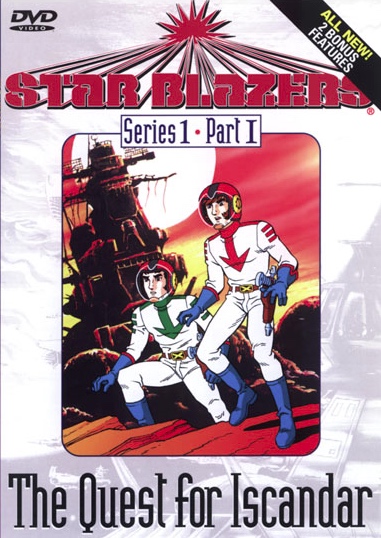
Star Blazers, The Quest for Iscandar (1979)
Star Blazers was a 1979 American adaptation of the 1974 Japanese anime television series Space Battleship Yamato. There were three seasons and they were followed by various movies, sequels and remakes. The first season was The Quest for Iscandar.
Apart from being dubbed in English the original Japanese series was edited somewhat, with the violence toned down and sexual references and content that could be construed as anti-American being removed.
Space Battleship Yamato can be regarded as an interesting transitional stage in the history of anime. It was clearly aimed at an older audience than earlier anime TV series like Astroboy and Prince Planet. It has a more grownup tone and it has more of a genuine science fictional feel. Not only are there girls, there is also obvious sexual interest between male and female characters (even in the censored US version).
It was also the first anime series with an overarching story arc to achieve success in western markets.
It has a more sophisticated look than earlier anime series although it’s still a lot less ambitious than the anime that came out later in the wake of the international success of Akira and Neon Genesis Evangelion in the late 80s.
In the year 2199 the Earth is doomed. The war against the invading Gamillon race has not gone well and the planet is pretty much a radioactive wasteland with the population forced to take shelter in underground cities. Within a year even the underground cities will be uninhabitable.
Then the human race is given one last hope of survival when a message is received from a distant planet. This alien race can offer the technology needed to save Earth but first Earth must build a new highly advanced engine in order to cover the incredible distance to the alien world of Iscandar.
For some curious reason the new engine has to be installed in the hulk of the ancient battleship Yamato. The real Yamato was a super-battleship sunk by the Americans in 1945. The story of the historical Yamato is one of the elements that is largely edited out the US version but happily Madman’s Region 4 DVD release includes the cut footage as an extra.
In the US version the Yamato gets renamed the Argo after its conversion to a spaceship. The US networks must really have been hyper-sensitive to any references to World War 2!
The science is delightfully silly with some great technobabble. Of course it’s possible that the science makes slightly more sense in the Japanese version but goofy technobabble is always fun anyway. The scientific goofiness is reminiscent of 1960s Japanese anime kids’ series but it’s combined with some reasonably in-depth characterisation and some good interaction between key characters (the distrust of the hero for the Yamato’s captain being a case in point).
There are of course lots of super-weapons, such as the dreaded wave-motion gun.
What’s interesting is that the Gamillons don’t really have superior technology. They have some immensely powerful technology but so does the Argo and the two sides are fairly evenly balanced which makes the many battles a lot more interesting.
There's plenty of action as the Yamato comes under attack even before it can be relaunched as a space battleship, and the action just keeps on coming. The Argo has to make the immensely long voyage to Iscandar and return, all within a single year. And the Gamillons will be doing everything they can to stop the Argo.
One amusing aspect is that much of the action is basically World War 2 naval warfare in space, with aircraft carrier battles and even submarine warfare. The echoes of naval warfare are appropriate given that the Argo is in fact a converted World War 2 battleship. The Argo does look pretty cool especially when it’s firing its main guns just like an actual battleship.
There’s not as much emotional complexity as you find in more recent anime but there is at least some attempt to give the characters a little depth. There’s also an interesting relationship between the main hero, Derek Wildstar, and the Argo’s Captain Avatar. Derek thinks the captain may have been at least partly responsible for his brother Alex’s death. Derek is also not entirely sure he’s up to the responsibilities that are suddenly forced upon him.
There’s considerable focus on the psychological strains suffered by the Argo’s crew. Some crew members deal with the pressure well, others not so well.
Even the chief villain, Leader Desslok of Gamillon, is not quite a simplistic villain.
I believe the original Japanese version, with subtitles, is available on DVD. This edited English-dubbed version is still great fun. Recommended.
Apart from being dubbed in English the original Japanese series was edited somewhat, with the violence toned down and sexual references and content that could be construed as anti-American being removed.
Space Battleship Yamato can be regarded as an interesting transitional stage in the history of anime. It was clearly aimed at an older audience than earlier anime TV series like Astroboy and Prince Planet. It has a more grownup tone and it has more of a genuine science fictional feel. Not only are there girls, there is also obvious sexual interest between male and female characters (even in the censored US version).
It was also the first anime series with an overarching story arc to achieve success in western markets.
It has a more sophisticated look than earlier anime series although it’s still a lot less ambitious than the anime that came out later in the wake of the international success of Akira and Neon Genesis Evangelion in the late 80s.
In the year 2199 the Earth is doomed. The war against the invading Gamillon race has not gone well and the planet is pretty much a radioactive wasteland with the population forced to take shelter in underground cities. Within a year even the underground cities will be uninhabitable.
For some curious reason the new engine has to be installed in the hulk of the ancient battleship Yamato. The real Yamato was a super-battleship sunk by the Americans in 1945. The story of the historical Yamato is one of the elements that is largely edited out the US version but happily Madman’s Region 4 DVD release includes the cut footage as an extra.
In the US version the Yamato gets renamed the Argo after its conversion to a spaceship. The US networks must really have been hyper-sensitive to any references to World War 2!
The science is delightfully silly with some great technobabble. Of course it’s possible that the science makes slightly more sense in the Japanese version but goofy technobabble is always fun anyway. The scientific goofiness is reminiscent of 1960s Japanese anime kids’ series but it’s combined with some reasonably in-depth characterisation and some good interaction between key characters (the distrust of the hero for the Yamato’s captain being a case in point).
There are of course lots of super-weapons, such as the dreaded wave-motion gun.
There's plenty of action as the Yamato comes under attack even before it can be relaunched as a space battleship, and the action just keeps on coming. The Argo has to make the immensely long voyage to Iscandar and return, all within a single year. And the Gamillons will be doing everything they can to stop the Argo.
One amusing aspect is that much of the action is basically World War 2 naval warfare in space, with aircraft carrier battles and even submarine warfare. The echoes of naval warfare are appropriate given that the Argo is in fact a converted World War 2 battleship. The Argo does look pretty cool especially when it’s firing its main guns just like an actual battleship.
There’s not as much emotional complexity as you find in more recent anime but there is at least some attempt to give the characters a little depth. There’s also an interesting relationship between the main hero, Derek Wildstar, and the Argo’s Captain Avatar. Derek thinks the captain may have been at least partly responsible for his brother Alex’s death. Derek is also not entirely sure he’s up to the responsibilities that are suddenly forced upon him.
There’s considerable focus on the psychological strains suffered by the Argo’s crew. Some crew members deal with the pressure well, others not so well.
Even the chief villain, Leader Desslok of Gamillon, is not quite a simplistic villain.
I believe the original Japanese version, with subtitles, is available on DVD. This edited English-dubbed version is still great fun. Recommended.
Friday, 6 November 2015
The Samurai, season 3 - Iga Ninjas (1963)
Onmitsu kenshi (Spy Swordsman) was a Japanese TV series made between 1962 and 1965. The English-dubbed version was retitled The Samurai. It was very successful in Japan and also did quite well in New Zealand and the Philippines. It attracted very little attention elsewhere in the world. Except for one place - Australia. In Australia it became more than just a cult sensation. It was the Nine Network’s highest-rating series. It was a bona fide pop culture phenomenon. It was the first TV series screened on Australian television to spawn a marketing frenzy. Soon Australian youngsters were running about all over the country dressed in ninja suits.
When star Koichi Ose toured Australia he was greeted at Sydney Airport by crowds larger than those that had turned out the previous year to greet The Beatles. The Samurai was not just a smash hit among boys - Koichi Ose apparently had a fairly significant and devoted female fan base as well. He was an unlikely sex symbol, but perhaps both the character and the actor were simply so different from anything that an Australian female was likely to encounter in the opposite sex at that time. The character he played, the samurai Shintaro Akikusa, was certainly not lacking in the manly virtues. He was brave and noble. He was good-looking. He was also kind and gentle and there was a touch of humour. Koichi Ose in person came across as a somewhat shy and very charming man, and when he was interviewed on Australian television more than forty years later the charm and the humour were still very much in evidence, along with some very fond memories of the series.
The series contained, for its time, much more violence than was usual in children’s TV. The violence was however so stylised that nobody really seemed to notice. It also provided Australians with their first taste of martial arts and Japanese swordplay.
There were plenty of British and American action adventure series around at the time but The Samurai made them all look rather dull and unimaginative. Not only did the Japanese series have more action, the action was much more stylish. The storylines (the complete series ran to ten story arcs and a total of 128 episodes) were more ambitious. The series was made on a relatively small budget but the locations were well chosen, the period detail was good (it set in the 18th century during the Tokugawa Shogunate), the costumes looked great and in general the production values were more than adequate. Most of all it had (in the 1960s) a wonderfully exotic feel to it.
It also had a coolness rating that was right off the scale. Not just lots of sword-fighting but the ninja make frequent use of star knives (or shuriken), small star-shaped throwing knives, which were even cooler. The ninja also had the exciting ability to leap directly upwards to great heights and there were various other exotic types of weaponry in evidence (such as a rocket launcher). Ninja were even adept at underwater warfare!
Japanese movies of the postwar period mostly adopt a rather sceptical (if not outright hostile) attitude towards Japan’s feudal past and towards the code of honour of the samurai. Interestingly though this series takes a different approach. It takes the hierarchical nature of feudalism for granted. It does not occur to Shintaro to question the social privileges of rank that he enjoys, or to question the deference which his social inferiors display towards him. On the other hand he is very much aware that rank brings responsibilities as well as privileges. Although Shintaro appears to be a wandering ronin we soon discover that this is not the case. He is a very high-ranking member of the nobility - a close relative of the shogun. Shintaro could live a life of luxury and leisure. Instead he risks his life in the service of the government, because his sense of duty and honour compels him to do so. He takes the code of bushido quite seriously, although he tempers the stricter aspects of this code with his innate sense of mercy.
Shintaro does not merely serve the government. If he encounters a person in trouble he will unhesitatingly risk death in order to help them, even if the person in trouble is a humble peasant. A samurai must live his life honourably and be prepared to die honourably. Not that Shintaro wants to die - he is by nature a man who loves life. But he knows where his duty lies. This rather positive attitude towards both feudalism and the warrior code of the samurai is rather refreshing.
The overall tone of the series is much darker than anything you will find in British or American children’s television at this time. Violence has consequences. Being an agent for the shogun’s government is genuinely dangerous. It involves a very real risk of death, and it requires Shintaro to be wiling to kill. In fact the tone is rather grown-up, to an extent that makes me question whether it was ever actually intended as a children’s series at all. There’s enough complexity to make it the kind of series that adults should have no difficulty in enjoying. Despite the sometimes dark and tragic themes there is however no trace of the fashionable cynicism and moral nihilism that has come to plague modern popular culture in the west. The Samurai makes no bones about the existence of evil and makes it clear that the fight against evil is a difficult one. It is however a fight worth fighting. Evil can be beaten, even though the costs are often high. Courage and honour are not futile. And even though there is no guarantee of success in every case it is better to die with courage and honour than to accept the triumph of evil.
Iga Ninjas was the third story arc, first airing in Japan in 1963. The lord Matsudaira Sadanobu has set out on a secret mission to Kyoto, hoping to foil a plot by the lord Owari to gain control of the government. Owari has employed the services of the sinister Momochi Genkurō (Toshiyuki Katsuki) and his ten renegade Koga ninja to assassinate Sadanobu. Shintaro is reluctantly persuaded to act as Sadanobu’s bodyguard (Shintaro has grown tired of killing and would prefer to live in quiet retirement. This story arc introduces one the most popular characters in the series, the Iga Ninja Tombei the Mist (Fuyukichi Maki). Tombei and his Iga ninja will provide valuable help to Shintaro.
Tombei is more than just a sidekick for the hero. He is a brave and skilled ninja and a clever tactician who saves Shintaro’s life on more than one occasion. Tombei is definitely not the sort of sidekick who needs to be constantly rescued from danger by the hero.
Momochi Genkurō makes an absolutely splendid and delightfully sinister villain, a truly worthy adversary for Shintaro.
It’s not that easy to maintain a consistent level of excitement and suspense over the course of a thirteen-episode story arc but writer Masaru Igami manages to do just that while also ensuring that each half-hour episode has its own distinctive features. It’s an achievement that most modern television writers would struggle to emulate.
The level of inventiveness displayed by this series is impressive. There are countless fight scenes but there is always some new variation to keep things interesting. Ninja have plenty of tricks up their sleeves and it’s fun anticipating what each new trick will be. While the basic storyline for this arc is simple - it’s basically the kind of story familiar in westerns, where a wagon train has to fight its way to its destination while being menaced by murderous bandits. Masaru Igami however manages to embroider this simple basic tale with numerous sub-plots involving treachery and Genkurō’s seemingly endless supply of fiendish and outlandishly ingenious schemes to kill Lord Sadanobu. Genkurō employs rocket launchers, gas attacks, a glamorous but deadly lady ninja, a ninja who can steal people’s faces, explosives and all manner of ninja magic.
It’s never explicitly stated but it’s implied that ninja magic is mainly a combination of illusionism, trickery, chemical agents and perhaps hypnosis rather than anything supernatural.
The Samurai offers excitement, intrigue, adventure and imaginative fight scenes all done with style and also with surprising intelligence and subtlety. It has its dark moments, even tragic moments. It achieved massive popularity in Australia as a kids’ series but in fact it compares very favourably with most action adventure series aimed at adults. Very highly recommended.
The Samurai has been released on DVD in Region 4 (Australia), either in season sets or as a complete series boxed set. The Region 4 season sets are available from both amazon and amazon UK. They're all-region DVDs. It's actually cheaper to buy the complete series boxed set from an Australian supplier like EzyDVD.
I've also reviewed the Fuma Ninja story arc.
Subscribe to:
Posts (Atom)