Showing posts with label russian tv. Show all posts

Tuesday, 3 August 2021

The Hound of the Baskervilles (The Adventures of Sherlock Holmes and Dr. Watson)

The Hound of the Baskervilles was made for Soviet television in 1981, as part of their excellent The Adventures of Sherlock Holmes and Dr. Watson series. It was directed by Igor Maslennikov, who co-wrote the script with Yuri Veksler.

It is of course one of the many many adaptations of Sir Arthur Conan Doyle’s famous 1902 novel. It’s a two-part adaptation with a total running time of 154 minutes.

The setting is the moors in Devonshire. Sir Charles Baskerville seems to have become the latest victim of the terrifying beast that roams the moors, the hound of the Baskervilles. It’s a family curse dating back to the mid-18th century.

The adventure begins for Holmes and Watson when a worried young physician, Dr Mortimer (Evgeniy Steblov), turns up at 221B Baker Street with an old manuscript. Dr Mortimer holds grave fears for the safety of the heir to the Baskerville estate, Sir Henry Baskerville, newly arrived from Canada. Holmes of course does not believe in supernatural hounds but he has caught the scent of a fascinating mystery.

Dr Watson is despatched to the Baskerville estate while Holmes attends to certain investigations of his own in London. Watson discovers that Sir Henry Baskerville is a wild-eyed eccentric but Baskerville has a certain charm as well. Watson is used to dealing with eccentrics (Sherlock Holmes is nothing if not eccentric) and he has a vast store of tolerance for odd behaviour.

The death of Sir Charles Baskerville certainly appeared to be another manifestation of the ancient family curse.

Of course like Holmes the viewer will be inclined to look for a more rational explanation. There are lots of romantic complications that could provide clues. There’s the passionate love between Sir Henry Baskerville and Miss Beryl Stapleton, the sister of Baskerville’s neighbour Mr Stapleton. There’s a Mrs Laura Lyons, the slightly disreputable daughter of an eccentric and remarkably litigious old man named Frankland. Mrs Lyons may have been involved in an intrigue with Sir Charles Baskerville.

Old Frankland is crazy enough to be involved in anything.

There’s also an escaped murderer roaming the moors. Sir Henry’s butler Barrymore is definitely hiding something. Dr Mortimer might be hiding something as well. He’s a pleasant young man but he seems rather anxious.

As for the hound, we don’t see it until the very end but we hear it. The final reveal of the beast is extremely effective and genuinely horrifying.

As in the previous episodes I’m struck by the amount of care that went into this production and in particular by the determination to avoid a studio-bound look. The London street scenes were shot in the old quarter of Riga. I have no idea where the scenes of the moors were shot but those scenes perfectly capture the required feeling of loneliness and desolation. And the sense of brooding menace. In some ways the locations used actually work better than authentic English locations would have worked - they’re so wonderfully cold and bleak. It’s almost like we’re on an alien world.

The sets and the costumes are sumptuous. No opportunities are missed to make the look of the production interesting. It’s one of the most visually impressive Hounds of the Baskervilles that I’ve seen. This is a superbly crafted production with some stunning cinematography - not just by 1980s TV standards but by feature film standards.

This adaptation has more of the feel of a feature film than of a TV series. The production values are high.
I don’t think there’s much I can add to what I’ve already said in a previous review about the wonderful performances of Vasily Livanov as Holmes Vitaly Solomin as Dr Watson. Solomin is the best Watson ever. Due to the nature of the plot Vitaly Solomin has to carry a large part of the first part single-handed and he has no difficulties at all in doing this. This is a Watson we enjoy watching, rather than being impatient for Holmes to make his re-appearance.

Nikita Mikhalkov’s performance as Sir Henry Baskerville is amusing. Sir Henry has lived for most of his life in the United States so I assume Mikhalkov was trying to make him seem like a brash American. Actually he comes across as a crazy Russian! But he certainly makes the character seem wildly eccentric and yet rather good-natured.

As is usual for this series the supporting performances are very strong with Aleksandr Adabashyan as Baskerville’s butler Barrymore (a man who seems to know a great deal more than he is willing to reveal) and Irina Jupchenko as Beryl Stapleton being especially good. Beryl may also know more than she is prepared to disclose.

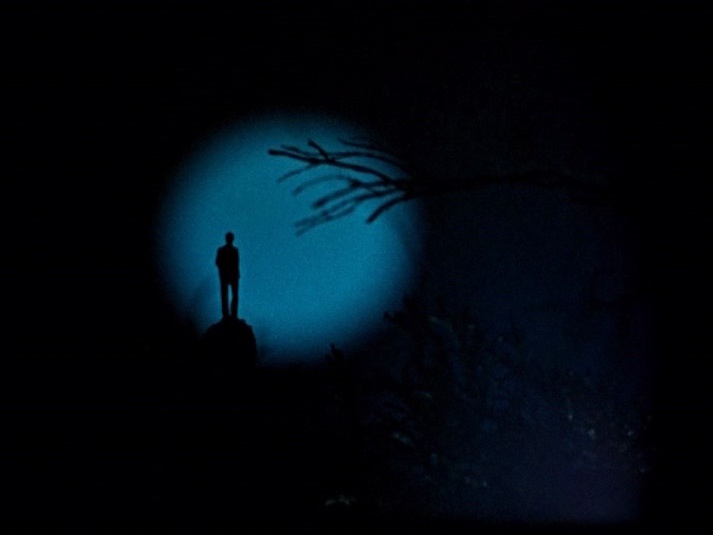
What’s most impressive here is the gloomy, spooky, doom-laden very gothic atmosphere. The moors are pretty frightening even without a supernatural beast lurking in them.

One interesting feature of this adaptation is that whenever a letter or a document of any kind plays a part in the story it is always in English - presumably an attempt to give the production a more English flavour.

This is an adaptation that is not only more faithful to the plot of Conan Doyle’s story it is also more faithful than most to the feel. Readers in 1902 who were familiar with the Sherlock Holmes stories would have been aware that this was not going to be a novel of the supernatural. It is a detective story. Sherlock Holmes is a man who takes the mysterious and gives it a rational explanation. Consequently this production downplays the supernatural elements. Neither Holmes nor Watson believes for one second that this is really a case of a spectral beast from the underworld. This is murder, with very real human motives.

If you’re going to watch this production (and you should) it’s better to start with the earlier episodes (which I’ve reviewed here) which will give you a chance to really get a feel for the performances of Livanov and Solomin.

There are those who regard this as the best ever adaptation of Conan Doyle’s novel. They may well be right. It’s certainly one of the very best and it might even qualify as my personal favourite. It’s not a slam-bang fast-paced version. The story unfolds in a leisurely manner allowing plenty of time to immerse the viewer in the atmosphere. Very highly recommended.

The Russian DVD offers a very good transfer with optional English subtitles.

Wednesday, 20 January 2021

the Russian Sherlock Holmes and Dr. Watson

Between 1979 and 1986 Soviet television produced a very successful series of adaptations of Sir Arthur Conan Doyle’s Sherlock Holmes stories. They were widely acclaimed in the Soviet Union, and in the West. Vasily Livanov played Holmes while Dr Watson was played by Vitaly Solomin. The first adaptation, Sherlock Holmes and Dr. Watson, was in two parts, the first being based on The Adventure of the Speckled Band and the second being based on A Study in Scarlet.

The first part begins in an intriguing manner. Dr John Watson accepts an offer to share rooms in Baker Street with a Mr Sherlock Holmes. He likes Holmes well enough but he knows nothing whatever about him and has no idea that he is a detective. Watson is a man who prides himself on minding his own business so it never occurs to him to ask Holmes what his profession is. Watson is however human and he is curious. He decides that, given Holmes’ odd interests, he must be a master criminal of some sort.

This introductory episode serves two purposes. It establishes the essential Englishness of the setting. A well-bred Englishman of the middle classes does not intrude into other people’s business. Watson cannot ask Holmes outright what he does for a living. It just isn’t done. The second purpose it serves is to establish the basis for the friendship between the two men. Once Holmes finally reveals that he is a detective all the suspicion is instantly transformed into comradeship. An immediate bond of friendship is formed. And of course Holmes knows that Watson is a man whose discretion can be relied upon.

The leisurely introduction also very clearly delineates the two lead characters for us. Holmes is a very odd bird indeed. Watson is deeply shocked to discover that Holmes has no idea that the Earth revolves around the Sun but is even more shocked to discover that Holmes considers this to be a matter of no importance whatsoever. Holmes is a man of very deep but very narrow intelligence. On matters relating in any way to criminal investigation (such as chemistry) he is close to being a genius. On matters not related to crime he is as innocent as a small child. All of this is of course straight from Conan Doyle’s stories but this TV production establishes this facet of Holmes’ character very cleverly and very wittily.

The continuing popularity of the Sherlock Holmes stories has little to do with Conan Doyle’s plots, which are now so familiar to us not just from his stories but from countless movie and TV adaptations. It is the character of Sherlock Holmes himself, and his friendship with Dr Watson (an apparently unlikely friendship) that provides the continuing fascination. This TV version, wisely, emphasises character over plot.

The actual plot of The Adventure of the Speckled Band occupies a comparatively small part of the running time but it’s dealt with deftly and skilfully. And again the emphasis is on character - both Holmes and Watson are outraged by the threat to the life of young Ellen Stoner. She is a charming young woman (played by Vitaly Solomin’s real-life wife Mariya Solomina) whose sister died in mysterious and sinister circumstances and who now believes that her stepfather intends to kill her. For Holmes this is not just crime-solving as an intellectual game. He detests criminals who prey on the vulnerable. It is a detestation that Watson emphatically shares. So while this is a Sherlock Holmes with the character’s eccentricities strongly emphasised this is also a Sherlock Holmes who is by no means lacking in humanity.

The second part opens with the murder of an American and we will eventually discover that it is a very American murder (Conan Doyle was somewhat fascinated by America). There are no signs of violence on the body but there are blood spots on the floor of the abandoned house in which the murder clearly took place. Inspector Lestrade is on the case and Holmes is confident that Lestrade has no chance of solving the murder. And Holmes is quite correct in his assumption.

By this time Holmes and Watson are firm friends. Watson decides to try his hand as a detective, with predictable results. Holmes does not hold this against his friend. In fact he has to admit to making some mistakes himself.

The second film in the series is in three parts, The King of Blackmail (based on the story The Adventure of Charles Augustus Milverton), Mortal Fight (based on The Final Problem) and The Hunt for the Tiger (based on The Adventure of the Empty House). It is in fact handled as a single connected story - the story of the epic fight of Holmes against the vast criminal conspiracy controlled by Professor Moriarty.

As I mentioned earlier the enduring appeal of Conan Doyle’s creation has little to do with his plots which, even by the 1920s, were starting to seem just a little contrived and lacking in the elaborate brilliance which later writers brought to the genre. This second film puts the emphasis on the thriller elements rather than the mystery elements and it’s a sound decision. The Holmes-Moriarty struggle really does make for a thrilling story, with plenty of action and danger. This is Holmes not as armchair detective but as a man of action, prepared to put his life on the line and prepared to kill or be killed.

Production values are extremely high, closer to feature film quality than to television quality. This was clearly a lavish production, with elaborate sets and great use of location shooting.

Livanov’s Holmes is very eccentric but I think his performance works. Holmes may be a very odd person but he has charisma and he is a very driven personality. Livanov plays him as a man for whom the fight against crime is a great game but it is also more than a game.


I can’t praise Vitali Simonov highly enough. This a complex Watson, a man who believes that he just wants to mind his own business but is caught up in the glamour and excitement of crime-fighting. His partnership with Holmes makes him feel more alive than ever before. He has always been a man of honour and principle. Now he has the opportunity to put his beliefs into practice. And Simonov makes this entirely plausible. Watson is a doctor but he was an army doctor. Clearly he always had a certain taste for adventure and a willingness to practise self-sacrifice. It’s also at times a humorous performance but not in the ways that portrayals of Watson often fall down by making Watson a figure of fun. We laugh with Simonov’s Watson, not at him. He is an intelligent man who can see the humour in life. Is he the best Watson ever? I thought Edward Hardwicke and David Burke were very very good in the Granada TV series but I think Vitali Simonov is slightly better.

If you’re expecting political subtexts then you needn’t worry. There aren’t any. Watson is thoroughly bourgeois but while he has the quirks of his class (a deep liking for respectability and order) he has the virtues of his class as well. He dislikes men like Moriarty who threaten the social and moral order because threats to the social and moral order really do cause suffering. His Watson is a thoroughly decent man who willingly accepts that sometimes decent men have to risk their lives for noble causes and he has no doubt that fighting crime is a noble cause.

I don’t think Vasily Livanov is as good as Jeremy Brett or Basil Rathbone but he’s not far behind and his performance is delightfully quirky.

In Conan Doyle’s original stories Holmes is on rare occasions troubled by the moral dilemmas raised by his profession. Perhaps justice and a rigid adherence to the law are not always entirely compatible. There is at least one story in which Holmes allows a criminal to go free because sending him to prison would not serve the interests of justice. Even murderers sometimes have motives which make their crimes understandable even if that does not excuse them. This series seems inclined to emphasise these moral dilemmas, most obviously in The King of Blackmail in which Holmes is prepared to break the law in the cause of a greater justice.

All I can say is that if all Soviet television was this good then I want to see more. This is a superb production. It’s intelligent, it’s polished, it’s pretty faithful to Conan Doyle and it’s great fun. Highly recommended.

It’s readily available on DVD, with English subtitles. I’ve also reviewed the second TV film, Sherlock The Hound of the Baskervilles.