Wednesday, 20 April 2022

Knight Rider season 3 (1984-85)

Knight Rider returned for its third season in 1984. Knight Rider was one of the three great American action/adventure series of the early 80s, along with The A-Team and Airwolf. They were all thoroughly enjoyable and while the first season of Airwolf was the supreme achievement of the genre Knight Rider was still enormous fun.

The premise was pretty darned cool. An undercover cop is badly wounded but his life is saved by a mysterious tycoon. The cop gets a new identity and a new partner - an ultra-high tech car named K.I.T.T. (pretty much a mobile fortress) - and a new career as an unofficial crime-fighter. He works for a kind of vigilante justice outfit (but a respectable one) called the Foundation for Law and Government (FLAG), headed up by a suave if somewhat pompous Englishman named Devon Miles (Edward Mulhare).

The series had just the right mix of science fiction, fun, action, stunts, car chases, gadgets, humour, occasional seriousness and romance. Getting that mix right is quite an art and it’s something that the show’s creator, Glen A. Larson, was pretty good at.

David Hasselhoff may not be a great actor but he was perfect for this series. There’s one thing that has to be said for him - his performance is always enthusiastic. The car itself has its own personality and qualifies as the fourth regular cast member. It’s not easy to have chemistry with a machine but the chemistry between Michael and K.I.T.T. really does work.

For the third season some cosmetic changes were made to K.I.T.T.’s interior and the car gained even more formidable capabilities but the big news for fans was that Bonnie was back. Bonnie Barstow (played by Patricia McPherson) was the genius girl scientist/engineer who maintained K.I.T.T. and added various refinements to the car. She left after the first season to be replaced by April Curtis (Rebecca Holden). Rebecca Holden was an OK actress, April was pretty, she wasn’t an irritating character and I don’t think any Knight Rider fans actively disliked her but she wasn’t Bonnie. Bonnie just seemed to be an essential part of the team. So, wisely, the producers brought her back for the final two seasons.

K.I.T.T. is not just a super-car but a super-computer as well. The trick to making this series work was to ensure that K.I.T.T. could play a real rôle in each episode. It wasn’t enough to just throw in a car chase every time, there had to be something that needed doing that Michael could not possibly do without K.I.T.T. and could not possibly do with an ordinary car - something that required K.I.T.T.’s array of gadgetry and ability to do things that no conventional car could do. And ideally Michael had to get himself in a jam from which only K.I.T.T. could rescue him.

Of course this was the 80s so there had to be babes as well. Every case seems somehow to involve at least one glamorous young person of the female persuasion. The difficulty is that the whole concept of the show is that (apart from K.I.T.T.) Michael is a loner so you always know that any budding romance isn’t going to go anywhere. So any romances have to end one way or another before the closing titles but without making Michael appear to be a heel. This is something that the series managed to do pretty successfully.

A lot of K.I.T.T.’s super-abilities are in fact pretty much magic. They’re totally impossible and there’s no attempt to make them even the slightest bit plausible. K.I.T.T. can do just abut anything. This should be a weakness of the series but somehow it never seems to matter - Knight Rider, like The A-Team, has very much a comic-book feel.

Knight Rider has had several DVD releases. The Mill Creek complete series releases on DVD and Blu-Ray are extremely good value. The transfers on the DVD set (which is the one I own) are pretty good.

Episode Guide

Season three kicks off with the two-parter Knight of the Drones. Which starts promisingly - a prisoner (a killer named C.J. Jackson played by cult movie icon Jim Brown) breaks out of jail with the help of a cassette player that is really a robot, and a self-driving car. And there’s a glamorous female diabolical criminal mastermind named Margo Sheridan. She has plans for Jackson but neither Jackson nor the viewer has any idea what her plans actually are. Since Jackson killed Michael’s predecessor at FLAG the Foundation is taking a very keen interest in his recapture. A fine episode to kick off season three.

In The Ice Bandits diamonds belonging to the estate of an elderly lady and earmarked for the Foundation are stolen. Michael discovers that he is not the only one able to get a new face, and he also discovers that monks are not always what they seem to be. A fun episode.

Knights of the Fast Lane introduces Michael to the world of banzai racing - illegal street races for the super-rich, with super-cars. A young woman is a victim of a hit-run driver and she happens to be the daughter of a cop who was Michael’s partner when he was a rookie in the police force. And Michael used to know the daughter so this case is very much a personal matter for him and he thinks banzai racing is involved. So naturally we get lots of automotive action in this story. Plus football is involved, so K.I.T.T. has to learn to play football. And where there’s football there will be cheerleaders so we get lots of scantily-clad cheerleaders. Car racing, murder, football, babes. Is there anything else that the target audience for this series could possibly want? It works for me.

Halloween Knight I've talked about elsewhere.

In K.I.T.T. vs. K.A.R.R. Michael and K.I.T.T. come up against the K.I.T.T.’s original prototype, K.A.R.R. (Knight Automated Roving Robot). K.A.R.R. looks the same as K.I.T.T. and has much the same capabilities but unfortunately he also has a bad attitude. K.A.R.R. was found buried in the sand by a guy with a metal detector. He was foolish enough to dig up his find and K.A.R.R. thereupon offered to take him for a ride. It’s going to prove to be quite a ride. K.A.R.R. made his first appearance in season one and he wants revenge. The evil twin idea has been used countless times and using it for a super-car works pretty well in this case. It culminates in an epic machine vs machine showdown. Good stuff.

Michael and K.I.T.T. battle cattle-rustlers in The Rotten Apples. Rancher Rebecca Hammond isn’t really a rancher, she’s a child psychologist. And her ranch isn’t really a ranch, it’s a kind of halfway house for New York street kids. But if those cattle-rustlers can’t be stopped she’ll lose the ranch. K.I.T.T. has a disagreement with a horse and has to battle not one but two giant trucks. Michael has to ride a mechanical bucking bronco. The silliness level is off the scale in this episode but it’s good fun silliness. It’s like a western but somehow it works and it’s a lot of fun.

In Knight in Disgrace Michael is framed by a big-time New Orleans gangster named LaSalle. Michael is kicked out of the Foundation but LaSalle offers him a job - the job being to steal K.I.T.T.. Surely Michael is not going to go to work for a mobster? OK, so this one is a bit predictable but it’s OK.

In Dead of Knight Michael is on the trail of a criminal selling deadly chemicals to revolutionaries. An attempt to kill Michael ends with a girl dead by mistake, which gives him an added incentive to crack the case. There are deadly orchids and there’s a race against time with two lives at stake, including Michael’s. Not a bad episode, even with K.I.T.T.’s jokes.

The episode is called Lost Knight but it’s not Michael who is lost, it’s K.I.T.T. - he gets electrocuted and loses his memory. They were chasing some bad guys who’d stolen some new super high explosives. K.I.T.T. doesn’t know who he is any more but he befriends a boy. And the boy could be a key witness.

In Knight of the Chameleon Michael is up against a renegade arms dealer known as the Chameleon. He’s a man of a thousand faces, a master of disguise. The Chameleon has just escaped from custody and he has two objectives - to pull off a huge arms coup and to kill Michael Knight. Of course you know that at some stage he’s going to disguise himself as Michael. The gee-whizz jetpack is amusing and finally someone has found a real use for K.I.T.T.’s ejector seat mechanism. Good fun.

The garment trade is the scene for murder in Custom Made Killer. A series of murders in fact, all involving a deadly custom car. This episode is a good blend of action and glamour and it gives K.I.T.T. a worthy opponent in the form of the fairly scary killer car. Good stuff.

In Knight by a Nose Michael gets mixed up with a girl and a racehorse. Maxine’s beloved horse King Jack, a rising champion, has to be put down after a fall. Michael suspects that whatever happened it wasn’t as simple as that. A fairly innocuous episode in which K.I.T.T. develops a gambling habit.

Junk Yard Dog pits Michael against a ruthless toxic waste dumper but it’s K.I.T.T. who ends up in real trouble. He gets dumped in the toxic waste and it may be the end of the line for him. Even if he can be fixed, will he have lost his nerve? Can a car lose its nerve? Apparently so. This one could have been an embarrassing misfire but somehow it works. It works because David Hasselhoff makes it work - he really makes us believe that Michael believes that K.I.T.T. has emotions and since Michael believes it we believe it.

In Buy Out a company specialising in ultra high tech armoured limousines is about to make an important sale when their sales demonstration is spectacularly sabotaged. Michael has to find out what was behind the disaster. The employees were planning a buy out of the company so they stand to lose everything if the company goes under. Plenty of explosions, plenty of opportunities to show off K.I.T.T.’s capabilities and plenty of automotive mayhem. A good solid episode.

In Knightlines an employee at a high-tech corporation is accidentally killed while stealing company property, although maybe that wasn’t what he was doing and maybe it wasn’t an accident. It’s all about bugs and it’s a pretty good episode.

In The Nineteenth Hole the grand-daughter of one of Devon’s friends is organising a car race in a small town but someone is trying to stop the race. And they’re prepared to kill her to do it. The story also involves gangsters and golf, and it’s pretty entertaining.

Knight & Knerd is an obvious attempt to cash in on the unexpected success of Revenge of the Nerds. The Foundation gets a new recruit, a nerd named Elliott. The case involves the use of a new top-secret laser in a diamond robbery. It’s strictly played for broad comedy and you’ll either love it or hate it. I’m afraid I hated it. Rather cringe-inducing.

Ten Wheel Trouble deals with an attempt by a big trucking combine to put independent operators out of business, and with a trucker who may or may not have resorted to murder in order to stop them. Michael also has to deal with a precocious and feisty fifteen-year-old girl who’s as hot-headed as her big brother (the one accused or murder). It’s a pretty standard episode but there’s plenty of big rig action and K.I.T.T. takes on a truck loaded with ten tons of concrete.

An old friend of Bonnie’s is found dead in Knight in Retreat and since he was involved in top-secret work there’ll have to an investigation. Bonnie wants Michael to do the investigation even though she might not like what he finds out. There’s a glamorous lady criminal mastermind with lots of glamorous henchwomen. There’s a plot to steal a missile and a guidance system. It’s typical Knight Rider over-the-top nonsense and it’s fun.

In Knight Strike a cache of impounded weapons has been stolen from a police lock-up. The cache includes a couple of super high tech laser rifles. The case takes Michael to a survivalist convention were he gets to play with cool guns and a cute blonde. And there’s another babe who seems to want to play as well. It’s standard Knight Rider stuff but it’s executed with style and energy.

Knight Rider goes to the circus in Circus Knights. And there’s murder and mayhem. Michael decides to go undercover as a daredevil, complete with super car. I just love TV shows and movies with circus settings. K.I.T.T. gets to jump through the ring of fire, there’s a sexy tiger lady and there’s a great fiery action scene at the end. It’s good stuff.

Final Thoughts

The third season of Knight Rider is just as much fun as the first two seasons. Michael and K.I.T.T. remain a great team and there’s the right mix of action, humour and pretty girls. It’s great comfort TV. Highly recommended.

I've also reviewed season one and season two of Knight Rider.

Thursday, 7 April 2022

Thriller - Lady Killer, Possession (1973)

I purchased the complete series boxed set of Brian Clemens’ celebrated 1970s horror/thriller anthology series Thriller back in 2010. I’ve worked my way very slowly through it and I finally reached the end about a year ago. By the time I started this blog I’d already reaches season four. I’ve posted lots of reviews of the later episodes. And now I find myself wanting to revisit the earlier seasons. It is after all around twelve years since I’ve seen some of these episodes.

So if I’m going to do this I should start right from the very beginning.

Lady Killer

Lady Killer is the first episode of the first season and was originally screened in April 1973. Lady Killer was, like just about every episode, scripted by Clemens.

Lady Killer starts in an English seaside hotel. Paul Tanner is romancing Jenny Frifth (Barbara Feldon) but we’re immediately suspicious of his intentions. He sneaked it into her room to get a look at her passport before making his first approach. Then we hear him talking on the telephone to a colleague or accomplice and we realise that for some presumably dishonest reason he is planning to manipulate Jenny into falling in love with him.

Which he has no trouble doing. Jenny is pretty and seems like a pleasant person but she’s obviously shy and lonely, and we know from that phone conversation we overheard that Paul has selected her specifically because she is a lonely lady.

Jenny is swept off her feet. Had she been less lonely and a bit more worldly she might perhaps have realised that this guy is just a bit too smooth and too charming and that he knows every trick in the book when it comes to playing with a woman’s emotions. Jenny is so emotionally starved that she agrees to marry Paul even though she’s known him for just a couple of days.

Gradually she notices little things, or little things are pointed out to her, and the seeds of suspicion are planted in her mind. The problem is that Paul is incredibly quick-witted and is able to provide a plausible explanation every time.

We know that Paul is up to something and it’s pretty obvious what his plan is. But don’t despair. Brian Clemens has a few very neat plot twists up his sleeve.

The casting is quite interesting. Robert Powell was an obvious choice to play Paul. No-one could do oily sinister charm and emotional manipulativeness better than Powell.

Jenny is played by Barbara Feldon. Yes, 99 from Get Smart. She gives a terrific performance, capturing Jenny’s unworldliness and vulnerability without ever allowing her to seem ridiculous or pathetic. And her performance is totally believable - Jenny reacts the way a rather lonely woman desperate for love would react.

The other major female character, Toni, is played by Linda Thorson, which is somewhat surprising since Clemens and Thorson had a fraught and uneasy relationship on The Avengers. Thorson is excellent and her performance is also believable - she has certain logical motivations but they’re complicated by emotion and Thorson makes Toni just sympathetic enough - we don’t approve of her actions but we can understand them.

The icing on the cake for me is the presence of T.P. McKenna, one of my favourite British character actors of that era, in a secondary but crucial role.

All the performances are extremely good and, most importantly, Powell and Feldon and Powell and Thorson work exceptionally well together.

A mystery-thriller needs to have a coherent plot but it doesn’t matter if it’s a little far-fetched. That’s the nature of the mystery and thriller genres. In real life people rarely plan incredibly elaborate crimes, but that’s why real-life crime is boring. The mystery-thriller genre should have nothing to do with realism. As long as the plot has internal coherence there’s no need to ask yourself if anybody would really carry out such a complicated crime which apparently required three years’ worth of planning.

It’s a clever enough plan. Not dazzlingly original but the sheer effort and sacrifice and patience required to make it work are impressive. It won’t take most viewers very long to figure out what Paul’s plan is. That doesn’t matter because Clemens has a couple of very nifty little plot twists to spring on us in the third act. And those plot twists are very cleverly executed.

That’s so much here to enjoy but the greatest pleasure comes from the performances of Robert Powell, Barbara Feldon and Linda Thorson. They really are a joy to watch.

Lady Killer is a great way to kick off a brand new series.

Possession

Possession is episode two and already the series is shifting gears to keep us on our toes. Suddenly we’re in supernatural territory, with a haunted house story. With Thriller you could never be sure if there were going to be supernatural elements or not. And the supernatural could be handled in a rather ambiguous way in this series.

In this case the setup is a classic haunted house story. Successful businessman Ray Burns (John Carson) and his wife Penny (Joanna Dunham) have just bought a lovely old house in the country.

At first everything goes well, with just a few very tiny odd things that disturb Penny. Then there are problems with the central heating and the basement floor (which for some mysterious reason had been concreted) has to be dug up. A gruesome discovery is made, which seems to provide a partial solution to a 20-year-old mystery. This discovery also explains some increasingly odd events. There is a ghost haunting the house, but whose ghost? Is it the ghost of the victim or the murderer?

The obvious step is to get a medium to conduct a séance. As is always the case in movies and TV the séance turns out to be a seriously bad idea.

Penny is now quite frightened and Ray is pretty shaken as well.

And there’s the matter of the murder that takes place nearby. There’s no connection of course but it is an odd coincidence.

This story leads us up the garden path pretty effectively. We think it’s a very conventional ghost story but things are by no means as simple as they appear to be.

There are some clues as to what is going on, clues such as the killer’s fondness for whistling Greensleeves, but these clues can mislead us if we’re not careful.

It’s a clever variation on the haunted house theme.

So two very good episodes right at the start of season one.

Wednesday, 23 March 2022

Robert Miall's UFO-1 Flesh Hunters

UFO-1 Flesh Hunters was the first of two novelisations of Gerry Anderson’s 1970 sci-fi TV series UFO. Both were written by John Burke under the name Robert Miall. UFO-1 Flesh Hunters was published in 1970. This was a novelisation rather than an original novel and was based on the episodes Identified, Exposed, Close Up and Court Martial.

John Burke (1922-2011) wrote countless novelisations of movies and TV series in the 60s and 70s, including Moon Zero Two, based on Hammer’s extremely interesting movie of the same name. The Moon Zero Two novelisation is actually pretty good.

UFO was not just a fun alien invasion science fiction series - it also had a bit more psychological complexity than you might expect. A lot of the focus was on the personal price that had to be paid by people working for a top-secret organisation (called SHADO) set up to defend Earth from murderous attacks by UFOs. In particular there was a focus on the loneliness of command. The head of this organisation, Commander Straker, has to make frighteningly difficult decisions and he has to make those decisions alone. Even some of his subordinate commanders, such as Lieutenant Ellis (in charge of Moonbase), have to be prepared to sacrifice their personal lives if necessary. It was a surprisingly character-driven series.

The author spends the first third of the book giving us the setup - governments have known for years that alien invaders have reached Earth but they have to make sure that the public knows nothing about this, in order to prevent panic. Test pilot Paul Foster blunders across the truth, and he will face consequences.

While this part of the book necessarily involves a lot of info-dumps it’s hard to see how that cold have been avoided. Anybody who had seem the first few episodes of the series would have known all this stuff, but anybody who had started watching the series several episodes in, or anybody who hadn’t yet watched the series, was going to need to have the show’s fairly complicated premise explained.

Fans of the series would not have minded since one of the things they liked about UFO is that it wasn’t totally action-oriented.

The book also gives us an introduction to the most important characters from the series. Straker, the most interesting character of all, remains a bit of an enigma but that’s the type of man he is. He does not reveal his emotions. Not ever.

SHADO’s biggest frustration is that they have no idea why the aliens are attacking Earth. Then they get a lucky break. They recover an alien from a wrecked UFO. This answers some of their questions, and the answers are terrifying. And what they’ve learned just serves to raise more questions.

There’s a major security leak in SHADO, and there’s an ambitious plan by SHADO to discover the home planet of the aliens.

Burke shuffles the sequence of events around a little, with events from the second episode taking place before events from the opening episode. He has legitimate dramatic reasons for doing this however.

I generally enjoy TV tie-in novels but I have a strong preference for original novels based on a series rather than novelisations and this book is a good example of the potential problems with novelisations. It’s based on four episodes of the series and the novel is therefore very episodic with no strong narrative thread tying things together. Originally novels are often interesting because they offer a writer a chance to explore characters and situation in more depth and from slightly different perspectives. This book does not do this. We learn no more about the characters than we learn from watching the series. In fact, give the high standard of acting in the series and in particular given Ed Bishop’s subtle performance as Straker we actually learn a good deal less about the characters from the novel. The novel also feels incredibly rushed with no real dramatic tension or suspense.

While my experiences with original novels based on TV series has generally been quite positive I was rather disappointed by this book. The events described in the book seemed so much more interesting when watching them on the screen.

Unless you’re totally obsessive about collecting UFO memorabilia you’d be well advised to skip this book.

Sunday, 6 March 2022

The Six Million Dollar Man season 1 (1974)

The three TV movies having been successful The Six Million Dollar Man was given the go-ahead as a regular series in 1974. With Lee Majors as the star, obviously. Richard Anderson, who took over from Darren McGavin as Steve Austin’s boss in the second TV movie, remains in the regular cast.

Astronaut Steve Austin (Lee Majors) loses an arm, a leg and an eye in the crash of an experimental aircraft but he is rebuilt - faster, stronger and better. The only catch is that in return he has to work for a government intelligence agency known as OSI. He gets assigned the missions that only a cyborg can carry out.

The Six Million Dollar Man made Lee Majors more than just a star. He became an icon.

And of course if you are of a certain age its nostalgia appeal is immense.

One thing that is rarely mentioned is that The Six Million Dollar Man is very similar in concept to the earlier (and vastly superior) British series The Champions which dealt with three secret agents who possessed superhuman powers. In fact the beginning of the opening episode of The Six Million Dollar Man follows the same pattern as The Champions which invariably began with one of the three agents demonstrating his (or her) super powers in an everyday setting.

The Six Million Dollar Man can certainly be cheesy at times but it was a bona fide television phenomenon and if you have any interest at all in 70s pop culture it can’t be ignored. The series ran for five seasons, it was preceded by three TV movies and followed by another three TV movies and of course it spawned a very successful spin-off series, The Bionic Woman. And it was a marketing bonanza with Steve Austin action figures being particularly popular. It was the most successful American science fiction TV series of its era.

It was also hugely influential. The series permanently added the word bionics to the language. It really introduced the idea of human-machine hybrids (or cyborgs) into mainstream popular science fiction. Just about every movie and TV series made since then that has addressed that concept has been influenced by this series. You could go so far as to say that it made the idea of posthumanism (or transhumanism) one of the enduring themes in modern science fiction.

Adding to its appeal (as was the case with The Champions) is that it straddled the boundaries between the spy thriller and science fiction (although the first season of Voyage to the Bottom of the Sea was actually the first TV series to do this).

There are occasional fascinating subversive moments. For Steve Austin to breathe a word to anybody about his bionic abilities would be a major breach of national security but in one episode he tells his buddy Vasily Zhukov the whole story even though Zhukov is a colonel in the Soviet Air Force. To hell with national security - you don’t keep secrets from a buddy. In any case Steve’s attitude towards rules and orders is that if you don’t like them you just ignore them. What is the US Government going to do to him? He’s an astronaut who walked on the Moon. He’s a national hero.

One of the show’s signatures was the use of slow motion to represent Steve’s ability to run super-fast. In the earlier TV movies they tried speeding up the action but it just looked silly. The slow motion idea worked much better. It was a clever way to give the impression that something extraordinary was happening - a fine example of an improvised inexpensive special effect that works. The show’s fans loved it.

Episode Guide

The opening scene of Population: Zero takes place in a tiny town called Norris where the entire population is suddenly and mysteriously dead. It’s is a direct rip-off of The Andromeda Strain (one of the best sci-fi movies of the ’70s). In fact it even uses footage from the movie! But it’s really quite a different story. It’s all about blackmail for very high stakes. There are some plot holes but generally speaking it’s a pretty good way to kick off the series.

In Survival of the Fittest someone is trying to kill Oscar Goldman. They try again when Oscar and Steve are on a flight to Washington and the plane goes down and they end up on an uninhabited island and they know that one of the survivors is the killer. It’s a solid story with a decent surprise ending.

In Operation Firefly an American scientist has perfected a new portable laser weapon but an international crime syndicate has kidnapped him. Luckily there is a way to find out where he’s being held - his daughter Susan has extra-sensory perception. She knows he’s somewhere in the Everglades. She and Steve set out to rescue him but they’re being trailed by the bad guys and there are other obstacles to overcome as well. Luckily wrassling ’gators is child’s play for Steve Austin. It helps that the ’gator is obviously made of rubber. This is an episode in which nothing quite works and the silliness level is a bit too high and it just generally falls flat.

Day of the Robot
involves a conspiracy so over-complicated and so silly that it simply has to fail but there are compensations. We get to see Steve battling with a killer robot and we get the awesome John Saxon as Steve’s buddy, missile scientist Fred Sloan, and as the robot! Saxon does the robotic stuff just right - he’s almost convincingly human but he’s not quite right and this leads to Steve’s suspicions that something weird is going on. The robot effects are good and they’re creepy. A pretty good episode and pitting the bionic man against a robot is an obviously excellent idea.

In Little Orphan Airplane an American spy plane has come down in an African country. The US Government wants the film that the pilot (played by Greg Morris from Mission: Impossible) took but they don’t want to risk starting a war. Retrieving the film has to be a one-man job, and of course it’s a job for Steve Austin. He finds the plane, and the film and the pilot but the plane is totally smashed up. Unfortunately there’s no other way out so Steve will have to use his super powers to rebuild the plane. He also has to rescue two Flemish nuns who were hiding the pilot. The biggest failing of this episode is the ill-advised decision to speed up the film to show Steve’s ability to move super-fast. It looks embarrassingly silly. In fact the whole episode is far-fetched and silly. This one just doesn’t work.

In Doomsday, and Counting Steve flies to Khamkov Island to help out an old buddy, a Russian cosmonaut named Zhukov. Zhukov has a plan to turn the island into a base from which to launch a joint US-Soviet mission to Mars using a nuclear-powered rocket. Unfortunately there’s been an earthquake and Zhukov’s girlfriend is trapped in one of the underground levels of the reactor complex. Steve agrees to help Zhukov to rescue her, because that’s what buddies do. There’s an added complication - the whole base is about to be blown up by a nuclear explosion. They have one hour to prevent it. An exciting episode, surprisingly dark and without any hints of silliness. Excellent TV science fiction.

In Eyewitness to Murder Steve is not up against international spies or terrorists but plain old-fashioned gangsters when he witnesses a murder. The problem is that he saw the murderer from along way away with his bionic eye and nobody is going to accept his identification, given the distance involved. There’s another mystery as well - the killer has an absolutely water-tight alibi. And he will strike again since he missed his intended target. This one plays more like a cop show episode than an episode of The Six Million Dollar Man and the solution to the puzzle is a bit too obvious. An interesting experiment that doesn’t quite come off - the bionic/science fiction elements just don’t fi in here.

Farrah Fawcett, already married to Lee Majors, guest stars in Rescue of Athena One. This is just a straight space adventure story which I guess makes sense - there’s not much point in having an astronaut as your hero if he never goes into space. Farrah Fawcett is Major Kelly Woods and she’s about to be the first American woman in space. Steve has the job of training her. Her mission almost ends in disaster when there’s an explosion aboard the spacecraft and only Steve Austin can rescue her and her co-pilot. I always thought Farrah was at her best when she was being cute and ditzy (as she was in Harry O and Charlie’s Angels) but this time she has to play things dead straight. And she does OK. It’s an unusual episode but it adds a bit of variety to the season and it’s not too bad.

Dr Wells Is Missing takes Steve to Austria where Dr Rudy Wells, the man who gave him his bionics, has been kidnapped by gangsters who want to to build a bionic man for them. This is pretty far-fetched - it’s hardly likely gangsters are going to have the ultra high tech medical facilities that would be needed. This is an episode that makes very heavy use of Steven’s bionic capabilities. The slow-motion fight against four bad guys is a highlight. There are lots of fight scenes and they’re pretty violent. There are some odd touches - apparently everybody in Innsbruck drives vintage cars. Steve is in full-on James Bond mode which is something we saw in the third pilot but haven’t really seen in the series itself. It’s exciting and fun.

In The Last of the Fourth of Julys OSI have discovered that a mercenary named Quail has something big planned to happen in July. Something really really big but they have no idea what it is. It has something to do with a laser. So Steve is torpedoed(!) ashore to Quail’s secret island headquarters. This is a very very James Bond-style episode with a Bond villain equivalent (with a very Bondian plan in mind), a Bond girl equivalent (the glamorous but sadistic Violette), lots of gadgetry and lots of action. It’s just pure Bond all the way. And it works extremely well.

Burning Bright
is what you might call a high-risk episode. It could so easily have gone horribly horribly wrong. Josh Lang is an astronaut who absorbed a few too many gamma rays during a space walk. Now he appears to have gone crazy. But it’s not as simple as that. Josh always was an eccentric and always was somewhat attracted to off-the-wall ideas. It’s not that he’s gone crazy - he’s just an exaggerated version of what he always was. It’s as if his brain has been supercharged. And now he thinks he’s super-intelligent and the scary part is, he really has become super-intelligent. He really has developed psionic powers. Some of his crazy ramblings turn out to be absolutely correct and scientifically brilliant. The problem is that his brain is burning too bright. Much too bright. If he isn’t helped he could burn out completely and Steve discovers that persuading Josh to accept help is going to be a challenge. 

Against the odds this episode really does kind of work and William Shatner’s performance as Josh is typical Shatner - he manages to be totally over-the-top and emotionally complex at the same time. So Burning Bright is a high-risk story that pays off.

Steve will have to confront the past in The Coward. Not his own past, but his father’s. Steve has to retrieve documents from the wreckage of a World War 2 transport aircraft that has been located near the Chinese border. His father had been flying that plane and according to official records he abandoned his crew. To get to the aircraft Steve will have to climb a mountain that even he cannot climb alone. He knows he might not like what he finds there. He also has to battle bandits and that provides some action but the main focus in this episode is on Steve’s emotions. Not a bad episode.

In Run, Steve, Run the crazy Dr Dolenz (played the ever-wonderful Henry Jones) wants Steve’s bionics secrets, even if it means taking him apart piece by piece. It’s not a terrible idea but not very much is done with it and too much of the running time is taken up by flashbacks to earlier episodes. A disappointing end to the season.

Final Thoughts

I wanted to like this series more than I did. It has its moments but it hasn’t stood the test of time quite as well as some of the other science fiction series of its era and it’s not as good as the earlier TV movies. It’s still fairly enjoyable if very uneven. The fact that the season one boxed set includes the three original TV movies makes it worth a purchase.

Thursday, 17 February 2022

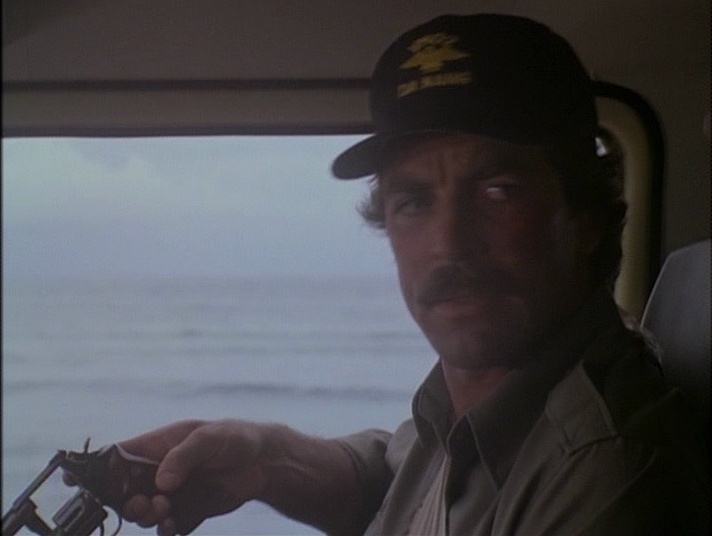
Magnum, P.I. season 3 (1982)

The third season of Magnum, P.I. went to air in late 1982 and early 1983.

More than most television series a private eye series has to have a charismatic lead actor. Magnum, P.I. has no problems there. Tom Selleck’s middle name is charisma.

If it’s going to keep us interested over multiple seasons such a series also has to have a protagonist who is more than just a stereotype. And while Thomas Magnum might initially seem like a stereotyped self-centred playboy it’s soon evident that he’s actually a pretty complicated guy. Thomas went through some very bad stuff in Vietnam and he’s still haunted by it. That gives the character a touch of darkness and a touch of pathos.

What makes this series unusual for a P.I. series is that its great strength is the ensemble acting. There are four regular characters, all of them different and all of them interesting. And the interactions between them are subtle and complex. Magnum is a guy who is only too happy to shamelessly manipulate his old wartime buddies TC and Rick into giving him outrageous amounts of help in his cases, often at considerable expense, inconvenience and even danger to themselves. But he’d do the same for them if they needed help. He’s not really selfish. He is a very demanding friend, but he’s a loyal one as well. Magnum can be childish and petulant, and then turn on a dime and behave in a noble and generous way. And as much as Higgins irritates him, when the chips are down he’ll stand by Higgins just as he’ll stand by his wartime buddies. Magnum is a flawed hero but he’s a hero just the same.

As in the earlier seasons there’s an obsessive preoccupation with the shadow that the past is able to cast over the present. The strength of this series is that this theme is explored so often, but never in quite the same way twice. In fact it’s a series that is constantly trying to take familiar themes and give them an original twist. Sometimes this is risky, but it’s a risk worth taking.

One important point has to be made about watching TV series on DVD. There’s a real danger of indulging in too much binge-watching. If you’d been a Magnum, P.I. fan back in the 80s you’d have seen the 162 episodes over the course of eight years. If you watch too many episodes (and this applies to every TV series) in too short a space of time you can overdose. This is important particularly when you get to the third season of a series. 

Like Hawaii Five-O this series tends to blend crime and espionage elements, sometimes in the same episode. It’s one of the things that makes Magnum, P.I. a slightly unusual private eye series.

Thomas Magnum is a guy who appears to be big, loud and dumb but he isn’t. He’s smart and he’s sensitive. And you can say the same thing about Magnum, P.I. as a series. Like Magnum the man it’s deceptive. It seems superficial but actually it’s thoughtful and it has some substance. It’s intelligent fun.

Magnum, P.I. is also incredibly stylish. Like Mannix it has that glossy polished look that American television perfected in the late 60s.

This seems at first to be a traditional private eye series but Magnum, P.I. often takes unexpected risks and unconventional approaches. More surprisingly, the risks usually pay off. It really has a distinctive flavour of its own. The polished and very stylish surface has led to its being very underrated. And in its third season it’s still taking risks.

Episode Guide

Did You See the Sun Rise? opens the season in a very impressive manner. It’s one of the many Vietnam-related episodes and it’s one of the best. A guy Magnum served with in Vietnam is convinced that a Russian named Ivan is out to kill him. Ivan had been attached to the North Vietnamese Army and Magnum and his buddies had encountered him when they were P.O.W.s and he’s one nasty customer. But why would he be trying to kill one of them now? And why is Colonel Buck Green, a Marine intelligence officer for whom Magnum has an undying hatred, involved? This is a very dark episode (and Magnum, P.I. had some very dark moments).

In The Eighth Part of the Village Thomas picks up a carton of books from the docks for Higgins. But the carton doesn’t contain books, it contains a young Japanese woman named Asani. She is the daughter of a man named Sato, a Japanese officer Higgins had befriended during the war. But why are a couple of hoodlums now trying to kill Thomas? And why is it so hard to find Asani’s husband who is supposed to be in Honolulu? Not to mention Asani’s stories of the cruelty of her father, even though Higgins assures Magnum that Sato is a very kind and honourable man. It’s a decent episode.

In Past Tense TC’s chopper is skyjacked and used in a daring prison escape and TC and Higgins find themselves held hostage on a small island by a bunch of desperadoes. The question is why a small-time white-collar criminal nearing the end of his sentence would stage a violent prison break, and what does it have to do with Magnum? Magnum will have to find the answer to both questions. A good episode.

There are quite a few Magnum episodes dealing with Thomas’s nightmare memories pf the Vietnam War. In Black on White it’s Higgins who has to confront such memories. He was in Kenya in 1953 during the Mau Mau Rebellion. Lots of terrible things occurred at that time and one of those things involved his regiment. Now three members of the regiment have been murdered, by the same methods the Mau Mau used. A certain member of the regiment, Edwin Clutterbuck by name, is on the list to be killed. And so is Higgins. But why? This is a welcome change from the Vietnam episodes although it explores similar themes. Some thing you just can’t ever forget. A very good episode.

Flashback is a dream episode. Most of the episode is one long extended dream sequence. This is the kind of thing that is usually best avoided but in this instance it’s done very cleverly and with style and wit. Magnum wakes up to find that it’s 1936 and his client has just arrived in Hawaii, by flying boat. Her father is going to be charged with murder. Magnum has to prove his innocence. He has T.C. and Rick to help him, only they’re not quite the same people that they are in 1982. Similar, but not quite the same. He has Robin Masters’ car, only now it’s a 1927 Bugatti. Magnum knows it’s a dream. The viewer knows it’s a dream. But it’s a dream that has unexpected significance. A clever idea superbly executed, and it looks fabulous with the 1930s cars, planes and fashions. It’s offbeat episodes such as this that make this such an intriguing series.

In Foiled Again Higgins becomes reacquainted with an old enemy from his school days, and there is no hatred that can compare to the hatreds formed in schooldays. He also becomes reacquainted with an old love from the same period of his life, and these two encounters lead to disaster. A good episode. 

In Mr. White Death an ageing professional wrestler by that name (played by Ernest Borgnine) saves Magnum from being beaten up. The wrestler loses his job and his apartment as a result so Magnum puts him up in the guest house. You’d expect Higgins to be appalled but amazingly he and Mr White Death get on like a house on fire. The wrestler wants Magnum to find his long-lost son. Magnum becomes suspicious that there’s more to it, and there is, but the plot twists are genuinely clever and offbeat. Ernest Borgnine is in fine form, Rick gets knocked unconscious every few minutes and it all builds into an emotional climax. This is vintage Magnum.

In Mixed Doubles Thomas and Rick are playing in a pro-am tennis tournament and Thomas likes the idea because he thinks he’ll be partnering an old flame, Ginger Grant, who’s now the top women’s tennis player in the world, But instead he has to partner an obnoxious brat named Carrie Reardon, a rising star on the women’s circuit. He has to partner because she’s been threatened and he has to act as her bodyguard. The case gets complicated and Magnum’s personal life gets mixed up in it as well. It’s another Magnum episode dealing with the fact that we can never quite escape the past and we can’t put it right either. Quite a good episode.

With Almost Home we have another episode dealing with the past. Magnum is hired by cocktail waitress Bridget Archer who wants to clear her father’s name. He was court-martialled by the Navy 40 years ago. Her case seems hopeless and Magnum knows the smart thing would be to put Bridget on the next plane back to Omaha, but Magnum does have a weird thing about the Navy and honour and all that sort of thing. As a result he has to deal with an enraged admiral and an annoyed gangster, and he manages to get the Ferrari stolen. It’s an episode that deals not just with the past but with conflicting loyalties and differing interpretations of honour, themes that this series often tackles. And in this case tackles very well. A very good episode.

In Heal Thyself a nurse named Karen whom Magnum knew in Nam is now a doctor and she may be facing a triple murder charge. Thomas is sure she’s innocent but she did crack up after Nam so that makes things more awkward for her. She’s not even sure herself that she’s innocent. This one has a decent mystery plot with multiple plausible suspects (including Karen herself). Another story with Vietnam flashbacks but it’s a good episode.

In Of Sound Mind a former client named MacLeish is killed in a plane crash and leaves his $50 million fortune to Magnum, but there’s a catch. Magnum has to find MacLeish’s killer. Not an original idea but it’s given some new twists and it’s executed with enormous wit and style. The ending is very very clever. A fun lighthearted episode, and a very very good one.

The Arrow That Is Not Aimed is typical Magnum, P.I. - you take a conventional private eye plot and then add some wildly unconventional elements. A valuable Japanese porcelain on its way to Robin Masters is stolen. What’s unconventional is that it was stolen by ninja, and the courier was a samurai named Tozan and he’s going to commit ritual suicide if the plate is not recovered. Magnum learns about the samurai code of honour, and Tozan learns a few things about himself as well. A very good episode.

In Basket Case Magnum and T.C. are coaching rival kids’ basketball teams and Magnum has a secret weapon - a girl named Willie. But Willie has a few secrets. This is an interesting low-key episode focused on questions of loyalty and trust. It avoids sentimentalising and works surprisingly well.

The Birdman of Budapest is a mad Hungarian ornithologist and Magnum has to find him so that Robin Masters’ old high school English teacher Elizabeth can interview him for her book on ornithology. But there’s something to this story that Magnum doesn’t know. And Magnum has to find the ornithologist before Higgins is driven to murder. There’s also a homicidal macaw. Quite a good episode.

Magnum gets married in I Do? but of course you’re going to suspect that it’s not quite so straightforward. And it isn’t. In between squabbling with his new bride Marsha MacKenzie he has to find out why so much money has gone missing from the MacKenzie corporation. It’s not a complicated plot but it’s well executed and the repartee between Magnum and Marsha is amusing.

Forty Years from Sand Island is another story dealing with the past. Forty years earlier Japanese-Americans were interned in a camp on Sand Island in Hawaii. One night something terrible happened, and that long-ago event could get Higgins killed. Maybe sometimes it’s best to forget the past but some things can’t be forgotten. Another strong episode.

In Legacy from a Friend Magnum acquires a partner. Sort of. Very reluctantly. It starts with Magnum’s friend Marcus drowning. Only that doesn’t make sense. Marcus was a lifeguard. And always penniless, so where did he get the very expensive brand new sports car he’d been driving? Then Tracy turns up with a story that she was Marcus’s fiancée but then she says she’s an undercover cop but Tracy changes her story numerous times. Either way she forces herself on Magnum as a partner. The comic interchanges between Magnum and Tracy are the highlight of the episode but there’s also a decent plot which will eventually explain the sports car, and Marcus’s death. Magnum P.I. is at its best in the darker episodes but the more comic stories such as this can be quite delightful. And while Tracy is irritating she’s also likeable even if as a detective she can be more of a hindrance than a help.

Two Birds of a Feather is another episode with Vietnam flashbacks. During the war Magnum was trapped by Vietcong forces in Cambodia and he only escaped because a Marine Corps Phantom pilot, Sam Houston Hunter, bent the rules and gave him air support. Now Hunter has crashed a light plane in Robin Masters’ tidal pool. Magnum and Hunter never actually met in Nam but they both have a weird feeling that they should know each other. What puzzles Magnum is what he found in the wreckage of the light plane.

Sam Hunter is the kind of character who pops up regularly in Magnum, P.I. - he’s a nice guy but he’s a dreamer. One of his dreams is connected to the fateful day in Nam more than a decade earlier. This is an unusual episode in that Magnum plays virtually no part in the story. Maybe there were thoughts of a spin-off series featuring Sam Hunter?  It’s at best an OK episode (the plot is a bit thin). Magnum, P.I. without Magnum falls a bit flat. There are some good flying sequences though.

The guest star in ...By Its Cover is Stuart Margolin, best known as Angel in The Rockford Files. And in this episode he plays Rod Crysler, a character who is simply a slightly older version of Angel. But it has to be said that he’s the sort of character Margolin plays incredibly well. Rod was in Nam with Magnum. Now he sells encyclopædias and he persuades Magnum to deliver a crate of encyclopædias for him, except that the crate actually contains marijuana. Rod has an explanation for this. He has an explanation for everything. Magnum should just call Five-O but he owes Rod from Nam and maybe Rod isn’t lying this time. There’s some comic relief provided by Rod’s parole officer who is really excited about getting involved in Magnum’s plan to get Rod out of trouble because she’s never had the chance to play at being a real cop. It’s basically a fun episode (and it does have a very Rockford Files flavour) and it works.

The Big Blow is a hurricane that is just about to hit Oahu. That however is not going to stop Higgins from going ahead with Masters’ spring equinox party, one of the highlights of the social season. The party attracts three unexpected guests - two prison escapees one of whom has his pregnant wife in tow. There's also another complication that only Magnum knows about. He has a plan for dealing with that complication but it goes wrong. But that’s OK. He has another plan. But first there’s the problem of the two escaped convicts with guns. And there’s also the problem of the hurricane, and the phone lines being down and the power being out. There are both thriller and mystery elements in this story and both are handled pretty well. An excellent episode.

Faith and Begorrah begins with Magnum tailing someone when he runs into an Irish priest and the priest looks a bit like Higgins. So Magnum tells Higgins about the encounter and Higgins realises, to his horror, that his half-brother Father Paddy McGuinness is in Hawaii. It’s not just that Father Paddy is a somewhat disreputable priest with a fondness for whisky. The real embarrassment is that Father Paddy is illegitimate. That sort of thing bothers Higgins and it bothers him even more that Magnum knows about it. Father Paddy is looking for a relic stolen from his church in Northern Ireland and he blames the British and then another relic, this one a British relic in the keeping of Higgins, is stolen. Meanwhile Magnum is trying desperately not to find evidence that a boxer’s wife has been unfaithful.

This is a story in which not much happens and yet quite a lot happens. There’s no great mystery to be solved. What happens is all character stuff. It’s all very light-hearted. It’s the kind of quirky episode that makes this series so fascinating. I liked it.

Final Thoughts

Along with Mickey Spillane’s Mike Hammer, Mannix, The Rockford Files and Harry O this is one of the great American private eye series. Very highly recommended. 

I’ve also reviewed season one and season two.

Saturday, 29 January 2022

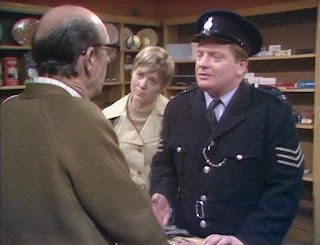
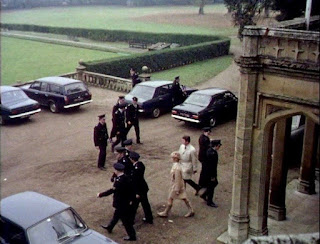
Softly Softly Task Force, season 1 (1969)

Softly Softly Task Force (1969-1976) is a British TV cop series with an interesting history. In the early 60s Z Cars had been a very popular cop show on the BBC and in 1966 a new series was spun off from it, called Softly Softly. Which was also very successful and ran until 1969. In 1969 the BBC launched a new police series and since the new series included three of the characters from the previous series it was given the name Softly Softly Task Force. In 1971 Softly Softly Task Force gave birth to yet another spin-off, Barlow At Large. And in 1976 came a docudrama series in which two of the characters from Softly Softly Task Force, Barlow and Watt, investigate famous historical crimes. Meanwhile Z Cars kept running until 1976.

In 1969 Softly Softly Task Force was considered to be unusually realistic and gritty and hard-edged. Then in 1974 The Sweeney radically changed both the look and the tone of British cop shows and suddenly shot-in-the-studio series like Softly Softly Task Force seemed quaint and stodgy. That’s a bit unfortunate because at the time Softly Softly Task Force really did mark a step forward in the portrayal of the police in a more realistic and less romanticised light. It was ground-breaking in some ways. In 1969 it was unusual for a TV cop series to show the police as fallible, with investigations occasionally ending in failure and tragedy.

It was also ground-breaking in showing the police occasionally in a negative light, with incompetent and lazy officers making a hash of cases.

Intriguingly, in the first episode we see the police entering premises illegally, conducting illegal searches, intimidating suspects, denying suspects their legal rights and arresting a suspect even though their only evidence was obtained illegally. In 1969 all of this seemed to be taken for granted. Britain was a strictly regulated society and the police could do pretty much whatever they wanted.

It’s also noticeable that every single criminal in Softly Softly Task Force is working class.

The difference in tone between this series and The Sweeney is extraordinary when you consider that The Sweeney began its run only five years later and the two series ran concurrently for a while. Softly Softly Task Force not only has none of the violence and action of The Sweeney, it represents an entirely different approach to the TV cop show with its emphasis on routine everyday policing and the emotional strains faced by police officers.

Episode Guide

Softly Softly Task Force begins with the arrival (in the first episode, Arrival) of Detective Superintendent Barlow (Stratford Johns) to take up his duties at the Thamesford Constabulary. Barlow had featured in both of the earlier series referred to above. He is shocked by the laziness, stupidity and incompetence of the officers under his command.

A little boy has gone missing and for hours nothing has been done. That all changes when the one competent officer at the station decides it would be a good idea to get Detective Superintendent Barlow out of bed to let him know what’s happening. Five minutes later Barlow arrives and takes charge but it may already be too late for that little boy.

Both Barlow and the Chief Constable are very dissatisfied with the handling of the case. They decide on a radical re-organisation, with two task forces (under the overall command of Barlow) to handle serious crimes. The personnel will be seconded from the normal divisions making up Thamesford Constabulary.

The second episode sees the re-organisation well underway. The one problem is that there is no-one competent to take charge of one of the task forces. The Chief Constable decides to bring in an outsider, John Watt, who will be promoted to Detective Superintendent. Watt has worked with Barlow before (and had been a regular character in both Z Cars and Softly Softly). Watt decides to conduct an exercise but it becomes more than an exercise when a serious stabbing takes place. The woman victim is in critical condition and may die. It could become a murder investigation.

It should be a straightforward investigation but it goes badly. There’s something the police are missing. The solution involves subject matter that was considered daring at the time and it’s an episode that almost certainly could not be made today without radical changes to make it politically correct.

In Diversion John Watt has planned an operation to catch a sneak thief who has been stealing from houses. It’s a very trivial crime but it’s more in the nature of a training exercise than anything else. It becomes much more exciting when an armed robbery takes place in the middle of the operation. This is Softly Softly Task Force at its best, very much in police procedural mode. Both the police and and the audience know the identity of the robbers and know where they are. The tricky part is going to be apprehending an armed robber without bloodshed.

The Spoilt Ones
deals with children with serious problems at home. This is a series that was consciously trying to grapple with difficult social problems. In this case it’s the problem of bad parenting. This is the sort of thing can veer into preachiness. Softly Softly Task Force tends to give us extreme examples but at the same time tries to take the line that the simple obvious solutions won’t necessarily work. A very depressing episode, depressing in that characteristic English style familiar to anyone who’s seen any of the English kitchen sink melodramas of the early 60s. It’s a good story, but harrowing.

To Protect the Innocent… once again deals with children. A prisoner wants a favour from Barlow and he has something to offer in return. What the prisoner wants is for the police to find his wife. Barlow shows an uncharacteristic human side. There’s a child involved and the possibility that harm may come to that child. It’s another example of the series treating social problems as complex and difficult to solve.

In Any Other Night it’s New Year’s Eve. The Chief Constable plies his senior subordinates with alcohol in an effort to iron out the personal conflicts between them. His plan is going well until the Thamesford police station itself is robbed. A very embarrassing and annoying occurrence. This is a crime that has to be solved quickly and as usual in this series the method adopted is painstaking routine police work. As with most episodes this one combines police work on the streets with high-level police internal politics. Good episode.

The Aggro Boy deals with football hooligans. A bit too much pontificating and speechifying in this one.

Standing Orders sees Thamesford Constabulary caught in the middle in a labour dispute. Their problem is that they have to be seen as strictly neutral which means a low-key presence but at the same time they cannot allow any threat to persons or property. In Inspector Hawkins is the man on the spot and he discovers just how difficult remaining neutral can be. There’s no real crime to solve in this episode the focus being on the pressures brought to bear on the police in such a situation. Good episode.

In Private Mischief someone has been impersonating a police officer. This has the potential to cause Thamesford Constabulary a lot of embarrassment. The matter has to be handled delicately, especially if the impersonator turns out to be the person they suspect. And then things get really awkward, with Barlow and Watt in a very tricky situation. Good episode with some emphasis on the pressures that can be put on junior officers.

In Open and Shut Inspector Hawkins has a very simple murder to deal with, but Chief Superintendent Barlow doesn’t seem as pleased as you’d expect. It’s that witness’s statement that makes him uneasy, and the confession makes him even more uneasy. It has the kind of ending you occasionally get in this series, the kind of ending you don’t expect in a 60s cop show. Very good episode.

In Sprats and Mackerels Thamesford police are investigating an illegal immigration racket. A call to a domestic dispute provides a possible lead. Meanwhile John Watt is trying to get his love life organised. Woman Detective Constable Betty Donald goes undercover but her efforts are hampered by the over-protectiveness of her male colleagues. Just as she was having fun playing at being a sexy bad girl. John Watt and Inspector Hawkins come face to face with some of the moral quandaries involved in policing. Good episode.

Like Any Other Friday… starts with what seems like a routine burglary, with a few trinkets being stolen. But there’s a concern that maybe something else may have been stolen, something the police haven’t been told about, and that something might be a gun. Possibly more than one gun. Nothing upsets the British police more than the idea of criminals getting their hands on guns so this becomes a major operation. A good police procedural episode with Barlow and Watt having to handle the situation very carefully, and having to consider whether or not to issue firearms to the task force. As in a previous episode we learn that this is something that John Watt is very very reluctant to do.

In Power of the Press a reporter wants to do a story on Thamesford Constabulary and the Chief Constable has the nagging suspicion that the reporter is actually trying to uncover a scandal and to suggest that the police have been covering it up. The police have to deal with the matter before the reporter can file his story but they have no idea what the scandal might be about. But they’ll have to try, and Sergeant Jackson’s gifts for routine administrative work provide a valuable clue. This is a story about the way the press uses and abuses its power. It features a particularly slimy newspaperman. He fancies himself a very clever very devious fellow but Charlie Barlow can be pretty clever as well. A very good episode.

In Trust a Woman WDC Betty Donald, in the course of an enquiry about a missing au pair girl, comes across some information that could be very useful to Thamesford CID. The information comes from an informant but the informant is the criminal’s girlfriend. John Watt doesn’t like it very much. In his experience women informants in such a situation often back out at the last moment. So it’s a police procedural story about the trickiness of using informants, and to some extent it’s a story about the psychology of informants. And the psychology of criminals and the women who love them.

In The Hermit a gang of thieves is preying on old people. They’re stealing jewellery and antiques. Their latest target is an old man who has some very valuable silverware. The police get a lucky break. They learn that the thieves will be returning to the old man’s house. Barlow sees the opportunity to set a trap to catch not just the thieves but the people behind the racket. There is however a risk. Barlow thinks it’s worth it, John Watt is not so sure. The emphasis here is on the moral dilemma because we know that Watt’s fears are reasonable. Good episode.

The final episode in the season, Escort, gives the task forces a new challenge. They have to protect a visiting American senator. They face a job for which their training may not have prepared them, and things get out of hand. This is the first episode in which a member of Thamesford police carries a gun. Not a bad episode but it gets a bit political, which is always a mistake.

Final Thoughts

If you can accept that this is a police procedural series that also focuses heavily on the social dimensions of crime and the political dimensions of police work then there’s much to enjoy here. There’s some fine writing and some fine acting and Barlow is a wonderful character. Highly recommended.

Tuesday, 11 January 2022

Thriller - A Midsummer Nightmare and Death in Deep Water (1976)

The final two episodes of the Brian Clemens-created British Thriller anthology series went to air in May 1976.

Network in the UK released the compete series on DVD and thankfully they’e the original versions, not the later American versions which added excruciatingly bad extra scenes.

A Midsummer Nightmare

This episode starts with a prologue in which a young woman is murdered in the woods. After the opening credits the scene switches to London.

Jody Baxter (Joanna Pettet) is married to a private detective. They’re still in love but they’re separated because she wants to Be Her Own Person. Johnny (her husband) is off to Rome on a case. Jody offers to mind the store while he’s gone but he dismisses the idea out of hand. But Jody decides to play private detective anyway.

She manages to get herself a case and it’s a murder case. A murder that happened five years earlier (the one we saw in the pre-credits sequence). Arnold Tully (Freddie Jones) doesn’t want her to find out who murdered his daughter. He already knows that. He wants her to find the evidence that will convict the killer.

Detective Sergeant George Briggs (Brian Blessed) tells Jody that Tully is right. It was definitely Peter Ingram who murdered Annabella Tully. The police never had any doubts but they didn’t have enough evidence to be sure of getting a conviction. The case was never brought to trial because the police were hoping that eventually the evidence they needed would turn up.

Briggs, who is a jovial sort of fellow, is quite happy for Jody to investigate the case and he’s happy to offer her whatever co-operation she needs. He would very much like to see Peter Ingram behind bars.

What Briggs hasn’t told her is that Ingram wasn’t the only suspect.

It also turns out that Tully was Annabella’s uncle, not her father. He adopted her when her parents were killed.

Jody isn’t a trained detective but she’s married to one so she’s undoubtedly picked up a few pointers from her husband and she is intelligent and most of all she’s sceptical. She also knows her Shakespeare and she thinks that that might be useful in this case, with both the victim and most of the suspects being theatrical types. And she’d like to know why Annabella’s copy of A Midsummer Night’s Dream wasn’t found near her body.

She’s also in considerable danger. It’s a small town. Everybody knows everything that is going on, so the killer obviously knows there’s a private detective snooping around.

Jody is supposed to an American (this was an ITC series so there had to be an American in the cast). Joanna Pettet was English but raised in Canada so playing an American was no problem. Pettet’s career never really took off which is a pity. She was a decent actress and she does a fine job here.

Seeing Brian Blessed on screen is of course always a treat. Freddie Jones was wonderful at playing oddball characters and he’s excellent as Tully, still grieving for Annabella after five years.

For this instalment of Thriller Brian Clemens tuned out a very solid script with a good well-constructed mystery. The audience doesn’t know the identity of the killer and Clemens makes sure we’re kept in a state of uncertainty. There are two obvious suspects and there are other not-so-obvious but definitely possible suspects. There’s good suspense. We know Jody is playing a very dangerous game and she also doesn’t know who the killer is (she’s too sceptical to just automatically assume that it must be Ingram). We’re worried for her right from the start and we get more worried as the story progresses).

I was pretty sure I knew who the killer was, but I was wrong.

The consensus view is that Thriller was running out of steam by this point but I think A Midsummer Nightmare is actually pretty good.

Death in Deep Water

Death in Deep Water was the final episode of Thriller. Gary Stevens (Bradford Dillman) is on the run. He was going to testify against organised crime but changed his mind and decided to get out the United States. Now he’s living in a cottage in a little fishing village in England. He’s bored and going a bit stir-crazy but at least he’s pretty confident he’s safe.

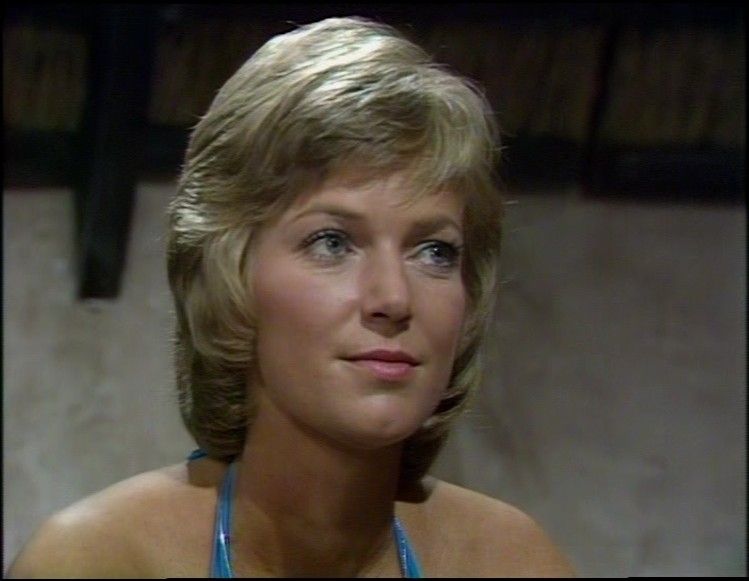
He isn’t bored any more after the blonde in the bikini shows up. She was going for a swim in the middle of a storm and she ended up at his cottage. She figures out who he is pretty quickly. The newspapers say he was a hitman. Since she knows so much he’s going to have to trust her. And he does trust her. He doesn’t know her name so he just calls her Blondie.

She’s married to a much older man. A very rich older man. Blondie likes money.

Of course Gary and Blondie begin an affair. And of course they fall in love. Blondie is not the sort of girl who is likely to just walk away from a rich husband. And now the rich husband is taking her away, to Nice. Permanently. Which means the end of the nice little affair with Gary. But there’s nothing to be done about it. As long as her husband is alive she won’t leave him. Of course if her husband was no longer alive she’d be very rich and could do whatever she wanted to.

While Gary and Blondie try to solve this conundrum another hitman has arrived in the village. Burton (Philip Stone) is there to kill Gary Stevens.

Suzan Farmer is very good as Blondie. Ian Bannen is also very good as Gary’s fisherman buddy Doonan. The problem is Bradford Dillman. He gives a rather lifeless performance, suggesting that he just wanted the pay cheque.

Philip Stone was an odd choice to play a hitman. He was a very competent actor and could play sinister rôles but he might have been more at home playing the sort of man who orders others to do his killing for him. The oddness of the casting does work in its own way. And I guess a hitman who looks more like a bank manager or a village pharmacist would be a pretty effective hitman. His American accent is however atrocious.

The script (as usual it was written by Brian Clemens) combines several ideas that aren’t exactly dazzlingly original but Clemens gives them some new touches and throws in some wonderful twists at the end.

Thanks to those twists Death in Deep Water is a pretty high note for the series to go out on.

Final Thoughts

The last season of Thriller is better than many people would have you believe and both A Midsummer Nightmare and Death in Deep Water are highly recommended.