The VCI boxed set containing all three Republic Dick Tracy serials (and I’m a huge fan of movie serials) which I bought recently includes as a bonus an episode of the 1950-51 Dick Tracy TV series which aired on the ABC network. It's a series I had never seen.
The episode in question is Hi-Jack, episode 16 of season one.
I don’t consider myself a huge Dick Tracy fan but I love the Republic serials and the 1940s RKO Dick Tracy movies so I guess maybe I am a bit of a Dick Tracy fan after all.
The episode was a disappointment, but it is an interesting example of some of the problems of very very early TV crime drama series. American television was developing rapidly and by 1955 was starting to become reasonably sophisticated, but series from the early 50s do tend to be clunky.
There were reasons for this. The half-hour TV drama is a distinctive format of its own, quite different from one-hour dramas and feature films. There was a real art to writing a successful half-hour drama. You really had to plunge the viewer straight into the action and you had to get on with it. It was essential not to waste time on sub-plots or irrelevant scenes that failed to advance the action. You would probably only have time for one major plot twist so it had to be a good one.
It’s hardly surprising that in 1950 these rules were not yet fully understood. Hi-Jack wastes a lot of time early on with a long boring completely irrelevant dialogue scene with no connection at all to the story. Once we get into the action there’s just not quite enough plot and there are no major twists. Even at a half hour it drags a bit.
The plot, such as it is, concerns a car-stealing racket. Which is a rather mundane case for someone like Dick Tracy (at least it would be a very mundane case for the Dick Tracy of the serials and the RKO movies). The bad guys are switching the engine and chassis numbers on stolen cars and they’re also planning to double-cross each other.
The villain is unfortunately rather colourless.
Another problem with early 50s U.S. TV is that it looks stodgy. This was possibly due more than anything else to the limitations of the medium at that time. TV sets had very small screens and picture quality was not good. There was little point in trying for artistic lighting effects or imaginative framing (even if there had been time for such luxuries which there wasn’t). Sets were very basic. These early TV shows looked cheap.
Of course it’s possible that this just happens to be a dud episode.
It doesn’t help that image quality is atrocious.
What seeing this episode has done for me is to increase my admiration for the achievements of American television in the late 50s. The improvement was staggering. Series like Decoy (1957), M Squad (1957) and Mickey Spillane’s Mike Hammer (1958) were to demonstrate just how good half-hour episodic television could be.
Dick Tracy was possibly just made too soon. Six or seven years later it might have been possible to make a truly excellent Dick Tracy TV series.
On the plus side the series does have Ralph Byrd, the definitive screen Dick Tracy. And that’s a major plus.
So overall more of a curiosity than anything else.
I’ve also reviewed a couple of the RKO movies - Dick Tracy, Detective (1945) and Dick Tracy vs Cueball (1946).
Friday, 1 September 2023
Wednesday, 2 August 2023
Man from Atlantis (TV-movie, 1977)
Man from Atlantis started life as a series of four made-for-TV movies in 1977. They were quite successful and NBC gave the go-ahead for a weekly series which lasted just 13 episodes. I haven’t seen the series but the consensus seems to be that it was nowhere near as good as the TV-movies.
Patrick Duffy starred. He would soon go on to major stardom in Dallas.
The premise is rather silly, but then if you start worrying about the silliness of the premises of science fiction movies and TV series you’ll pretty much have to give up on the genre altogether. I figures that if I can accept impossibilities like faster-than-light travel then I can accept a water-breathing man.
The man (later given the name Mark Harris) is found washed up on a beach. He is taken to hospital but all attempts to resuscitate him seem doomed to failure. Then Dr Elizabeth Merrill figures out the problem. This man breathes water! She insists that he should be thrown back in the ocean, whereupon he immediately revives.
But where does a water-breathing man come from? The Navy’s super-computer has the answer. He must be from Atlantis.
The Navy sees possibilities in this young man, as a weapon. Dr Merrill doesn’t want him used in that way. Mark is also not interested in being used in this way. Mark is eventually persuaded to carry out one mission. The Navy has lost a super-secret deep-sea research submarine. It’s lying at the bottom of the sea, 35,000 feet down. That’s no problem for Mark.
What Mark finds at the bottom of the sea is not what he expected. He finds himself a prisoner of sorts. And mixed up in a terrifying plan for world domination.
It was clearly intended from the start to make this a series of TV-movies so, quite sensibly, lots of questions are left unanswered. They did after all want people to watch the next movie in the hope of getting those answers.
Mark, very conveniently, has amnesia. He has no idea of his own origins. All he knows is that the sea is his home and that he understands the language of whales. Maybe he is an Altantean. If so, does Atlantis still exist? Is he the last surviving Atlantean? Where was Atlantis? Was it really a fabulously ancient highly advanced civilisation? We don’t know and Mark doesn’t know.
He is suspicious of the US Government (this was 1977 so it’s the era of 70s paranoia) but we’re left unsure what plans the Government has for Mark. Those plans might well be somewhat sinister.
His relationship with Dr Merrill remains unclear. She has obviously developed an emotional attachment to him but whether it’s a kind of displaced maternal affection or whether there’s a romantic elements to it, and possibly a physical attraction, is uncertain. Mark may have developed an attachment to her but that is less clear.
All of this offers potential for further development, which is a sound storytelling strategy in this context.
There’s an over-the-top mad scientist/diabolical criminal mastermind involved, which is always a good thing.
Visually it’s reasonably impressive for a TV production.
There’s some action but it probably needed a bit more and it definitely needed a bit more zing.
The biggest weakness is that there are not enough exciting underwater action scenes. Such scenes are pretty much an essential ingredient for such a series. What they really needed to do was to get hold of someone like John Lamb, the man who did the underwater photography for Sea Hunt and Voyage to the Bottom of the Sea. Lamb knew how to do that sort of stuff and make it look good on a tight television budget. As it stands the underwater sequences are OK but just a little disappointing.
The action climax also needed to be a bit more spectacular but there was of course a limit to what you could do on a 1970s TV budget.
Patrick Duffy is OK. He’s supposed to be a kind of alien so his slightly detached performance works well enough. Belinda J. Montgomery as Dr Merrill is an adequate female lead and does the idealistic doctor thing convincingly. Victor Buono makes a fine mad scientist.
The four original TV-movies have been released on DVD in the Warner Archive series and they look quite acceptable. The TV series has also had a DVD release. I believe the first TV-movie is also available on Blu-Ray.
Man from Atlantis isn’t great but it’s fairly entertaining and just interesting enough that I’ll probably watch the second TV-movie.
Patrick Duffy starred. He would soon go on to major stardom in Dallas.
The premise is rather silly, but then if you start worrying about the silliness of the premises of science fiction movies and TV series you’ll pretty much have to give up on the genre altogether. I figures that if I can accept impossibilities like faster-than-light travel then I can accept a water-breathing man.
The man (later given the name Mark Harris) is found washed up on a beach. He is taken to hospital but all attempts to resuscitate him seem doomed to failure. Then Dr Elizabeth Merrill figures out the problem. This man breathes water! She insists that he should be thrown back in the ocean, whereupon he immediately revives.
But where does a water-breathing man come from? The Navy’s super-computer has the answer. He must be from Atlantis.
The Navy sees possibilities in this young man, as a weapon. Dr Merrill doesn’t want him used in that way. Mark is also not interested in being used in this way. Mark is eventually persuaded to carry out one mission. The Navy has lost a super-secret deep-sea research submarine. It’s lying at the bottom of the sea, 35,000 feet down. That’s no problem for Mark.
What Mark finds at the bottom of the sea is not what he expected. He finds himself a prisoner of sorts. And mixed up in a terrifying plan for world domination.
It was clearly intended from the start to make this a series of TV-movies so, quite sensibly, lots of questions are left unanswered. They did after all want people to watch the next movie in the hope of getting those answers.
Mark, very conveniently, has amnesia. He has no idea of his own origins. All he knows is that the sea is his home and that he understands the language of whales. Maybe he is an Altantean. If so, does Atlantis still exist? Is he the last surviving Atlantean? Where was Atlantis? Was it really a fabulously ancient highly advanced civilisation? We don’t know and Mark doesn’t know.
He is suspicious of the US Government (this was 1977 so it’s the era of 70s paranoia) but we’re left unsure what plans the Government has for Mark. Those plans might well be somewhat sinister.
His relationship with Dr Merrill remains unclear. She has obviously developed an emotional attachment to him but whether it’s a kind of displaced maternal affection or whether there’s a romantic elements to it, and possibly a physical attraction, is uncertain. Mark may have developed an attachment to her but that is less clear.
All of this offers potential for further development, which is a sound storytelling strategy in this context.
There’s an over-the-top mad scientist/diabolical criminal mastermind involved, which is always a good thing.
Visually it’s reasonably impressive for a TV production.
There’s some action but it probably needed a bit more and it definitely needed a bit more zing.
The biggest weakness is that there are not enough exciting underwater action scenes. Such scenes are pretty much an essential ingredient for such a series. What they really needed to do was to get hold of someone like John Lamb, the man who did the underwater photography for Sea Hunt and Voyage to the Bottom of the Sea. Lamb knew how to do that sort of stuff and make it look good on a tight television budget. As it stands the underwater sequences are OK but just a little disappointing.
The action climax also needed to be a bit more spectacular but there was of course a limit to what you could do on a 1970s TV budget.
Patrick Duffy is OK. He’s supposed to be a kind of alien so his slightly detached performance works well enough. Belinda J. Montgomery as Dr Merrill is an adequate female lead and does the idealistic doctor thing convincingly. Victor Buono makes a fine mad scientist.
The four original TV-movies have been released on DVD in the Warner Archive series and they look quite acceptable. The TV series has also had a DVD release. I believe the first TV-movie is also available on Blu-Ray.
Man from Atlantis isn’t great but it’s fairly entertaining and just interesting enough that I’ll probably watch the second TV-movie.
Thursday, 6 July 2023
The Avengers - The Interrogators
The Interrogators is a very fine Tara King episode of The Avengers, written by Richard Harris and Brian Clemens and directed by Charles Crichton. It went to air in January 1969.
I’ve always been a fan of the Tara King era and I’ve always enjoyed Linda Thorson’s performances.
This one has a very solid plot with some nice misdirection. At first we think we know what is going on. A British agent is being mercilessly interrogated by the bad guys. The chief villain is a British officer named Colonel Mannering (Christopher Lee) but we’re pretty sure he’s really a traitor working for a foreign government.
And then comes the first twist and we question everything we think we know. There will be more twists which will keep us wondering just how much we really know.
The British agent doesn’t break under torture, but one of his contacts gets assassinated. We’re not really sure how the bad guys got the information.
Mother is perplexed. Nothing seems to add up. There has to be a leak somewhere.
Tara thinks she’s found a vital clue. It’s a cigarette stub, with a very unusual tobacco blend.
Tara will end up being interrogated as well, but whether the interrogation is carried out by the good guys or the bad guys is still open to question. Tara certainly doesn’t know at this stage.
There’s a reasonable amount of action with Tara having some decent fight scenes. Steed gets to use his armoured bowler hat.
There are plenty of surreal touches. The music guy and the balloon seller are highlights. We get to see a lot of Mother in this story and Patrick Newell is in sparkling form. As usual the meetings with Mother take place in bizarre settings.
Christopher Lee provides some real menace but some nice ambiguity as well. It’s a vintage Christopher Lee performance. The acting overall is excellent and the sheer hopelessness and foolishness of the British agents under interrogation, determined to follow orders without exercising the slightest degree of intelligence, adds some amusement.
Charles Crichton directs with energy and style.
Mostly this episode works because it strikes the perfect balance. The script works as a clever spy thriller story, there is genuine suspense and mystery, and just enough outlandishness and lightheartedness. It’s a Tara King episode that stacks up quite favourably against the best of the Emma Peel episodes.
The Interrogators is highly recommended.
I’ve always been a fan of the Tara King era and I’ve always enjoyed Linda Thorson’s performances.
This one has a very solid plot with some nice misdirection. At first we think we know what is going on. A British agent is being mercilessly interrogated by the bad guys. The chief villain is a British officer named Colonel Mannering (Christopher Lee) but we’re pretty sure he’s really a traitor working for a foreign government.
And then comes the first twist and we question everything we think we know. There will be more twists which will keep us wondering just how much we really know.
The British agent doesn’t break under torture, but one of his contacts gets assassinated. We’re not really sure how the bad guys got the information.
Mother is perplexed. Nothing seems to add up. There has to be a leak somewhere.
Tara thinks she’s found a vital clue. It’s a cigarette stub, with a very unusual tobacco blend.
Tara will end up being interrogated as well, but whether the interrogation is carried out by the good guys or the bad guys is still open to question. Tara certainly doesn’t know at this stage.
There’s a reasonable amount of action with Tara having some decent fight scenes. Steed gets to use his armoured bowler hat.
There are plenty of surreal touches. The music guy and the balloon seller are highlights. We get to see a lot of Mother in this story and Patrick Newell is in sparkling form. As usual the meetings with Mother take place in bizarre settings.
Christopher Lee provides some real menace but some nice ambiguity as well. It’s a vintage Christopher Lee performance. The acting overall is excellent and the sheer hopelessness and foolishness of the British agents under interrogation, determined to follow orders without exercising the slightest degree of intelligence, adds some amusement.
Charles Crichton directs with energy and style.
Mostly this episode works because it strikes the perfect balance. The script works as a clever spy thriller story, there is genuine suspense and mystery, and just enough outlandishness and lightheartedness. It’s a Tara King episode that stacks up quite favourably against the best of the Emma Peel episodes.
The Interrogators is highly recommended.
Friday, 9 June 2023
Lost in Space (TV tie-in novel)
Lost in Space by Dave van Arnam and Ron Archer is as its name suggests a TV tie-in novel inspired by the classic TV series.
One intriguing thing about TV tie-in novels is that some are very close in spirit to the TV series while others are quite different. Some were commissioned at a time when only one or two episodes had gone to air. The novels sometimes reflected the original concept for the series, rather than the way the series actually turned out.
In this case the series premiered in 1965 and the novel was published in 1967 so I can only assume that the reason it differs so radically from the series is that it was a conscious decision on the part of the writers.
It is however worth observing at this point that Lost in Space was not conceived of as a silly goofy kids’ show. If you watch the pilot episode (No Place to Hide) or, even more to the point, the first few episodes of season one then it is plausible that the authors of the novel decided to make that very early version of the series the basis for their novel.
It’s obvious that the authors were attempting to write not just serious science fiction, but Big Ideas science fiction.
Some of the characters also differ markedly from their television counterparts. Especially Dr Smith. The Dr Smith of the novel is a serious scientist and he’s not the least bit lazy. He’s also not especially treacherous. He’s not even all that cowardly. He does have some megalomaniacal tendencies, which the TV version of the character doesn’t really have, at least not to anywhere near the same extent.
The authors also decided that the Robot would be groping towards acquiring independent decision-making abilities, which is certainly not the case in the TV version.
It’s also obvious that the only characters in whom the authors are interested are Dr Smith and Professor Robinson, and to a much lesser extent Don West and the Robot. Maureen Robinson becomes a very minor character. Will, Penny and Judy are even more minor characters. I suspect that the authors marginalised Will and Penny because they didn’t want to be seen as writing a science fiction novel for kids.
There is some of the familiar verbal sparing between Dr Smith and the Robot but the relationship between the two is overall quite different. In the novel the Robot’s function is not to provide comic relief. The relationship between Professor Robinson and Dr Smith is very different.
One positive thing about the novel is that it takes advantage of a huge advantage that novels have over TV series - the ability to operate on a truly epic scale. The novel takes the form of a series of three linked short stories and not one of those stories could have been attempted with a 1960s television budget.
In the first story the crew of the Jupiter II find a city that seems to have been home to an advanced civilisation but the planet is now deserted. Deserted, apart from a large number of robots and a central computer, all of which are dedicated to maintaining the city for the benefit of its non-existent inhabitants. The first mystery to be solve is obviously the lack of living inhabitants. There’s a second mystery - the central computer is hiding something very important and appears to be hopelessly conflicted over its own deceptions. It is now neurotic and guilt-ridden.
In the second story our spacefarers find a planet which is home to intelligent life, but it seems to take the form of a kind of hive mind.
The third story is even more ambitious. Our space adventurers find a vast city which turns out to be rather old. Billions of years old. And the history of this planet is somehow intertwined with Earth’s history and its destiny may be linked to Earth’s as well.
And Dr Smith believes he has finally gained what he aways wanted - the power to be a galactic emperor. Of course he’ll need an empress, and he feels that Judy Robinson would be an ideal choice. The prospect of marriage between Dr Smith and Judy is certainly something you wouldn’t have seen in the TV series,
If you’re looking for a novel that captures the feel of the TV series then you’re going to be pretty disappointed. About the only things it really has in common with the series are the names of the characters and the name of the spaceship. If that bothers you then you definitely should avoid the novel.
If you approach it merely as a science fiction novel then it’s not too bad. It grapples with big ideas with reasonable success. If you’re content with that then it’s not a bad read.
So I can’t really say whether I recommend it or not - it depends so much on what you’re looking for.
I’ve mentioned the origins of the series. I’ve reviewed the pilot episode Lost in Space - No Place to Hide and the first few episodes of the first season and they’re very much worth seeing as a glimpse of what the TV series could have been like.
One intriguing thing about TV tie-in novels is that some are very close in spirit to the TV series while others are quite different. Some were commissioned at a time when only one or two episodes had gone to air. The novels sometimes reflected the original concept for the series, rather than the way the series actually turned out.
In this case the series premiered in 1965 and the novel was published in 1967 so I can only assume that the reason it differs so radically from the series is that it was a conscious decision on the part of the writers.
It is however worth observing at this point that Lost in Space was not conceived of as a silly goofy kids’ show. If you watch the pilot episode (No Place to Hide) or, even more to the point, the first few episodes of season one then it is plausible that the authors of the novel decided to make that very early version of the series the basis for their novel.
It’s obvious that the authors were attempting to write not just serious science fiction, but Big Ideas science fiction.
Some of the characters also differ markedly from their television counterparts. Especially Dr Smith. The Dr Smith of the novel is a serious scientist and he’s not the least bit lazy. He’s also not especially treacherous. He’s not even all that cowardly. He does have some megalomaniacal tendencies, which the TV version of the character doesn’t really have, at least not to anywhere near the same extent.
The authors also decided that the Robot would be groping towards acquiring independent decision-making abilities, which is certainly not the case in the TV version.
It’s also obvious that the only characters in whom the authors are interested are Dr Smith and Professor Robinson, and to a much lesser extent Don West and the Robot. Maureen Robinson becomes a very minor character. Will, Penny and Judy are even more minor characters. I suspect that the authors marginalised Will and Penny because they didn’t want to be seen as writing a science fiction novel for kids.
There is some of the familiar verbal sparing between Dr Smith and the Robot but the relationship between the two is overall quite different. In the novel the Robot’s function is not to provide comic relief. The relationship between Professor Robinson and Dr Smith is very different.
One positive thing about the novel is that it takes advantage of a huge advantage that novels have over TV series - the ability to operate on a truly epic scale. The novel takes the form of a series of three linked short stories and not one of those stories could have been attempted with a 1960s television budget.
In the first story the crew of the Jupiter II find a city that seems to have been home to an advanced civilisation but the planet is now deserted. Deserted, apart from a large number of robots and a central computer, all of which are dedicated to maintaining the city for the benefit of its non-existent inhabitants. The first mystery to be solve is obviously the lack of living inhabitants. There’s a second mystery - the central computer is hiding something very important and appears to be hopelessly conflicted over its own deceptions. It is now neurotic and guilt-ridden.
In the second story our spacefarers find a planet which is home to intelligent life, but it seems to take the form of a kind of hive mind.
The third story is even more ambitious. Our space adventurers find a vast city which turns out to be rather old. Billions of years old. And the history of this planet is somehow intertwined with Earth’s history and its destiny may be linked to Earth’s as well.
And Dr Smith believes he has finally gained what he aways wanted - the power to be a galactic emperor. Of course he’ll need an empress, and he feels that Judy Robinson would be an ideal choice. The prospect of marriage between Dr Smith and Judy is certainly something you wouldn’t have seen in the TV series,
If you’re looking for a novel that captures the feel of the TV series then you’re going to be pretty disappointed. About the only things it really has in common with the series are the names of the characters and the name of the spaceship. If that bothers you then you definitely should avoid the novel.
If you approach it merely as a science fiction novel then it’s not too bad. It grapples with big ideas with reasonable success. If you’re content with that then it’s not a bad read.
So I can’t really say whether I recommend it or not - it depends so much on what you’re looking for.
I’ve mentioned the origins of the series. I’ve reviewed the pilot episode Lost in Space - No Place to Hide and the first few episodes of the first season and they’re very much worth seeing as a glimpse of what the TV series could have been like.
Thursday, 25 May 2023
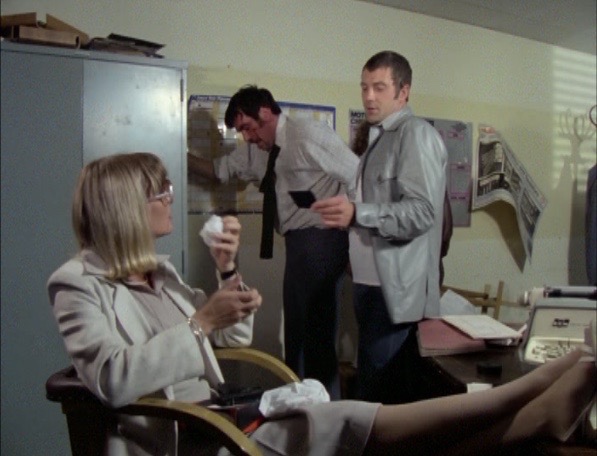
The Professionals season 3 (1979)
The mid-70s witnessed a revolution in British television. It started with seasons three and four of Special Branch but the series most associated with this revolution was The Sweeney. Shooting on video in the studio was out. Everything had to be shot on location, on 35mm film. The emphasis henceforward was on action, which usually meant violent action. Brian Clemens was not unaware of this trend and had taken his first tentative steps in this new direction with The New Avengers. For his next project Clemens decided to go all-out. He would out-Sweeney The Sweeney. That new project would become The Professionals.
The Professionals certainly attracted attention. And outrage. It wasn’t just the violence. It’s a series about a British counter-terrorist counter-espionage squad, CI5, that quite openly flouts the law.
The Professionals was made in five separate production blocks between 1977 and 1983 and screened as five seasons over the same period, but the production blocks and the seasons do not coincide at all. There was no attempt to screen the episodes in the order in which they were made. The 1979 third season is a mixture of episodes from the second and third production blocks.
The cast remained unchanged from season two - Gordon Jackson as CIA chief George Cowley with Lewis Collins and Martin Shaw as Bodie and Doyle, his two top agents. The characterisations haven’t changed either. Cowley is as ruthless as ever with a fine disregard for everything except getting the job done. Ex-mercenary Bodie is pretty much an ice-cold killer, although with a sense of humour. Doyle is equally tough but more sensitive, and is the only one of the trio with what you might call a fully developed conscience.
The stories haven’t changed a great deal either. CI5 battles spies and international criminals but their main focus is combating terrorism.
There’s enough action and mayhem to ensure that the viewer will overlook any deficiencies in the scripts. And for the most part the scripts are solid and tight.
The Professionals was intended as pure high-octane entertainment so don’t expect any philosophical musing or too much in the way of subtlety. On occasions the series does confront ethical issues but this is not Callan, or even Danger Man. If you’re looking for a series that offers provocative intellectual insights into the morality of espionage this is not that series. The Professionals offers car chases, gun battles and explosions.
But the action is handled with style and energy.
Episode Guide
The Purging of CI5 was a logical enough choice for a season opener, with lots of action, lots of explosions and lots of excitement. Someone is trying to destroy CI5. Their plan seems to be to kill every last CI5 agent, including Cowley. And they seem quite capable of doing so.
This episode is quite reminiscent of the excellent 1969 Callan episode Let's Kill Everybody. In fact the premise is more or less identical. It’s not a bad episode.
In Backtrack CI5 have to stop an arms smuggling operation. They have a witness who might be useful, if they can keep him alive. They have to follow the trail of evidence back to a burglary. That burglar found something crucial. Bodie and Dole have to try out their own skills as burglars.
A typical but very entertaining episode with Cowley being particularly ruthless.
Stopover starts with a British agent who has just escaped from the Khmer Rough. He has some interesting information about a high-level defector. Of course there are twists. A solid enough plot.
In this episode there’s plenty of focus on the tense relationship between Cowley on the one hand and Bodie and Doyle on the other. They feel that Cowley is concealing vital information from them, forcing them to work in the dark. And they’re right. And they resent it, understandably. One of the best episodes of the season.
Dead Reckoning starts with an exchange of agents by the British and the Bulgarians. The British got double-agent Stefan Batak as their part of the deal. The arrangement was that the deal was to be kept secret. There is a complication - Batak’s daughter Anna who lives in London. She was all set to go to Bulgaria to visit her father in prison.
There are the usual betrayals and counter-betrayals and complex plot twists. Cowley is getting plenty of information out of Batak. He thinks the information is accurate, but he still isn’t certain. And then disaster strikes. Could Anna be an assassin? Or is she an innocent pawn?
Doyle takes some film and somebody is very keen to take it away from him. The trouble is that the film doesn’t show anything that could possibly be useful.
A nicely cynical twisted spy thriller plot. A very good episode.
The Madness of Mickey Hamilton starts with an attempted political assassination but the viewer already has reason to suspect that something else is going on. CI5 however are sure it was an attempt to kill an African diplomat. If they’d realised earlier that were barking up the wrong tree disaster might have been averted, but that the theme of this episode - by the time anyone realises there’s a problem it’s too late.
A good episode with Doyle showing an unexpected touch of compassion. To everybody else the villain in this story is just a villain, but to Doyle’s he’s a victim.
A Hiding to Nothing involves the possibility of an assassination attempt on an Arab leader. And CI5 has a leak. There are lots of twists to come.
Again we see a subtle difference between Bodie and Doyle, with Doyle being just as tough but with more of a human side. Excellent episode.
In Runner a gun shop is robbed. Robbed of a variety of very nasty weaponry. CI5 assume it’s the prelude to a major campaign of violence, a campaign of political violence by an outfit referred to as the Organisation (presumably some offshoot of the IRA).
CI5 are being manipulated and Doyle is being manipulated. The Organisation is being manipulated. There’s a dangerous game being played, and the motivations are not clear. CI5 have to find out what those motivations are. They have a number of sources of possible information but those sources are not exactly friendly. A solid episode with a fiendishly complicated plot. Maybe too complicated. You’ll have to concentrate.
In the season finale Servant of Two Masters Bodie and Doyle have to investigate a possible traitor - George Cowley. This is by far the weakest episode of the season. You have to take seriously the idea that Cowley might be corrupt, and I don’t believe that a single viewer would have bought that for a second. If you don’t buy it the story becomes boringly predictable.
Final Thoughts
Overall a strong season with the season finale being the only dud episode. Other than that there’s plenty of excitement and mindless violence. Highly recommended.
The Professionals certainly attracted attention. And outrage. It wasn’t just the violence. It’s a series about a British counter-terrorist counter-espionage squad, CI5, that quite openly flouts the law.
The Professionals was made in five separate production blocks between 1977 and 1983 and screened as five seasons over the same period, but the production blocks and the seasons do not coincide at all. There was no attempt to screen the episodes in the order in which they were made. The 1979 third season is a mixture of episodes from the second and third production blocks.
The cast remained unchanged from season two - Gordon Jackson as CIA chief George Cowley with Lewis Collins and Martin Shaw as Bodie and Doyle, his two top agents. The characterisations haven’t changed either. Cowley is as ruthless as ever with a fine disregard for everything except getting the job done. Ex-mercenary Bodie is pretty much an ice-cold killer, although with a sense of humour. Doyle is equally tough but more sensitive, and is the only one of the trio with what you might call a fully developed conscience.
The stories haven’t changed a great deal either. CI5 battles spies and international criminals but their main focus is combating terrorism.
There’s enough action and mayhem to ensure that the viewer will overlook any deficiencies in the scripts. And for the most part the scripts are solid and tight.
The Professionals was intended as pure high-octane entertainment so don’t expect any philosophical musing or too much in the way of subtlety. On occasions the series does confront ethical issues but this is not Callan, or even Danger Man. If you’re looking for a series that offers provocative intellectual insights into the morality of espionage this is not that series. The Professionals offers car chases, gun battles and explosions.
But the action is handled with style and energy.
Episode Guide
The Purging of CI5 was a logical enough choice for a season opener, with lots of action, lots of explosions and lots of excitement. Someone is trying to destroy CI5. Their plan seems to be to kill every last CI5 agent, including Cowley. And they seem quite capable of doing so.
This episode is quite reminiscent of the excellent 1969 Callan episode Let's Kill Everybody. In fact the premise is more or less identical. It’s not a bad episode.
In Backtrack CI5 have to stop an arms smuggling operation. They have a witness who might be useful, if they can keep him alive. They have to follow the trail of evidence back to a burglary. That burglar found something crucial. Bodie and Dole have to try out their own skills as burglars.
A typical but very entertaining episode with Cowley being particularly ruthless.
Stopover starts with a British agent who has just escaped from the Khmer Rough. He has some interesting information about a high-level defector. Of course there are twists. A solid enough plot.
In this episode there’s plenty of focus on the tense relationship between Cowley on the one hand and Bodie and Doyle on the other. They feel that Cowley is concealing vital information from them, forcing them to work in the dark. And they’re right. And they resent it, understandably. One of the best episodes of the season.
Dead Reckoning starts with an exchange of agents by the British and the Bulgarians. The British got double-agent Stefan Batak as their part of the deal. The arrangement was that the deal was to be kept secret. There is a complication - Batak’s daughter Anna who lives in London. She was all set to go to Bulgaria to visit her father in prison.
There are the usual betrayals and counter-betrayals and complex plot twists. Cowley is getting plenty of information out of Batak. He thinks the information is accurate, but he still isn’t certain. And then disaster strikes. Could Anna be an assassin? Or is she an innocent pawn?
Doyle takes some film and somebody is very keen to take it away from him. The trouble is that the film doesn’t show anything that could possibly be useful.
A nicely cynical twisted spy thriller plot. A very good episode.
The Madness of Mickey Hamilton starts with an attempted political assassination but the viewer already has reason to suspect that something else is going on. CI5 however are sure it was an attempt to kill an African diplomat. If they’d realised earlier that were barking up the wrong tree disaster might have been averted, but that the theme of this episode - by the time anyone realises there’s a problem it’s too late.
A good episode with Doyle showing an unexpected touch of compassion. To everybody else the villain in this story is just a villain, but to Doyle’s he’s a victim.
A Hiding to Nothing involves the possibility of an assassination attempt on an Arab leader. And CI5 has a leak. There are lots of twists to come.
Again we see a subtle difference between Bodie and Doyle, with Doyle being just as tough but with more of a human side. Excellent episode.
In Runner a gun shop is robbed. Robbed of a variety of very nasty weaponry. CI5 assume it’s the prelude to a major campaign of violence, a campaign of political violence by an outfit referred to as the Organisation (presumably some offshoot of the IRA).
CI5 are being manipulated and Doyle is being manipulated. The Organisation is being manipulated. There’s a dangerous game being played, and the motivations are not clear. CI5 have to find out what those motivations are. They have a number of sources of possible information but those sources are not exactly friendly. A solid episode with a fiendishly complicated plot. Maybe too complicated. You’ll have to concentrate.
In the season finale Servant of Two Masters Bodie and Doyle have to investigate a possible traitor - George Cowley. This is by far the weakest episode of the season. You have to take seriously the idea that Cowley might be corrupt, and I don’t believe that a single viewer would have bought that for a second. If you don’t buy it the story becomes boringly predictable.
Final Thoughts
Overall a strong season with the season finale being the only dud episode. Other than that there’s plenty of excitement and mindless violence. Highly recommended.
Sunday, 30 April 2023
Thriller - three 1973 epidodes
A look at three episodes from Brian Clemens’ horror anthology series Thriller, one of the finest series of its type ever made. All three episodes originally aired in 1973.
The Colour of Blood
The Colour of Blood is the fifth episode of the first season of Thriller. Brian Clemens wrote the script, Robert Tronson directed.
The Carnation Killer, a crazed sex murderer who has killed at least nine women, has been caught. He has been found guilty but insane and he is now on his way to a hospital for the criminally insane. Everyone can breathe a sigh of relief.
Unfortunately Arthur Page (for that is the Carnation Killer’s real name) never reaches the hospital. The prison van crashes and Page escapes.
Page hopes to lose himself in the crowds at Waterloo Station. But first he must have a red carnation for his button hole. He simply doesn’t feel dressed without it.
He is rather surprised when a young blonde woman carrying an attache case suddenly latches onto him. As luck (in this case bad luck) would have it Julie Marsh is waiting to meet a man she has never set eyes on.
A man named Graham has inherited a large sum of money and a house in the country. Julie’s job is to meet Graham at Waterloo Station, hand over the money and then take him by train to Westerling (the house he has inherited). Julie will recognise Graham by the red carnation in his button-hole.
It’s just very bad luck for Julie that the first man she sees with a red carnation is not Mr Graham, it’s Arthur Page the insane sex murderer. Page might be insane but he can also be very charming and appear very normal, and Julie has no idea that she’s chosen the wrong man and that she’s about to take him out into the country to a very isolated house where she’s going to be quite alone with him.
But there are some major plot twists that are about to kick in and take the story in a rather different direction. There are nasty surprises in store for just about everyone.
Norman Eshley’s chilling performance as Page is what stands out most in this episode. It’s a neat little script, which relies a little on coincidence but the coincidences are entirely plausible. There’s some effective suspense and some creepy moments. All in all an excellent episode.
Murder in Mind
Murder in Mind was scripted by Terence Feely from a story by Brian Clemens. It was directed by Alan Gibson and was broadcast in May 1973.
It starts with a murder that isn’t.
Tom Patterson (Donald Gee) has held the very humble rank of Detective-Constable for all of a week. Like any keen young copper he dreams of solving a major case. And then a major case seems to drop into his lap. A woman wanders into the police station in the middle of the night and confesses to a murder. Since he’s the only detective on duty it’s Tom Patterson’s case.
But it ends disappointingly. Betty Drew (Zena Walker) had had a blow on the head and her confession was all nonsense.
There’s something about the case that keeps niggling at Tom Patterson. He’s not sure what it is but he feels that there’s some connection he should have made but he didn’t and nobody else did either. There wasn’t any murder and it was all Betty Drew’s imagination and it would be better for Tom to forget all about it. But Tom still feels that there is a puzzle here somewhere.
Brian Clemens has come up with a very intricate script this time. There’s a perfectly straightforward explanation for what has happened, the straightforward explanation being that Betty was concussed and confused and imagined a murder that never happened. Everybody accepts the straightforward explanation, apart from Tom. And of course the viewer is likely to agree with Tom - that there is an alternative explanation. But it requires the pieces of the jigsaw to be pieced together in a different way. The alternative explanation is convoluted but it’s clever and it’s plausible.
But if Tom is right then there might be a murder after all.
The acting is solid but for me the highlight is Ronald Radd’s performance as Superintendent Terson. Good episode.
A Place to Die
A Place to Die was scripted by Terence Feely from a story by Brian Clemens. It was directed by Peter Jefferies and went to air in May 1973.
It’s a basic story that has been done countless times and i’s an idea that was very popular at the time - a remote community that seems perfectly normal but in fact follows either paganism or satanism. To be fair, in 1973 the idea was still reasonably fresh.
It’s also another story of innocent city folk who foolishly move to a rural area only to find themselves in a nightmare world of primitive superstition and terror. Dr Bruce Nelson (Bryan Marshall) has just taken over a practice in a small village. He and his American wife Tessa (Alexandra Hay) are looking forward to getting away from the stresses of city life.
The first sign that something odd is going on comes when they meet their seriously weird housekeeper Beth. Beth reacts with wonder when she sees Tessa. She excitedly informs the other villagers that Tessa is moon-pale and moon-gold and limps with her left leg. The villagers know what that means. Tessa is the Expected One. And it’s almost Lady Day, and this year Lady Day coincides with a full moon. The signs are clear.
What is going on is obvious to the viewer very early on, we know what Bruce and Tessa have wandered into, but they have no idea. That of course sets up the suspense very nicely. The viewer doesn’t know how Bruce and Tessa are going to get out of a terrifying situation. Another fine episode.
Final Thoughts
Three more very solid Thriller episodes. All worth watching.
The Colour of Blood
The Colour of Blood is the fifth episode of the first season of Thriller. Brian Clemens wrote the script, Robert Tronson directed.
The Carnation Killer, a crazed sex murderer who has killed at least nine women, has been caught. He has been found guilty but insane and he is now on his way to a hospital for the criminally insane. Everyone can breathe a sigh of relief.
Unfortunately Arthur Page (for that is the Carnation Killer’s real name) never reaches the hospital. The prison van crashes and Page escapes.
Page hopes to lose himself in the crowds at Waterloo Station. But first he must have a red carnation for his button hole. He simply doesn’t feel dressed without it.
He is rather surprised when a young blonde woman carrying an attache case suddenly latches onto him. As luck (in this case bad luck) would have it Julie Marsh is waiting to meet a man she has never set eyes on.
A man named Graham has inherited a large sum of money and a house in the country. Julie’s job is to meet Graham at Waterloo Station, hand over the money and then take him by train to Westerling (the house he has inherited). Julie will recognise Graham by the red carnation in his button-hole.
It’s just very bad luck for Julie that the first man she sees with a red carnation is not Mr Graham, it’s Arthur Page the insane sex murderer. Page might be insane but he can also be very charming and appear very normal, and Julie has no idea that she’s chosen the wrong man and that she’s about to take him out into the country to a very isolated house where she’s going to be quite alone with him.
But there are some major plot twists that are about to kick in and take the story in a rather different direction. There are nasty surprises in store for just about everyone.
Norman Eshley’s chilling performance as Page is what stands out most in this episode. It’s a neat little script, which relies a little on coincidence but the coincidences are entirely plausible. There’s some effective suspense and some creepy moments. All in all an excellent episode.
Murder in Mind
Murder in Mind was scripted by Terence Feely from a story by Brian Clemens. It was directed by Alan Gibson and was broadcast in May 1973.
It starts with a murder that isn’t.
Tom Patterson (Donald Gee) has held the very humble rank of Detective-Constable for all of a week. Like any keen young copper he dreams of solving a major case. And then a major case seems to drop into his lap. A woman wanders into the police station in the middle of the night and confesses to a murder. Since he’s the only detective on duty it’s Tom Patterson’s case.
But it ends disappointingly. Betty Drew (Zena Walker) had had a blow on the head and her confession was all nonsense.
There’s something about the case that keeps niggling at Tom Patterson. He’s not sure what it is but he feels that there’s some connection he should have made but he didn’t and nobody else did either. There wasn’t any murder and it was all Betty Drew’s imagination and it would be better for Tom to forget all about it. But Tom still feels that there is a puzzle here somewhere.
Brian Clemens has come up with a very intricate script this time. There’s a perfectly straightforward explanation for what has happened, the straightforward explanation being that Betty was concussed and confused and imagined a murder that never happened. Everybody accepts the straightforward explanation, apart from Tom. And of course the viewer is likely to agree with Tom - that there is an alternative explanation. But it requires the pieces of the jigsaw to be pieced together in a different way. The alternative explanation is convoluted but it’s clever and it’s plausible.
But if Tom is right then there might be a murder after all.
The acting is solid but for me the highlight is Ronald Radd’s performance as Superintendent Terson. Good episode.
A Place to Die
A Place to Die was scripted by Terence Feely from a story by Brian Clemens. It was directed by Peter Jefferies and went to air in May 1973.
It’s a basic story that has been done countless times and i’s an idea that was very popular at the time - a remote community that seems perfectly normal but in fact follows either paganism or satanism. To be fair, in 1973 the idea was still reasonably fresh.
It’s also another story of innocent city folk who foolishly move to a rural area only to find themselves in a nightmare world of primitive superstition and terror. Dr Bruce Nelson (Bryan Marshall) has just taken over a practice in a small village. He and his American wife Tessa (Alexandra Hay) are looking forward to getting away from the stresses of city life.
The first sign that something odd is going on comes when they meet their seriously weird housekeeper Beth. Beth reacts with wonder when she sees Tessa. She excitedly informs the other villagers that Tessa is moon-pale and moon-gold and limps with her left leg. The villagers know what that means. Tessa is the Expected One. And it’s almost Lady Day, and this year Lady Day coincides with a full moon. The signs are clear.
What is going on is obvious to the viewer very early on, we know what Bruce and Tessa have wandered into, but they have no idea. That of course sets up the suspense very nicely. The viewer doesn’t know how Bruce and Tessa are going to get out of a terrifying situation. Another fine episode.
Final Thoughts
Three more very solid Thriller episodes. All worth watching.
Sunday, 9 April 2023
Patrick Macnee's Dead Duck (Avengers tie-in novel)
Dead Duck is an original novel inspired by the TV series The Avengers. It was published in 1966 and written by Patrick Macnee. At least Macnee’s name appears on the cover as the author. Of course he didn’t write it. The book seems to have been written by Peter Leslie who wrote some very decent TV tie-in novels. It is just within the bounds of possibility that Macnee may have had some slight input into the book.
Dead Duck was actually the second Avengers novel credited to Macnee, the first being Deadline in 1965.
Steed takes Mrs Peel to lunch, to a very swish French restaurant. He has told her that the duck is divine. One of the other customers would tend to disagree -he has a couple of bites of his duck and keels over dead.
It seems to have been a heart attack. For some reason Steed is suspicious (he sees a man handing over a package to a girl just after the unfortunate diner’s demise) and does some checking. There have been rather a lot of deaths from heart attacks in this part of East Anglia recently. A lot more than one would normally expect.
The victims all have one thing in common. They have all recently eaten, and all have eaten duck.
The story feels like an Avengers yarn. There’s a poacher. With a beautiful daughter who tends to point guns at people. There are two odd old men conducting research - on birds. There’s an old house surrounded by elaborate but oddly childish booby-traps.
Steed and Mrs Peel go both undercover, Steed as a journalist and Emma as a housemaid.
The story gets more Avengers-like. Steed engages in a life-or-death struggle with a bird. There’s mention of a sinister but mysterious character named Worthington whom nobody sees. There’s a South American connection. And there’s a horrifying conspiracy involving, naturally, birds.
There are two villains and they’re fine Avengers villains.
Steed finds that his gadget-loaded umbrella comes in very handy indeed. Not to mention his armoured bowler hat.
The tone strikes the right mock-serious note. And Steed’s plan to unmask the conspiracy is absurdly far-fetched but amusing.
And there are the right touches of Avengers surrealism.
A good TV tie-in novel has to get the characters right. They have to be convincing as the characters from the TV series. This novel certainly gets Steed right. It gets Mrs Peel right in terms of personality but she’s not quite as much of an action heroine as she is in the TV series. She doesn’t get sufficient opportunities to strut her stuff and demonstrate her prowess in unarmed combat.
There’s some of the witty repartee between Steed and Mrs Peel that you expect, but perhaps not quite enough.
These are minor quibbles. It’s an engagingly offbeat story with a fine crazy finale. Fans of the TV series should enjoy this novel. Recommended.
The only other Avengers novel I’ve read is a later one, Keith Laumer’s The Drowned Queen (which features Tara King), and it was quite good.
Peter Leslie also wrote a couple of the Girl from U.N.C.L.E. novels.
Dead Duck was actually the second Avengers novel credited to Macnee, the first being Deadline in 1965.
Steed takes Mrs Peel to lunch, to a very swish French restaurant. He has told her that the duck is divine. One of the other customers would tend to disagree -he has a couple of bites of his duck and keels over dead.
It seems to have been a heart attack. For some reason Steed is suspicious (he sees a man handing over a package to a girl just after the unfortunate diner’s demise) and does some checking. There have been rather a lot of deaths from heart attacks in this part of East Anglia recently. A lot more than one would normally expect.
The victims all have one thing in common. They have all recently eaten, and all have eaten duck.
The story feels like an Avengers yarn. There’s a poacher. With a beautiful daughter who tends to point guns at people. There are two odd old men conducting research - on birds. There’s an old house surrounded by elaborate but oddly childish booby-traps.
Steed and Mrs Peel go both undercover, Steed as a journalist and Emma as a housemaid.
The story gets more Avengers-like. Steed engages in a life-or-death struggle with a bird. There’s mention of a sinister but mysterious character named Worthington whom nobody sees. There’s a South American connection. And there’s a horrifying conspiracy involving, naturally, birds.
There are two villains and they’re fine Avengers villains.
Steed finds that his gadget-loaded umbrella comes in very handy indeed. Not to mention his armoured bowler hat.
The tone strikes the right mock-serious note. And Steed’s plan to unmask the conspiracy is absurdly far-fetched but amusing.
And there are the right touches of Avengers surrealism.
A good TV tie-in novel has to get the characters right. They have to be convincing as the characters from the TV series. This novel certainly gets Steed right. It gets Mrs Peel right in terms of personality but she’s not quite as much of an action heroine as she is in the TV series. She doesn’t get sufficient opportunities to strut her stuff and demonstrate her prowess in unarmed combat.
There’s some of the witty repartee between Steed and Mrs Peel that you expect, but perhaps not quite enough.
These are minor quibbles. It’s an engagingly offbeat story with a fine crazy finale. Fans of the TV series should enjoy this novel. Recommended.
The only other Avengers novel I’ve read is a later one, Keith Laumer’s The Drowned Queen (which features Tara King), and it was quite good.
Peter Leslie also wrote a couple of the Girl from U.N.C.L.E. novels.
Subscribe to:
Posts (Atom)


.jpg)
.jpg)
.jpg)


.jpg)
.jpg)
.jpg)
.jpg)