Saturday, 20 February 2021

The F.B.I. season 2 volume 1

The F.B.I. returned for a second season in late 1966 (there would eventually be no less than nine seasons). At this stage the key cast members - Efrem Zimbalist Jr as Inspector Lewis Erskine, Stephen Brooks as Special Agent Jim Rhodes and Philip Abbott as Deputy Director Arthur Ward - were unchanged.

I’ve been watching a number of American cop/private eye series of this era recently. It was very much the Heroic Age for those genres. While the criminals sometimes offer some degree of psychological complexity the heroes are very much straightforward heroes with no hints of moral ambiguity. Authority, whether represented by the police or the F.B.I. or the government, is never questioned. At the beginning of each episode we are assured that the Bureau is there to fight the enemies of the US Government and we are naturally expected to assume that the US Government’s enemies are the enemies of all decent people. In 1966 it was reasonable to assume that contemporary audiences would accept this unironically.  Perhaps it was their tragedy that they accepted authority without question, and perhaps it’s our tragedy that we are unable to do so.

Which sounds like I’m being snarky about this series. In fact it’s sophisticated, polished and very professional. It’s very good television indeed, with fine scripts and fine acting. It’s simply made with certain assumptions that audiences today will find slightly difficult to accept, and which would in fact be increasingly questioned even a decade later.

Lewis Erskine is by no means a two-dimensional character. He’s decent and honest and honourable but he’s rather complicated. He’s a very driven man, a man with certain obsessions and a man who has largely sacrificed his personal life for the sake of his career. He doesn’t complain about this. He Iikes his job and believes it is worthwhile and important but at times you get the feeling that he’s not a guy who is going to cope very well when retirement times comes around. He might perhaps be just a little too dedicated and single-minded. But he doesn’t qualify as a flawed hero of the type that would become commonplace in the 70s, and he also doesn’t qualify as an eccentric hero (in the way that 70s cops like McCloud, Kojak and Columbo are to varying degrees and in different ways eccentric heroes). Erskine is very much a regular guy. The most unconventional thing about him is that he’s so very conventional.

I feel a little bit sorry for Stephen Brooks. I like his understated performance as Jim Rhodes and Rhodes is the perfect foil for Erskine. However there was just no way Brooks could compete with Efrem Zimbalist Jr’s star power and charisma so inevitably Jim Rhodes became a sidekick rather than a partner and in the second season he was more often than not relegated to the background. It’s no great surprise that Brooks departed the series at the end of this season.

Quinn Martin’s productions tended to be a bit more character-driven than other American heroes of that era. While the heroes of The F.B.I. are conventional heroes and while there’s  a definite sense that there is such a thing as right and wrong there is at times a genuine attempt to examine the psychology of the criminals (and even the spies) and even the psychology of the victims. This is not a series that accepts the there can be any excuses for crimes or espionage but at least there’s an awareness that people do things for a reason.

If you’ve been avoiding this series because it sounds like it might be a bit too old-fashioned with a bit too much in the way of simplistic Cold war politics and a perhaps way too much glamorisation of the F.B.I. then my advice is to think again. It’s an intelligent grown-up series and the scripts really are extraordinarily good (and consistently so). And Efrem Zimbalist Jr really is a joy to watch. In his own distinctive way he has amazing amounts of charisma and Lew Erskine is a great character.

The first couple of seasons have been released in half-season sets but they were longish seasons (twenty-nine episodes in the second season) - the season 2 part 1 set includes sixteen of those episodes.

Episode Guide

The Price of Death is a kidnapping story and this series includes a lot of those. They somehow always manage to make them interesting, with at least a couple of twists. And of course as always it’s remarkably well-executed with some very fine acting by the supporting cast.

The Escape starts with a spectacular and deadly shoot-out as a prisoner, Larry Drake, escapes from custody at a small airport. The Drakes are quite a family. Three brothers, plus the older brother's wife. And they’re not exactly one big happy family. Which may be a help to the F.B.I. but it makes the situation much more dangerous and much more volatile. A very good episode.

The Assassin starts with the killing of a police officer in Manila. Before he does he reveals sketchy details of a plot to assassinate well-known peace activist Bishop John Atwood. The hunt is now on but it’s a double hunt, with shadowy assassin Anton Christopher stalking the bishop while being stalked in turn by the F.B.I. and both Lewis Erskine and Christopher are accustomed to being successful hunters. An otherwise routine story is enlivened a couple of interesting character studies. William Windom is excellent as the cynical but world-weary assassin who feels that his career is nearing its close. The bishop is stubborn, arrogant, egotistical and generally insufferable and he’s actually a less human and less sympathetic character than his would-be killer. Tom Skerritt as Christopher’s political zealot assistant and Rhys Williams as the bishop’s trusted friend who has his own agenda add further interest and make this a fine episode.

The Cave-In deals with sabotage at a mine in New Mexico. The mine was about to close, until a new vein of tungsten was discovered. Since tungsten is of vital strategic important the F.B.I. is called in. Naturally they suspect commies but that doesn’t seem to fit. The sabotage was too amateurish. A second act of sabotage triggers a cave-in and half a dozen miners, along with Social Agent Jim Rhodes, are trapped. Solving the case is pretty easy but the real focus is on the attempts to rescue the trapped men. A decent episode.

Vendetta is a spy story. This time it’s not just commies the Bureau is after but Nazis as well. In fact it’s Nazi commies. A suspected war criminal apparently commits suicide but an Israeli investigator doesn’t believe he’s really dead, and that he’s now a communist agent. Spy stories often deal with themes of betrayal but this one focuses on guilt (both appropriate and inappropriate) and fanaticism (of at least three different kinds). An interesting if not entirely successful episode.

In Anatomy of a Prison Break Erskine goes undercover as a con in a federal prison to try to foil a big prison break. The guy behind the plan is a real genius. He’s so smart he’s currently serving a lengthy sentence for his last brilliant plan. He may not be as clever as he thinks he is but he is ruthless. He killed the last inmate he suspected of being a stool pigeon. Erskine can probably derail his plans, if he lives long enough. This is great stuff.

In The Contaminator a communist spy accidentally sets off a nuclear reaction at a research facility. It’s a really really tiny nuclear reaction but it’s enough to contaminate everybody in the room, including the spy. This is a fine manhunt episode with some great wilderness location shooting with the nuclear contamination problem adding some spice.

The Camel's Nose is a surprisingly sordid tale of corruption and defence contracts, and murder. It starts with a plane crash that was no accident. And Deputy Director Arthur Ward has a personal involvement in the case which could prove awkward. Of course in this series there can never be a hint of corruption within the government (and we get some speeches assuring us that the F.B.I. especially is utterly incorruptible) but big business corruption was a different matter. Not a bad story.

With The Scourge we’re in organised crime territory. The Mob is using juicers (loan sharks who charge astronomical interest rates) to gain control of legitimate companies. One such company is Towner Industries but the head of the company is too scared to testify against Johnny Albin, the juicer in question. Erskine and Rhodes think there may be another way to get the evidence they need. Another very good episode.

In The Plague Merchant a biochemist indulges in a little harmless industrial espionage, stealing samples of a new hand lotion. Only it’s not hand lotion, it’s a killer bacteria that could kill millions. The script goes to great lengths to convince us that of course it wasn’t developed for bacterial warfare (there are lots of peaceful uses for killer bacteria that could kill millions), but other wicked nations (never the United States) might use it for that purpose. It’s another story featuring a villain who isn’t villainous, just naïve and mostly sympathetic. Quite a good episode.

Ordeal starts with a robbery but it’s no ordinary robbery. What was stolen is not nitro-glycerine, which would be bad enough, but a new experimental form of nitro-glycerine which is even more unstable than the regular kind. It’s destined to be used in a revolution in South America. Carl Munger is finished with driving that kind of stuff but he’s out of work and his wife is pregnant and he needs the money real bad so he’s driving it to the coast. And Jim Rhodes his long for the ride. It’s dangerous enough in ideal conditions but everything that could go wrong, everything that could jolt that nitro into exploding, does go wrong. This episode is obviously inspired by the classic 1953 French suspense thriller The Wages of Fear and it’s tense exciting stuff. A very good episode.

In List for a Firing Squad communist spies are at it again. A Hungarian agent, Istvan Sladek,  has obtained a list of the names of American spies in eastern Europe and the F.B.I. has to get the list back. This is a surprisingly nuanced episode. Even Erskine admits that from Sladek’s point of view he’s a patriot serving his country and a brave man, just as Erskine is. And the F.B.I. puts Sladek’s girlfriend in a ghastly position of conflicting loyalties. There are different kinds of betrayal. Is it worse to betray your country or to betray love? A disturbing and intelligent story.

The Death Wind is a tale of danger on the high seas. And possible even greater dangers elsewhere. An ageing tramp steamer bound for Port Spencer in Hawaii hits a World War 2 mine and sinks. In the mid-60s wartime mines still caused such problems occasionally. There are however some complications in regard to that mine, and the ship’s cargo causes even more concern. Quite a clever little story.

The Raid is a siege story with multiple hostages. A dying informant alerts the Bureau to the presence in Los Angeles of Scott Martin, a bank robber on the Ten Most wanted list. Martin and is gang are holed up in a motel in the suburbs. Lots of tension in this one with the complication of a girl who may be a hostage or an accomplice and a boy who is definitely a hostage. Amazing amounts of gunplay in this episode. The drive-in scene is very good. Great episode.

Passage into Fear is a spy thriller set on a train, always a winning idea. And it works pretty well here. A witness in an espionage case has panicked and run and both the F.B.I. and the members for the spy ring are after her. Plenty of excitement and suspense in this story, and Erskine is put in as difficult moral position. Very good stuff.

Final Thoughts

The F.B.I. offers clever literate scripts involving people who have believable motivations for the things they do, whether they’re right or wrong. This is intelligent sophisticated entertainment mixed with plenty of entertainment value. Very highly recommended.

Tuesday, 9 February 2021

Hawaii Five-O season 3 (1972)

The most surprising thing about the third season of Hawaii Five-O, which screened on CBS in 1970-71, is that there is absolutely no sign of any drop-off in quality. The second season had been marginally better than the first and by season 3 everything was humming along nicely.

The four key cast members are unchanged. My feeling is that James MacArthur (as Danno) and Zulu (as Kono Kalakaua) in particular were growing steadily more comfortable and more confident.

Hawaii Five-O works for the same reason Mannix works. Both CBS series had charismatic lead actors. Both boasted high production values with a fair bit of location shooting. Both were extremely slick and very professional productions. Both combined action and glamour and both were fast-moving. They look expensive. In both cases the scripts were generally very strong. Both featured terrific guest stars. With those ingredients success was pretty much guaranteed. They were representative of a type of television that the Americans were remarkably good at making at that time.

Steve McGarrett and Joe Mannix also have a great deal in common. They take their jobs seriously, to the point that they have no time for a family life. They are very good at their jobs. And they are both hyper-masculine heroes. They’re so supremely comfortable in their masculinity that they have no qualms about revealing their sensitive sides. They are the absolute antithesis of the anti-heroes and flawed heroes who were increasingly featured in movies in the late 60s and early 70s. These are heroes in whom the viewer can have complete confidence.

As the 70s progressed American crime series would feature more oddball heroes (Frank Cannon, Columbo, Sam McCloud, Kojak) and flawed heroes (Jim Rockford). Hawaii Five-O and Mannix can be seen as the last hurrah for the old-fashioned all-American hero.

Hawaii Five-O is also interesting for the light it sheds on the stresses caused by rapid development. Hawaii had grown wealthy due to tourism but the native Hawaiians were losing their traditional way of life and some were not sure if it was worth it, particularly since they weren’t necessarily the ones getting seriously rich. Hawaii had become, to an extent, a troubled paradise. Hawaii was also getting some of the other dubious benefits of progress, such as organised crime and the drug culture. The series has a considerable amount of sympathy for those who were sceptical of the benefits of progress. Hawaii Five-O tackled social issues quite often and mostly tried to be fairly balanced.

One thing I really like about this series is that when Five-O are trying to trace a telephone call we actually get to see how it’s done, and in one episode we get to see the ingenious ways in which criminals can thwart such attempts. In fact the series is quite good at showing details of forensic stuff. It’s that kind of attention to detail that gives the series a realistic feel, even when some of the plots are quite outrageous.

Hawaii Five-O is also a series that occasionally veers into spy thriller territory, or into stories that deal with international intrigue or power politics. This gives it a distinctive feel among cop shows of the era.

Episode Guide

And a Time to Die… kicks off season three. Starting the season with a Wo Fat spy thriller episode is a pretty sound idea.  This time the Red Chinese master spy is trying to stop a CIA agent from revealing China’s nuclear secrets. The plan to assassinate the agent almost succeeded and he’s now in a coma in hospital.

The challenge for Wo Fat is to find a way to kill the agent with seems impossible since the entire wing of the hospital is sealed off. But Wo Fat has a plan to force the neurosurgeon to do the job for him.

Wo Fat is of course a wonderfully entertaining character. What’s interesting is that he’s not a two-dimensional villain. He believes the survival of his country is at stake so ruthless measures are justified. And we do see a human side of the Chinese master spy in his story. Wo Fat is also, in his own way, an honourable man. If he makes a promise he will keep it. The local CIA station chief is every bit as ruthless as Wo Fat and arguably less honourable. This is not the only Hawaii Five-O episode to take a slightly sceptical view of the CIA and other intelligence agencies and it’s obvious that McGarrett does not altogether trust spies, of any country.

In Trouble in Mind there’s a bad batch of heroin on the island. A really bad batch, cut with arsenic. McGarrett thinks that Michael Martin, pianist for popular jazz singer Eadie Jordan, might be involved. The fact that Martin slugged Kono when Kono tried to search his car adds weight to that suspicion. The truth is more complicated but McGarrett doesn’t want to see it. TV series that try to look sympathetically at social problems usually fall flat on the faces but this one works because it doesn’t pull its punches.

The Second Shot has a great opening pre-credits sequence. It establishes that something pretty bizarre is happening, wth a man apparently setting himself up as the target for an assassin’s bullet. We have no idea what’s behind it but we’re immediately interested. The plot of this episode certainly lives up to the promise of that pre-credits sequence. It’s a deliciously devious political thriller story. An excellent episode.

In Time and Memories McGarrett meets an old flame but she looks more and more like the obvious suspect in her husband’s murder. This is a good murder mystery plot with a rather neat solution plus we get some glimpses into McGarrett’s private life. Good episode.

The Ransom is yet another kidnapping story but there’s a twist. In trying to rescue the boy who’s been snatched Kono gets kidnapped as well. Which as you can imagine makes McGarrett pretty mad. Another good story with plenty of tension.

Force of Waves is a real misfire. McGarrett is nearly killed when a boat blows up. A rich businessman who has just dumped his wife for a younger prettier model is killed in the explosion. There are multiple suspects but the solution manages to both obvious and ludicrously far-fetched.

The Reunion of the title is a reunion of World War 2 veterans. Someone is threatening the life of a Japanese businessman and it seems that three of those WW2 veterans could be suspects and the roots of this case may go back to 1943. If the story of the veterans is true, which it may not be. Not a bad episode although the ending is not going to surprise anyone despite some heroic efforts at misdirection.

The Late John Louisiana takes Five-O to Maui where a hoodlum who works for gangster Harry Qon has been killed and a young couple have vanished. Is it part of a gang war? Is it connected to the murder of another gangster, John Louisiana? This one is quite complicated tale but it’s a clever story of love and betrayal.

The Last Eden is occasionally in danger of getting preachy but fortunately that element is kept reasonably well in check. A sewerage plant is blown up and a Hawaiian singer (and part-time ecological activist) is the prime suspect. But there’s just too much evidence pointing to Jimmy (the singer) - McGarrett doesn’t trust cases when they seem to have been made too easy for him. Not a great episode.

Over Fifty? Steal is unusual for Hawaii Five-O, being a whimsical mostly comic episode. A daring but oddly considerate elderly jewel thief leads McGarrett and his men on a merry chase and even McGarrett can’t help admiring him. A very enjoyable story.

Beautiful Screamer makes use of a device, having one of the detectives personally involved in a case, which I think is usually a mistake. Two young women are murdered. There’s a link between them but that link can’t possibly provide a plausible motive. So what could the real motive be? The plot does include some reasonably clever touches and the alibis are very clever. All in all a reasonably good episode.

In The Payoff a falling out among thieves might lead to murder, possibly even several murders. But all Five-O have to go on is the shooting of an anonymous drunk at a sleazy rooming house. It’s going to be a matter of slowly and methodically putting the pieces together. There’s no room for brilliant leaps of intuition in this story, but just patient thorough routine police work. But it’s also an exciting race against time. A good episode.

In The Double Wall a prisoner named Ritchie is badly injured and before dying makes a deathbed confession to another prisoner, Harry Kellem. That confession would have cleared Kellem of the murder for which he is serving a life sentence, but no-one else head the confession. Kellem goes crazy, takes a shotgun away from a guard and holds the prison doctor hostage. He insists that McGarrett reopen the case or he’ll kill the doctor. McGarrett figures there is a chance that Kellem is innocent but he has only hours to prove it. Lots of race-against-time tension in this one with the added bonus that McGarrett has no way of knowing just how much time he’s got. All he knows is that he hasn’t got long. Not overly original but well executed.

Paniolo is a cowboy story. Frank Kuakua is a cowpoke down on his luck. A shady land developer is trying to force him to sell his cattle ranch. Frank would rather die than give up his ranch, and sadly it may come to that. One man is dead already. And yes, back in 1970 there were cattle ranches in Hawaii. This one is on Maui. While it doesn’t have a particularly strong plot this episode does have quite a few things going for it. There’s some spectacular location shooting on Maui (which is great because most episodes of this series are set on Oahu). And to get his man McGarrett will have to saddle up his horse (literally) and get together a posse (literally). That’s enough to make this a pretty interesting episode.

Ten Thousand Diamonds and a Heart is an elaborate heist story. Old-time gangster Willard Lennox bust Sheldon Orwell out of prison. Orwell speciality is masterminding spectacular robberies. McGarrret knows Orwell is going to be planning a big score but he has no way of knowing what the target will be. All he has to go on is some cigar ash and some marble dust. While Orwell lays his plans for and rehearses his big robbery McGarrett patiently sets about trying to out-fox him. A terrific episode.

To Kill or Be Killed is one of a number of episodes dealing directly or indirectly with the Vietnam War and it takes a surprisingly strong anti-war stance. It begins with a mystery. A young man, not long returned from the war, falls from the balcony of an apartment to his death. Or was he pushed? There is certainly evidence suggesting foul play. What puzzles McGarrett is what was going on in the next door apartment. As in several other episodes McGarrett clashes with the military authorities. This is also a family drama. It’s a highly emotional episode but without ever feeling manipulative or sentimental. A very very good episode.

F.O.B. Honolulu is a two-parter, and it’s a Wo Fat episode which is even better. A Marine corporal arrives in Honolulu on a flight from Saigon, for R&R leave. He brings with him a souvenir - a Buddha. He is murdered and the Buddha is stolen. But he was no Marine corporal. And what did that Buddha contain? This is not just a spy story - there are lots and lots of spies in this one, all sorts of spies. And a plot that may endanger the entire Free World! The target is - the US dollar. And all those spies are in competition and trying to double-cross each other. Including a beautiful but deadly lady spy. An excellent episode with plenty of twists (and a great deal of mayhem).

In The Gunrunner arms dealer Ben Cunningham’s wife is kidnapped in a commando-stye raid. Cunningham kills one of the kidnappers. Cunningham is a legal arms dealer but since the dead kidnapper was a foreign national from a country in which separatists are planning an armed rebellion McGarrett can’t help suspecting that Cunningham is being pressured into supplying arms to the rebels. So this is an international intrigue rather than a straight crime episode. This blending of crime and espionage elements is one of the things that made Hawaii Five-O such an interesting and unusual series. A good episode.

Dear Enemy opens with small-time conman Ray Tobias just off the boat from Australia who meets with an unfortunate accident. He’d been a witness in a big murder trial a year earlier in which senatorial candidate Fred Whiting was convicted of murdering his mistress. Mrs Whiting claims Tobias had evidence that would force the case to be re-opened. McGarrett isn’t convinced but he is interested. And he gets more interested. A reasonable episode although motive is the weak link in the story.

The Bomber and Mrs. Moroney is a siege episode. A guy is paroled from prison and sets off to Five-O headquarters, wth a stack of dynamite, to see Danny Williams. Danny isn’t there but the guy takes a bunch of hostages, including Chin Ho. It’s a bad situation - there’s no way for Five-O to get in without blowing everyone up and the explosives are connected to a timer. Time is running out. Among the hostages is Mrs Moroney, a very feisty old lady who isn’t scared of hooligans with guns. Plenty of tension in this very good episode.

The Grandstand Play is a two-parter. A woman is murdered at a ball game. Gary Phillips, the son of baseball legend Lon Phillips, was seen in the vicinity. Gary is 17 and good-natured but he’s slow. McGarrett doesn’t think Gary killed the woman but he does think Gary saw something and is too frightened to talk. But someone else knows Gary may have seen something. Five-O will need to find Gary before that person finds him. The problem here is that there’s not enough plot to justify a two-parter and it’s all a bit too predictable. A disappointing end to an otherwise very strong season.

Final Thoughts

The third season of Hawaii Five-O is polished quality entertainment. A hit series at its peak. Highly recommended.

Tuesday, 2 February 2021

Danger Man: Storm Over Rockall (TV tie-in novel)

One of my more recent enthusiasms has been chasing down the various tie-in novels that were produced to accompany TV series. My latest find has been the third of the six Danger Man tie-in novels, W. Howard Baker’s Storm Over Rockall (published in 1966). Which is pretty exciting given that Danger Man (or Secret Agent as it was known in the US) is in my view one of the best TV spy series of all time.

These TV tie-in novels started to become a big thing in the 60s. One of the things that is interesting about them is that they often have a subtly different flavour compared to the TV series on which they’re based. In a novel of course you could get away with a bit more sex and violence but there are often other differences. The producers of a TV series were subject to a lot of pressure from the networks in the US. Even a British series could be affected by American pressure if you wanted to have a chance of selling it there. Return of the Saint was a good example of a British series that had to be made much less violent than originally intended as a result of such considerations.

The writers of TV tie-in novels had by contrast a greater degree of freedom. The result was that the novels were sometime closer to the tone that the producers originally intended the series to have. A notable example is Michael Avallone’s The Birds of a Feather Affair, the first tie-in novel based on The Girl From U.N.C.L.E., a series that suffered from pressure from the network to make it zanier and more light-hearted. Compared to the series Avallone’s rather good novel is much darker and more hard-edged.

The trick of course was to make use of this greater freedom while still capturing the essential feel of the TV series.

Storm Over Rockall is an original novel but some similar ideas were used in the TV episode Not So Jolly Roger (which happens to be an excellent episode).

Someone is trying to sabotage a British rocket program known as Phase Y. It could the Russians. Interestingly the British intelligence services seriously consider the possibility that it could be the Americans. That’s an interesting difference from the TV version. ITC were keen to sell the series in the US so such a suggestion would have been unthinkable in the TV series.

All that is known is that a pirate radio station is broadcasting coded messages in the form of music. The messages are believed to relate to the acts of sabotage and also to anti-nuclear protests. Those protests may well be organised by the same people carrying out the sabotage. Pirate radio stations, usually broadcasting from ships anchored just outside British territorial waters, were a big thing in Britain in the 60s and were a way of circumventing the BBC’s monopoly. They provide ideal background for spy fiction.

John Drake is sent to find out what exactly is going on and to neutralise the problem, by any means necessary. Including assassination. This is another interesting contrast to the TV series in which Drake is a man who only resorts to violence when there is no alternative. Drake’s reluctance to use violence was something that the star of the series, Patrick McGoohan (a man of very strong moral views) insisted upon. The novel in this case may be closer to the original conception of the character as a “licensed-to-kill” James Bond type of figure.

It’s also intriguing that in this novel Drake is used on missions that officially don’t happen. If something goes wrong the British government has plausible deniability. They will disavow any knowledge of his activities. In the original 1960 TV series Drake’s position was also slightly ambiguous (in fact even his nationality was slightly ambiguous).

Drake has one important lead which takes him to a discotheque called The Deeper Dive. He slowly puts the pieces of the puzzle together. In the process he gets a number of beatings for his trouble and has the requisite number of narrow escapes from certain death. As expected the trail eventually leads him to the pirate radio station and we get some mayhem on the high seas.

The ending is very Bondian indeed. Patrick McGoohan would not have approved.

This is very much second-tier spy fiction. W. Howard Baker is no Len Deighton. It is however a reasonably competent espionage tale. Obviously it’s going to appeal mostly to fans of the TV series who should enjoy its glimpses of a slightly more ruthless John Drake. So if you are a Danger Man fan it’s recommended.

Thursday, 28 January 2021

The A-Team season 3 (1984-85)

The A-Team returned for its third season in 1984. It was the formula precisely as before. It was a formula that was working so presumably there was no reason to change it. Eventually, inevitably, the formula was going to wear thin but at this stage it’s still working just fine. Disaster would finally strike in season four as the formula started to grow stale and the audience started to evaporate but during the third season the series was still riding high in the ratings.

The formula worked mainly due to sheer exuberance plus the inspired performances of the four regulars - George Peppard as Colonel Hannibal Smith, Dirk Benedict as Templeton Peck (The Face), Dwight Schlutz as Howling Mad Murdock and of course Mr T as B.A. Baracus.

If you try to pick a favourite character then you’re really missing the point. It was the combination of four wildly different characters played by four wildly different actors who somehow just had the right chemistry that made The A-Team work. There is simply no way any of the four leads could have been successfully replaced.

Melinda Culea, who played Amy, had departed during the second season (which I think was rather unfortunate). The series really needed a female cast member to add a bit of balance so Marla Heasley as Tawnia Baker was brought in as a semi-regular. Unfortunately she didn’t last long.

Of course this series was always going to run out of steam eventually. The formula was really quite rigid. It’s amazing that for three seasons, even with plots that were often pretty similar and with stunts that followed similar patterns as well ways were found to inject enough variety into that formula to keep things interesting. Somehow new ways were found to con B.A. into flying even though flying was the one thing he feared. New ways were found to bust Murdock out of the psych ward at the Veterans’ Hospital. Murdock found new ways to enrage B.A. and to express his craziness. Hannibal was still coming up with outlandish disguises. New ways were found for the A-Team to evade the Military Police. It couldn’t last but in season three these things still manage to be genuinely amusing.

There are a few signs that maybe the formula was going to start wearing thin sooner rather than later. There are a few episodes that are enjoyable enough but you start to notice at times that the spark is not quite there. There are too many episodes where the writers have been content to recycle the same plot. The episodes which work are the ones that vary the formula a little, or have settings that are colourful enough to make things interesting (just as the Wild West Show episode).

With all the mayhem and the explosions and the gunplay no-one ever gets badly hurt. The A-Team was both ultra-violent and yet not truly violent at all. Curiously enough this upset a lot of people at the time. They either felt there was too much violence or they felt that somehow there was something immoral about violence in which nobody gets hurt. It was a series that contrived to combine violence and wholesomeness.

The A-Team is supposed to be a bunch of urban mercenaries but they only ever take on cases where there are bad guys who need to be taken down. They’re mercenaries with morals. And they only work for people who really need help - rich people have plenty of other options. That’s about as close as the series ever comes to having a political subtext - they’re on the side of the little guy. Of course the people they work for usually don’t have much money but The A-Team doesn’t care too much about money. And they are on the run so I guess they don’t have much use for lots of money.

Episode Guide

In Bullets and Bikinis a couple of girls own this nice hotel in Miami and a gangster is trying to force them to sell. They don’t want to sell so they hire the A-Team. This one follows the standard A-Team formula. In fact to be honest almost every episode follows the standard A-Team formula. It doesn’t matter. The four regular cast members go through their paces with their usual style, there’s a generous helping of mayhem and there’s plenty of humour. Plus, since this is a resort hotel, there are plenty of babes in bikinis. It’s lots of fun.

The Bend in the River is a two-parter. Archaeologist Dr Brian Lefcourt is captured by river pirates on the Amazon. He was there looking for cultural artifacts and a lost city although there were rumours of buried treasure. Lefcourt just happens to be engaged to (well, almost engaged to) Tawnia Baker so naturally the A-Team sets off for South America to rescue him.

A good A-Team episode need colourful villains and this one scores highly in that regard. There’s El Cajon (“The Coffin”), the outrageous cut-throat river pirate, and there’s the sinister and utterly ruthless Doyle (Mike Preston). The question is, why is El Cajon preventing anyone from going down the river and what is Doyle up to? He’s not a man likely to be interested in cultural artifacts. It turns out that there’s a lot more hidden in the jungle than a lost city. There’s something much more menacing by far. This is an ambitious totally over-the-top episode that works very neatly indeed.

In Fire a big fire fighting company is trying to take over a contract from small fire-fighting company run by a feisty lady fire-fighter. But the contract is really small so why would such a big company be interested? That’s one of the things the A-Team will have find out. In this one the A-Team gets some good news. Colonel Decker isn’t after them any more. The bad news is that now there’s a Colonel Briggs after them, and he’s just as determined. You can’t dislike an episode which features a fire-engine chase. Good stuff.

In Timber! it’s small loggers under threat, this time from a crooked union which isn’t really a union at all. The Face has a lot of fun impersonating a forestry inspector spouting gobbledegook about horrible insect menaces. Another episode that follows the formula rigidly but gets away with it through sheer exuberance.

Double Heat lands the A-Team is in the middle of a war between rival gangster, with a kidnapped girl’s life at stake. What Hannibal would like to do is to make sure both gangsters lose. It will be tricky, but he likes a challenge. A good episode.

In Trouble on Wheels there’s a racket going on at an auto plant. Hannibal and Face go undercover to find out who’s behind it. The usual mayhem ensues. A routine episode.

In The Island an ex-army doctor named Fallone lives on a tiny island which happens to be a sovereign state, and that’s what attracts the bad guys who want to take over and use the islanders as slave labour in their narcotics business. The A-Team has no intention of allowing this to happen. When the A-Team has to assault a fortress you expect them to take a car or an old truck and convert it into an improvised armoured vehicle. But not this time. This time they have an actual tank. This story also features a memorable villain. A pretty decent episode.

In Showdown! we get the A-Team as the bad guys, battling against the good guys - who are of course the A-Team. Yes, two rival A-Teams. The bad A-Team is trying to intimidate the the owner of a travelling Wild West Show. The real A-Team has plenty to keep them busy since the military police are hot on their trail again and this time surely there can be no escape. Plenty of fun in this episode.

In Sheriffs of Rivertown the A-Team is hired to take over law enforcement in a South American mining town. There have been several mysterious accidents in the mine. The A-Team has fun running around with their badges before they discover that there’s a nefarious conspiracy behind the accidents. Of course they have to build a makeshift vehicle but this time it’s something more interesting than an armoured vehicle. A solid episode.

In The Bells of St. Mary’s the way in which the A-Team gets involved in the case makes no sense at all. The case involves a girl singing group who have major problems with their record company, for reasons that make no sense at all. It leads to kidnapping. The most surprising thing about this one is that it was written by series creator Stephen J. Cannell so he has no-one but himself to blame for the fact that it’s a bit of dud, enlivened only by an interesting twist in the B.A.-Murdock dynamic.

Hot Styles takes the A-Team into the world of high fashion. Face’s latest girlfriend is involved in some way with notorious hoodlum Johnny Turian. The A-Team rescues her but she doesn’t seem to appreciate their efforts one little bit. Face is determined to figure what’s going on. And Murdock turns fashion designer. B.A. doesn’t appear in this episode. This is a very routine episode, lacking any real cleverness or sense of fun. Even the fight scenes are very flat.

Breakout! begins with disaster for the A-Team - B.A. and Murdock get arrested in a hick town after getting caught in the middle of an armed robbery. As soon as B.A.’s prints are checked the sheriff will know he’s got a member of the A-Team in his hands which means Colonel Decker will soon be on his way. Hannibal will have to break his friends out of a chain gang but there are lots of complications and he’s not the only one planning a breakout. And there’s a woman and child under threat from murderous hoodlums and even if it means risking capture the A-Team is not going to walk away a situation like that. Naturally B.A. gets to construct an improvised vehicle but this one is really clever. Plenty of action and Decker is right on their tail all the way. Pretty good fun.

Cup A' Joe has an absolutely stock standard A-Team plot. If you’re a regular viewer you can predict the entire course of the story within the first few minutes. The owner of a chain of restaurants is trying to force the owner of a small diner to sell out which doesn’t seem to make sense unless that diner is worth more than appearances suggest. It’s executed well enough but that rigid adherence to a formula was becoming a problem. Murdock is amusing masquerading as an army bomb disposal specialist but apart from that it offers no surprises and no inspiration. A very routine story.

In The Big Squeeze the A-Team is trying to break a loan-sharking operation. Jack ‘The Ripper’ Lane runs the loan shark operation for big-time mobster Nathan Vincent. Lane (played with gusto by Wings Hauser) is a seriously crazy and unhinged villain. Since none of Lane’s victims will stand up to him the A-Team set themselves up as victims. Hannibal spends most of the episode regaling anyone who will listen with Irish proverbs (when he isn’t dead). Nothing wildly original here but it’s done with more style and energy than most season three episodes and it works.

Champ!
is a slight change of pace. The members of the A-Team find themselves owning 60% of a fighter named Billy Marquette. But petty gangster Sonny Monroe wants Billy to take a dive, and he’s threatening Billy’s sister. Fortunately Hannibal has a plan. It involves B.A. taking Billy’s place in the ring. Lots of boxing action in this one and some tension as Hannibal’s plan starts to unravel. A good episode.

Skins takes the A-Team to Kenya, hunting down poachers who killed a game warden. Hannibal’s plan to take down the whole poaching operation is pretty clever. It’s the basic A-Team formula but with a few subtle changes (such as B.A. flying, but for the first time ever doing so voluntarily) and with the change of setting it all works rather nicely.

Road Games deals with Gentleman Jim Sullivan who (along with his daughter) runs a home for troubled children. Gentleman Jim has one weakness, gambling, and it’s landed him in big trouble. He’s now in debt to a racketeer named Royce and as a result he could lose his house which means he, his daughter and five troubled kids will be homeless unless the A-Team can help him. This one follows the standard formula pretty closely but in this case it works beautifully. There’s the right mix of humour and action and there are a few inspired moments (such as chasing a mobile casino with a helicopter). A very good episode.

Moving Targets is another attempt to vary the formula a little. The A-Team is hired by a north-west African sheikh to protect his daughter. She’s about to marry a neighbouring prince which will bring peace between the two countries, but a revolutionary group intends to stop the marriage. There are multiple double-crosses, lots of action and the ever-awesome John Saxon as the revolutionary leader. B.A. gets conned into flying again but this time it looks like he really will get his revenge. He hates flying, but he hates crashing even more. Not a bad episode.

Knights of the Road is a by-the-numbers episode. A small towing company is being driven out of business by a larger outfit, for some unknown mysterious reason. So the A-Team finds itself in the tow-truck business. B.A. builds a monster tow-truck. The usual mayhem ensues. An average episode.

Waste ‘Em! sticks absolutely rigidly to the established formula and you can predict everything that is going to happen after the first 30 seconds. A waste disposal company is trying to force a small delivery service to sell their despatch centre. The dart bug is cute and the flamethrower is a nice touch but otherwise it’s strictly routine.

Just when the series seems to be hopelessly stuck in a rut along comes Bounty. It’s not just a very very good episode it’s also a very unusual one that departs from the standard formula. Murdock is captured by hillbilly bounty hunters who want the whole A-Team. Murdock has to be rescued but even if the rescue succeeds the bounty hunters will try again so they’re going to have to be persuaded not to do that. Murdock actually gets rescued by a pretty female veterinarian but the A-Team still has problems - Colonel Decker is hot on their trail as well.

And Murdock falls in love with the pretty vet. Any kind of serious romance just doesn’t happen in this series but this is true love. Two things make this more interesting - the vet is played by Wendy Fulton, who was (and still is) Dwight Schultz’s real-life wife so as you would expect there is genuine chemistry there. And Schultz, for the first time in the series, plays Murdock dead straight. Which raises really intriguing questions. Is Murdock’s madness all just an act? Which actually makes sense - by pretending to be mad he keeps out of the clutches of Colonel Decker and he can’t be used to trap the rest of the A-Team. And, even more unusually, the romance angle is all played very seriously.

Of course there’s the usual action as well, and some very effective tension. This story was a bold experiment, coming at a time when the series needed to do something a bit different, and it works surprisingly well. It may even be the best episode of the season.

Beverly Hills Assault takes the A-Team into the world of art. More specifically, the world of crooked at dealers. Young painter ‘Speed’ Miller gets beaten up by goons and his friends hire the A-Team to find out why. First they have to convince the dealer that Murdock is a great artist. This is another very good episode that breaks away just a little from the standard formula, and also moves away from the A-Team’s usual milieu. You don’t expect to encounter the A-Team on Rodeo Drive.

We’re back to the standard formula with Trouble Brewing. A brewery is trying to take over a small soda-pop business. A routine episode but competently executed.

In Incident at Crystal Lake the A-Team decides to take a vacation but Colonel Decker has other plans for them, as does a gang of psycho armed robbers. Face learns that fishing is a lot safer than chasing girls, B.A. has to watch in horror as his beloved van is about to be blown up, Murdock finds a new friend (a shop dummy) and Hannibal’s love of disguise is put to more imaginative use than normal. This episode is a fine example of the basic formula executed with real flair. A great way to end the season.

Final Thoughts

An uneven season with too many episodes just rehashing the basic formula but with a few inspired episodes thrown in. If you’re not a fan of the series this season won’t convert you but if you are a fan you’ll enjoy it.

Wednesday, 20 January 2021

the Russian Sherlock Holmes and Dr. Watson

Between 1979 and 1986 Soviet television produced a very successful series of adaptations of Sir Arthur Conan Doyle’s Sherlock Holmes stories. They were widely acclaimed in the Soviet Union, and in the West. Vasily Livanov played Holmes while Dr Watson was played by Vitaly Solomin. The first adaptation, Sherlock Holmes and Dr. Watson, was in two parts, the first being based on The Adventure of the Speckled Band and the second being based on A Study in Scarlet.

The first part begins in an intriguing manner. Dr John Watson accepts an offer to share rooms in Baker Street with a Mr Sherlock Holmes. He likes Holmes well enough but he knows nothing whatever about him and has no idea that he is a detective. Watson is a man who prides himself on minding his own business so it never occurs to him to ask Holmes what his profession is. Watson is however human and he is curious. He decides that, given Holmes’ odd interests, he must be a master criminal of some sort.

This introductory episode serves two purposes. It establishes the essential Englishness of the setting. A well-bred Englishman of the middle classes does not intrude into other people’s business. Watson cannot ask Holmes outright what he does for a living. It just isn’t done. The second purpose it serves is to establish the basis for the friendship between the two men. Once Holmes finally reveals that he is a detective all the suspicion is instantly transformed into comradeship. An immediate bond of friendship is formed. And of course Holmes knows that Watson is a man whose discretion can be relied upon.

The leisurely introduction also very clearly delineates the two lead characters for us. Holmes is a very odd bird indeed. Watson is deeply shocked to discover that Holmes has no idea that the Earth revolves around the Sun but is even more shocked to discover that Holmes considers this to be a matter of no importance whatsoever. Holmes is a man of very deep but very narrow intelligence. On matters relating in any way to criminal investigation (such as chemistry) he is close to being a genius. On matters not related to crime he is as innocent as a small child. All of this is of course straight from Conan Doyle’s stories but this TV production establishes this facet of Holmes’ character very cleverly and very wittily.

The continuing popularity of the Sherlock Holmes stories has little to do with Conan Doyle’s plots, which are now so familiar to us not just from his stories but from countless movie and TV adaptations. It is the character of Sherlock Holmes himself, and his friendship with Dr Watson (an apparently unlikely friendship) that provides the continuing fascination. This TV version, wisely, emphasises character over plot.

The actual plot of The Adventure of the Speckled Band occupies a comparatively small part of the running time but it’s dealt with deftly and skilfully. And again the emphasis is on character - both Holmes and Watson are outraged by the threat to the life of young Ellen Stoner. She is a charming young woman (played by Vitaly Solomin’s real-life wife Mariya Solomina) whose sister died in mysterious and sinister circumstances and who now believes that her stepfather intends to kill her. For Holmes this is not just crime-solving as an intellectual game. He detests criminals who prey on the vulnerable. It is a detestation that Watson emphatically shares. So while this is a Sherlock Holmes with the character’s eccentricities strongly emphasised this is also a Sherlock Holmes who is by no means lacking in humanity.

The second part opens with the murder of an American and we will eventually discover that it is a very American murder (Conan Doyle was somewhat fascinated by America). There are no signs of violence on the body but there are blood spots on the floor of the abandoned house in which the murder clearly took place. Inspector Lestrade is on the case and Holmes is confident that Lestrade has no chance of solving the murder. And Holmes is quite correct in his assumption.

By this time Holmes and Watson are firm friends. Watson decides to try his hand as a detective, with predictable results. Holmes does not hold this against his friend. In fact he has to admit to making some mistakes himself.

The second film in the series is in three parts, The King of Blackmail (based on the story The Adventure of Charles Augustus Milverton), Mortal Fight (based on The Final Problem) and The Hunt for the Tiger (based on The Adventure of the Empty House). It is in fact handled as a single connected story - the story of the epic fight of Holmes against the vast criminal conspiracy controlled by Professor Moriarty.

As I mentioned earlier the enduring appeal of Conan Doyle’s creation has little to do with his plots which, even by the 1920s, were starting to seem just a little contrived and lacking in the elaborate brilliance which later writers brought to the genre. This second film puts the emphasis on the thriller elements rather than the mystery elements and it’s a sound decision. The Holmes-Moriarty struggle really does make for a thrilling story, with plenty of action and danger. This is Holmes not as armchair detective but as a man of action, prepared to put his life on the line and prepared to kill or be killed.

Production values are extremely high, closer to feature film quality than to television quality. This was clearly a lavish production, with elaborate sets and great use of location shooting.

Livanov’s Holmes is very eccentric but I think his performance works. Holmes may be a very odd person but he has charisma and he is a very driven personality. Livanov plays him as a man for whom the fight against crime is a great game but it is also more than a game.


I can’t praise Vitali Simonov highly enough. This a complex Watson, a man who believes that he just wants to mind his own business but is caught up in the glamour and excitement of crime-fighting. His partnership with Holmes makes him feel more alive than ever before. He has always been a man of honour and principle. Now he has the opportunity to put his beliefs into practice. And Simonov makes this entirely plausible. Watson is a doctor but he was an army doctor. Clearly he always had a certain taste for adventure and a willingness to practise self-sacrifice. It’s also at times a humorous performance but not in the ways that portrayals of Watson often fall down by making Watson a figure of fun. We laugh with Simonov’s Watson, not at him. He is an intelligent man who can see the humour in life. Is he the best Watson ever? I thought Edward Hardwicke and David Burke were very very good in the Granada TV series but I think Vitali Simonov is slightly better.

If you’re expecting political subtexts then you needn’t worry. There aren’t any. Watson is thoroughly bourgeois but while he has the quirks of his class (a deep liking for respectability and order) he has the virtues of his class as well. He dislikes men like Moriarty who threaten the social and moral order because threats to the social and moral order really do cause suffering. His Watson is a thoroughly decent man who willingly accepts that sometimes decent men have to risk their lives for noble causes and he has no doubt that fighting crime is a noble cause.

I don’t think Vasily Livanov is as good as Jeremy Brett or Basil Rathbone but he’s not far behind and his performance is delightfully quirky.

In Conan Doyle’s original stories Holmes is on rare occasions troubled by the moral dilemmas raised by his profession. Perhaps justice and a rigid adherence to the law are not always entirely compatible. There is at least one story in which Holmes allows a criminal to go free because sending him to prison would not serve the interests of justice. Even murderers sometimes have motives which make their crimes understandable even if that does not excuse them. This series seems inclined to emphasise these moral dilemmas, most obviously in The King of Blackmail in which Holmes is prepared to break the law in the cause of a greater justice.

All I can say is that if all Soviet television was this good then I want to see more. This is a superb production. It’s intelligent, it’s polished, it’s pretty faithful to Conan Doyle and it’s great fun. Highly recommended.

It’s readily available on DVD, with English subtitles. I’ve also reviewed the second TV film, Sherlock The Hound of the Baskervilles.

Sunday, 10 January 2021

The Six Million Dollar Man: Wine, Women and War (TV movie, 1973)

The second of the three 1973 TV movie pilots which preceded the 1974 hit series The Six Million Dollar Man was Wine, Women and War. Compared to the first movie this seems like a pilot for a completely different TV series. The first movie was serious science fiction with a dark and brooding and very cynical tone. This second movie is pure James Bond, if you can imagine a cyborg James Bond.

The fact that Glen A. Larson had now come on board as executive producer may explain a great deal of this. He also wrote the script, and he was certainly a man with the right instincts as to what would work on network television.

The first movie was a ratings success but it was probably fairly obvious that the tone was too dark for a successful weekly series.

The first movie had been based (loosely) on Martin Caidin’s novel Cyborg. This second movie is based (very loosely) on Caidin’s follow-up novel Operation Nuke.

Steve Austin was a civilian in the first movie but now he’s magically transformed (without any explanation whatsoever) into an Air Force Colonel.

Unfortunately the most interesting character from the first movie, spymaster Oliver Spencer (Darren McGavin), has been replaced by a similar but much less interesting and less colourful character, Oscar Goldman (played by Richard Anderson). On the plus side the supporting cast is pretty impressive. There’s the very underrated Eric Braeden as arms dealer Arlen Findletter. There’s David McCallum once again playing a Russian as he did in The Man From U.N.C.L.E. (this time he’s a Russian rocket scientist) and there’s Britt Ekland (soon to be a Bond girl in The Man with the Golden Gun) adding some glamour. In fact adding lots of glamour.

The tone is set right at the start, with Steve Austin as an ultra-cool debonair secret agent in an exotic locale (Alexandria) and with a glamorous woman. It’s like the start of a Bond movie. In fact Wine, Women and War pretty much is a low-budget Bond movie. It has a Bond movie plot (an arms dealer selling nuclear weapons) and a Bond villain (the ice-cold Arlen Findletter). And it has two Bond girl equivalents, the aforementioned Miss Ekland (who appears to be some kind of Soviet diplomat) plus Michele Carey as all-American good-time girl Cynthia Holland. There’s also Earl Holliman as a sleazy OSI operative who’s an old buddy of Steve’s but that doesn’t stop Steve from (quite justifiably) wanting to punch him out by the end of the story.

As for the lot, it’s basic but more than competent. Steve’s original assignment was to steal one of Findletter’s arms catalogues since the OSI has reason to believe that the items Findletter has listed for sale include both American and Russian ballistic missiles complete with thermonuclear warheads. It seems impossible but what if it’s true? The Russians believe it’s true, which is why one of their top rocket scientists has been sent to the Bahamas (where Findletter has his headquarters) to open negotiations with the arms dealer. The Russians have no desire to deal with such a criminal but they also believe they have no choice.

Steve thinks his mission is over but he is about to be manipulated once again. Still, it’s not all bad. He does get to spend a lot of time with two gorgeous babes. And he does have a personal score to settle.

There are some hints of the darkness of the first movie. Steve is shocked by Oscar Goldman’s casual acceptance of a girl’s death as being just part of the job. And Steve is still a reluctant super-spy and he is still being manipulated, and he still doesn’t like it. But he’s not really the same character. He has none of the self-doubts that the first version of Steve Austin had. None of the self-pity. None of the things that made that version of the character such an interesting hero. This new version is smoother, more self-confident, more brash. He’s more Bond-like. He’s pretty cool and it works but there’s no way you’re going to buy the idea that this is the same man.

While I said that this is like a low-budget Bond movie it also has to be said that by TV movie standards it’s fairly lavish. The villain’s underground secret headquarters is reasonably impressive. It captures the Bond movie feel fairly well. There are some definite echoes of Thunderball.

Eric Braeden manages to be totally and convincingly evil without ever needing to overact. Which of course makes him scarier. He’s a cold-blooded reptile of a villain. David McCallum is very good and Britt Ekland is both fun and gorgeous.

Steve Austin gets lots of chances to show off his superhuman powers - the scene where he’s swimming underwater while trying to avoid a depth-charge attack is a highlight.

While the first movie tried (with some success) to be serious science fiction Wine, Women and War is more overtly light-hearted escapist entertainment. Maybe it’s less interesting in some ways, but it’s a lot more fun. Definitely recommended.

There was a third TV movie, The Solid Gold Kidnapping, which I’ll get to shortly.

Sunday, 3 January 2021

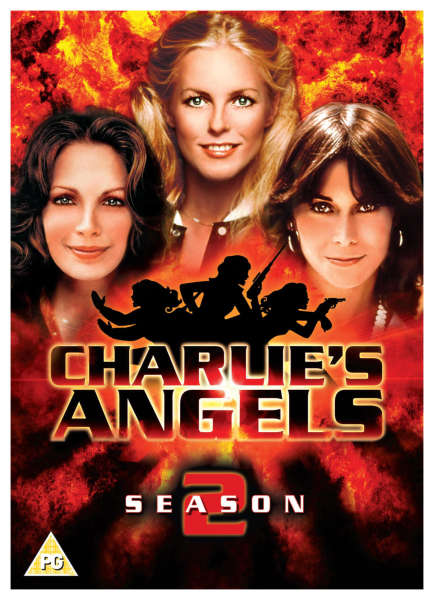
Charlie’s Angels season 2 (1977-78)

If you’re entirely unfamiliar with 1970s America it’s just possible that you don’t know about Charlie’s Angels. It was a major pop culture phenomenon. The premise is that there are three young pretty female cops (Jill, Sabrina and Kelly) just out of the Police Academy and they discover that being a rookie cop is really boring. They wanted excitement and they got routine. Then Charlie came along. Charlie runs a very upmarket private detective agency and he hires them. Now they have all the glamour and excitement they could wish for.

They never get to meet Charlie but one thing we learn about him very early on is that he has an eye for feminine pulchritude. He’s the kind of guy who likes the idea of having gorgeous women working for him. In fact, given that these three girls are totally inexperienced, we can be fairly confident that Charlie hired them because they’re, well quite frankly, because they’re babes. And maybe it makes some kind of sense - beautiful charming young women undoubtedly get more information out of informants than fat balding middle-aged guys.

The first season was a major hit. Then disaster struck, or so it seemed. Of the three Angels the one who got the most attention was Jill, played by Farrah Fawcett. It made Farrah Fawcett a star, a household name and a pop culture icon. At the end of the first season Farrah Fawcett made the biggest mistake in television history. She broke her contract, walked out on the series and set off for Hollywood to become a huge movie star. The glittering movie career that she thought awaited her never happened. And Charlie’s Angels lost by far its biggest star. It was obviously the end for the series but the producers didn’t see it that way. They set out to find a replacement and they found Cheryl Ladd. And surprisingly the gamble paid off. Rather that the series falling apart the second season, which started airing on ABC in late 1977, was marginally more successful than the first.

Charlie’s Angels may have been hugely popular but critics were disdainful. It was dismissed as a series that relied entirely on the attractiveness of the three female leads, or more crudely they felt it relied on T&A. And it’s certainly true that the Angels have a habit of wearing very revealing clothing and if a plotline offers even the slightest excuse to get the girls into bikinis you can be sure the opportunity will not be allowed to go by. It’s also reasonable to say that the various lead actresses over the show’s five-year run were not distinguished by extraordinary levels of acting ability. But they looked great in bikinis.

So what appeal does this series have today, apart from showing as much female flesh as you could get away with on network TV at that time? That’s a difficult question to answer. The premise is silly. Many of the plots are silly and far-fetched. The acting is nothing to get excited about. This series was, to a large extent, just a babe-fest. But it has an undeniable charm. Partly it’s because it was the 70s and people didn’t agonise so much about such things. The series makes no apologies for relying heavily on beautiful stars in skimpy clothing.

It also undeniably has a considerable camp appeal. The fact that the lead actresses play things so straight just makes it more deliciously camp.

Of course there have been attempts to retcon the series as a feminist statement. Which really is largely wishful thinking. OK, so the three glamorous female detectives are reasonably capable as private eyes but while you can make a feminist case for other series featuring women private eyes or secret agents (series like Honey West or The Avengers) trying to make that case for Charlie’s Angels does seem like clutching at straws.

Maybe that’s why Charlie’s Angels is so much fun. It doesn’t take itself seriously and it isn’t preachy and it isn’t trying to hit us over the head with political correctness. It’s just a fun lightweight adventure series with gorgeous scantily-clad women. Back in the 70s TV was allowed to be fun. And female TV stars were allowed to be sexy and glamorous and not wear very much clothing.

It’s not quite a private eye spoof series but it is somewhat tongue-in-cheek. It doesn’t expect its audience to take it too seriously. And it gets the tone just right, not pushing the tongue-in-cheek element too far. It’s also a fundamentally good-natured series. The three Angels are not treated in a mocking way. There’s no trace of snarkiness. There’s humour but we’re laughing with the girls, not at them.

Neither the Angels nor the viewers ever get to see Charlie but we do hear him. He’s voiced by John Forsyte, a very good choice with his rich fruity voice. Forstye manages to bring Charlie to life fairly effectively. We know he’s sublimely self-confident, he loves beautiful women, he enjoys the good life and he’s lazy - he lets Bosley and the Angels do all the work. He has a sense of justice but we feel he likes being in the detective business because it fits in with his glamorous playboy lifestyle.

One of the many things I love about this show is that the Angels are not super-women. They’re determined and capable and they can handle themselves OK but they can’t take on big guys in physical fights. That means they have to be smart to get themselves out of dangerous situations and it makes the writers work a bit harder. There’s a great moment in the season opener when one of the Angels is confronted by two really big guys on a beach. Her response? She screams, and every guy on the beach rushes over to protect the little lady. It’s a smart move and it’s both more fun and more convincing than having her take on the goons in hand-to-hand combat.

What the Angels do have going for them is that they’re gorgeous and that can be more useful to a private eye than martial arts skills. It’s amazing what a pretty PI can make a male suspect do.

One unexpectedly realistic touch (and realism is the last thing you would normally associate with this series) concerns guns. We know that the Angels all have gun licences because we see them carrying guns in the occasional episode. But they’re very reluctant to carry them and even more reluctant to use them. Which is of course quite realistic. Reading private eye thrillers and watching most private eye TV series you get the impression that the average American PI kills maybe a dozen people a year. Which is clearly ludicrous. A private investigator good at his (or her) job is not going to run around shooting people all the time. For one thing they don’t need the aggravation they’d get from the cops and the courts, and the media. So the Angels probably use guns the way real-life PIs would - only as a last resort.

A particular highlight is the fun the series has mocking every sort of 1970s California craziness.

Kate Jackson’s performances are a bit hit-and-miss. When she’s good she’s very very good but sometimes she just gets it badly wrong. Jaclyn Smith is uniformly good and Cheryl Ladd makes even the bad episodes worth watching.

There are definitely some bad episodes, with scripts that really needed a lot more work. But there are some terrific episodes as well. Oddly enough considering that this is basically a light-hearted series the standout episodes tend to be the slightly darker ones. On the whole the good episodes outnumber the bad ones.

Episode Guide

In the feature-length Angels in Paradise the Angels are anxiously awaiting the arrival of the new member of the team, the replacement for Jill. They expect to hate the new girl but it turns out to be Jill’s kid sister Kris (Cheryl Ladd) and they take to her straight away. And besides, they have bigger problems to worry about - Charlie has been kidnapped. The kidnapper is glamorous racketeer Leilani Sako and she doesn’t want money, she wants the Angels to do a job for her. A job that is kinda illegal (breaking people out of prison usually being illegal). The problem is that there’s another player in the game.

Charlie was in Hawaii when he was kidnapped so that’s where the Angels (and Bosley) are now headed. The Angels are working for Leilani Sako but it’s an uneasy relationship. Leilani is a crook, although by the standards of racketeers she’s ruthless but not especially evil. Her husband Billy (the one the Angels have to spring from prison) is a crook as well but he’s really a pretty nice guy. It’s Leilani’s opposition who are the seriously bad guys. There’s plenty of hijinks, lots of opportunities to get the Angels into their bikinis and Cheryl Ladd even has a nude scene (although shot so that we don’t see anything). She has to interview a contact and the only place she can interview him is on a nude beach and since she has a job to do she takes her clothes off. The producers were obviously determined that Cheryl Ladd was going to make an impression in her first appearance in the series! It’s all complicated and silly but great fun.

This is a great season opener. Lovely location shooting, Jaclyn Smith and Cheryl Ladd showing lots of skin, lots of teasing the audience with the possibility we might finally see Charlie, wonderful guest starring performances by Tommy Fujiwara as the nice guy crook Billy and France Nuyen as sexy villainess Leilani. They were pulling out all the stops to make sure that audiences weren’t going to miss Farrah Fawcett and it works.

Angels On Ice is another two-parter. Ice skating was a big thing in the 70s, and female ice skaters wear very revealing consumes, so an ice skating episode was an obviously terrific idea. Two ice skating stars have been kidnapped. The gloriously ludicrous plot has something to do with oil sheikhs and terrorists. What matters is that all three Angels get to shine. There’s a fun sequence where Sabrina steals a truck to chase the bad guys and slams straight into a police car, then tries to talk her way out of it and talks herself into the slammer. Kris gets to be a clown on ice. Kelly gets to wear a harem-girl outfit and do a belly dance, and does a wonderful escape scene. None of it makes much sense but it’s deliriously entertaining.

Pretty Angels All in a Row makes it clear that no opportunities are going to be missed to get Kelly and Kris into skimpy outfits. This time they go undercover at a beauty pageant. A couple of good old boys from Texas are trying to rig the contest. This is a cheesy episode but it’s quite deliberately and delightfully cheesy. Of course the Miss Chrysanthemum pageant contestants have to demonstrate that they have talent as well as looks, so Kris does a magic act and Kelly does a sexy dance routine. Cheryl Ladd does get one serious acting moment - she gets shot at, she reacts instantly as she’s trained to do and then after it’s over she is obviously seriously shaken up. It’s an unexpected moment of authenticity that Ladd handles extremely well. Apart from that it’s a lighthearted witty story with amusingly inept villains and a very high cheesecake content. A very good episode.

Angel Flight once again puts the Angels into a world of glamour. This time they go undercover as airline stewardesses, and they have to go to stewardess school. An old friend of Sabrina’s, a stewardess, is being threatened. And the Angels’ first flight could be their last, unless they can find out why. To continue the policy of providing some titillation in every episode there’s a locker room scene. This was the heyday of airline disaster movies so an episode featuring potential mayhem in the air was a shrewd move. This one stretches credibility a little. Wait a minute, what am I saying? This is Charlie’s Angels. No-one cares about credibility. What we care about is whether it’s fun or not. And it is fun.

It was inevitable that there would eventually be a circus episode. I love mysteries and thriller and horror stories set in circuses but Circus of Terror falls a bit flat, mostly due to an uninspired script and the excessive cheapness of the production that never quite convinces us we’re at the circus. On the plus side Kelly gets to look amazingly hot as a daredevil motorcyclist, Kris looks just as hot as the knife-thrower’s assistant and gets some knives thrown at her some of which are not intended to miss, and Sabrina does a pretty fair mime routine. So it’s enjoyable but slightly disappointing at the same time.

Angel in Love
means what it says. One of the Angels finds love. They’re investigating a murder at a hippie-dippie New Age resort where people go to get in touch with their feelings, and touch each other. That part is handled well - they don’t go overboard spoofing the New Age stuff, they just let its silliness speak for itself. At one of the encounter sessions Sabrina gets touchy-feely with one of the suspects and falls in love with him. She pretty much forgets about the actual case from this point on but it does give Kate Jackson a chance to do some real acting and she does a fine job.

It’s left to Kelly and Kris to solve the case, which they do (with Kris demonstrating her prowess with a lasso). We get some humour and some romance, and we get to see all three Angels in a hot tub. This one is all very California in the 70s but it’s an extremely very good episode.

Unidentified Flying Angels gets the angels involved in the UFO subculture. A wealthy elderly lady has disappeared. She said she might be going to another planet. And Angels have to find out where she actually has gone and it most likely has something to do with a pseudoscientific charlatan and an ex-astronaut. Kris gets to play act being a ditzy blonde bimbo who desperately wants to meet spacemen and learn about inter-galactic sex while the sight of Kelly as a spacelady in an incredibly short silver minidress (or rather micro-dress) is something you won’t soon forget. Lots of fun here.

Angels on the Air takes the Angels into the world of radio where death threats have been made against a female reporter. Kelly takes the reporter’s place and soon finds out that the death threats were meant seriously. Sabrina goes undercover as the radio station’s eye in the sky to check out a prime suspect, a macho Vietnam vet helicopter pilot. Kris pretends to be a biker chick to investigate another suspect, a motorcycle-obsessed hippie cult leader (and they have some very amusing verbal exchanges). Another suspect is a respectable research scientist and Sabrina volunteers to be a guinea pig in his experiments. What’s nice about this story is the way obvious expectations are flipped. Kelly gets to do some really dumb things and some really heroic things. A clever and witty episode.

The subject of Angel Baby is the black market in babies. The Angels get involved when an ex-juvenile delinquent goes AWOL looking for his missing girlfriend. The plot is fairly predictable but there are a few very good moments, both of which give Cheryl Ladd further opportunities to prove she really could act. The scene in which the baby marketeers show Kris three studs in a bar and inform her that they’re the ones selected to impregnate her (which will earn her a cool twenty grand) is memorably sleazy and Kris later gets to do something else she’s never done before and her reaction is harrowing and something you don’t expect in a show that is basically TV fluff. Kate Jackson has some good moments too as Sabrina goes undercover as a rich bitch prospective purchaser of a baby. So overall a very good and surprisingly dark episode.

Angels in the Wings
takes us to Hollywood. During filming of a musical the leading lady Ellen Jason is almost killed in a mysterious accident. And it’s just the latest in a long line of accidents on that supposedly jinxed sound stage. So the Angels have to find out who is trying to kill the star. Is it her leading man, who happens to be her estranged husband? Unfortunately it’s too obvious from the start what’s going on and the red herrings won’t fool the viewer for a moment. There’s an obvious Phantom of the Opera influence at work. On the plus side Cheryl Ladd demonstrates her singing skills (Kris manages to get herself cast as the female second lead in the movie) and she has great chemistry with guest star Gene Barry. This is very much a Kris-centric episode and Cheryl Ladd is terrific. On the minus side there are too many not-very-good songs and the plot is too weak and moves much too slowly.

Magic Fire sounds promising. An arsonist has become known as the Magic Man because nobody can figure out how he starts the fires he sets and the police suspect he’s a professional magician. Which means they suspect that he is in fact famed magician Wendell Muse whose whole act is built around tricks with fire. Muse hires the Angels to prove his innocence. There are quite a few scenes set in the Magic Castle, which was in real life the premier venue for magic acts in LA and these scenes are a highlight. Bosley and Kris do a terrible mentalist act but it’s very amusing and Cheryl Ladd shines. Kelly convinces down-on-his-luck magician The Great Danzini that she can provide him with the one great illusion he needs to restore his reputation.

So far so good. Unfortunately there are problems with this episode. Sabrina goes undercover as a French fashion designer and her accent isn’t amusing it’s just embarrassing and irritating. And the script is lazy and incoherent and has just too many gigantic holes in it and it doesn’t make any sense. Silliness is fine in a Charlie’s Angels story but this is uninspired silliness. So this one just doesn’t quite work.

The Sammy Davis, Jr. Kidnap Caper is very obviously about a plot to kidnap Sammy Davis, Jr. by a gang who probably could not successfully kidnap a kitten. It’s just as well they don’t know what they’re doing because the Angels don’t exactly cover themselves in glory in this episode. They’re supposed to be Davis’s bodyguards but they do a pretty poor job. They’re saved by dumb luck, since the kidnappers snatch a Sammy Davis lookalike (played by Davis of course) by mistake. They’re also saved by the fact that the man behind the plot has done nothing to cover his tracks so an intelligent five-year-old could have solved the case. There’s one very brief scene in which Cheryl Ladd manages to be amusing but apart from that unless you’re a very keen Sammy Davis, Jr. fan this episode is a complete washout - the plot is pitifully thin, the bad guys are stupid without being amusing, the Angels do nothing sensible or interesting.

Angels on Horseback starts with a murder at a dude ranch. Actually the murder took place on the bus on the way to the dude ranch. The murderer had to be one of four people on that bus. So the Angels and Bosley pose as guests. Unfortunately they make it much too obvious that they all know each other and it quickly becomes clear that their covers are blown so things are likely to get dangerous. This one has a pretty solid mystery plot and the Angels conduct the investigation fairly professionally - they pick the weak link among the suspects and really pile the pressure on that person. And there’s a horseback chase finale. Cheryl Ladd shines as usual. Jaclyn Smith has a wonderfully catty moment and shows she knows how to draw blood. All in all an entertaining episode.

Women’s professional tennis provides the background for Game, Set, Death. There have been too many suspicious accidents happening to top players. Kris goes undercover as one of the competitors (luckily she was a decent tennis player at college). Sabrina and Kelly go undercover as a designer of sporting fashions and her model. Since the modelling involves wearing a very revealing outfit you get no prizes for guessing that it’s Kelly who poses as the model (and she looks extremely hot). In this story the Angels actually behave like very competent private investigators. Sabrina has to talk down a killer who’s all set to shoot her and Kris has a very good fight scene and wins through a mixture of brains and sheer determination. Kris also gets to do the driving in a car chase.

This is another episode that does what Charlie’s Angels does best - mocking California flakiness. This time it’s yoga and meditation (one of the players in the tournament is a total New Age fruit loop). Game, Set, Death has the strengths of this series without any of its weaknesses. It’s good stuff.

Hours of Desperation actually has a pretty nifty plot. A jewellery heist goes awry when one of the three robbers (a guy named Murdoch) takes off with the diamonds. So the other two robbers, including a total psycho by the name of Dinsmore, hold Bosley and Sabrina hostage and demand that Kelly and Kris get their stolen diamonds back. Dinsmore has rigged up an explosive device that is strapped to Sabrina - if the other two Angels don’t come back with the diamonds within ten hours he’s going to blow her up. It’s a race against time with some neat plot twists. Kelly and Kris get to do some genuinely smart thinking - their eventual solution to the problem is very clever. In fact all three Angels are forced to be clever. Ray Brenner’s script is excellent. Plus we get to see Kelly clad only in a towel grilling a suspect and Kris in the cutest country and western outfit. A very very good episode.

Diamond in the Rough sounds promising. A bunch of bad guys are after Freddy the Fox because they think he’s stolen a famous diamond from a museum. A reasonable assumption since Freddy was in his day a renowned cat burglar. Freddy is adamant that he is innocent but he does know who has the stolen diamond - a very rich collector. He wants the Angels to help him steal the diamond from the collector and return it to the museum. Then everybody will be happy.

It’s a great idea that could hardly miss. And it sort of works. The biggest problem is Kate Jackson trying to sound like an aristocratic Englishwoman. Jackson could act but she just could not do accents. As a result she comes across as a complete ham. David Doyle is equally cringe-inducing trying to pass as an English gentleman’s gentleman. The pacing is also much too slow. A heist story needs a lengthy setup but in this case it takes a bit too long. On the plus side we get cult movie icon Sid Haig as a rich Arab’s manservant/bodyguard, we get Jaclyn Smith doing the sexy femme fatale thing and we get Cheryl Ladd doing the cat burglar bit and also wearing some fairly revealing outfits. It should have been a real showstopper episode. It isn’t, but it’s still reasonably enjoyable.

In Angels in the Backfield the Angels become jocks. Or jockettes. In fact they become pro football players. Sort of. Amy Jarvis is trying to get a women’s football league started. She has her own team, the Ducks, but someone is terrorising her players. So the Angels have to go undercover. Luckily Kelly and Sabrina played football at the Police Academy. Unluckily for Kris she didn’t but she still has to play for the Ducks. Now with a Charlie’s Angels episode involving women athletes you know there’s going to be a scene in the showers and you know there’s going to be a cat-fight but in this case we get a cat-fight in the showers! Of course there’s nothing but the very mildest titillation but for the Charlie’s Angels audience just knowing that Kris is wearing nothing under that towel was presumably enough. Sabrina starts to take the game very seriously - she’s taken a dislike to the owner of the rival team.

Of course the Angels manage to look gorgeous in their football gear. And Kelly gets to beat the daylights out of a player she doesn’t like. She also gets to fall in love, with a loser. Even she thinks he’s a loser. Maybe she has a thing for broken-down ex-football players. The mystery that has to be solved is why anybody would want to sabotage the Ducks when they’re the worst football team in the history of football and are obviously going to lose anyway. There has to be something else going on. Of course the Angels aren’t the least bit convincing as football players but it’s not a bad story and it’s kinda fun.

Whenever I find myself losing faith in this series along comes an episode like The Sandcastle Murders. A serial killer leaves his victims buried in the sand on the beach, with a sandcastle next to them. Kris gets involved accidentally through a friend, Betsy, who says she knows something but she’s really scared. This episode demonstrates that the series could delve into darker subject matter quite effectively. The three lead actresses have to play things more seriously than usual and acquit themselves well. Even David Doyle tones down the hamminess. There’s a decent mystery plot with several convincing suspects (one of the suspects lives above a merry-go-round which adds a nice touch). Sabrina undercover as a bag lady is a brief highlight. There are a couple of nicely creepy scenes. A very good episode.

Angel Blues starts with the death of famous country singer Amy Waters. Her father refuses to believe it was a drug overdose and hires Charlie’s detective agency to prove it. This one has a strong mystery plot. Amy was involved with some shady people any of whom could have killed her. Amy spent the last night of her life riding around for hours in a cab and Kris’s job is to retrace her movements. As Kris checks out the places at which Amy stopped on that night the plot slowly comes together. Sabrina and Kelly are tailing Kris and as she uncovers the leads the other two Angels follow them up. And while they’re tailing Kris someone is tailing them. It will take about two-and-a-half hours to retrace all Amy’s movements and in that time the Angels will have to solve the case. It’s a good structural technique and it works well.

This is a tightly constructed story with good plot twists. And the Angels (who sometimes make dumb mistakes in other episodes) are totally professional and they even remember that they were trained as police officers so they’re allowed to know how to fight. A great episode. In fact the best of the season.

Mother Goose Is Running for His Life takes the angels into a strange and dangerous world - the world of toys. Someone is trying to take over Leland Swinnerton’s toy company and they’ll stop at nothing. It’s dog-eat-dog in the toy business. Sabrina romances a crazed toy designer, Kelly turns to crime and Kris gets to prove (quite adorably) that she’s a real doll. Toy companies have been used as settings for murder and mayhem before but this one has a solid plot and all three Angels shine (and do their jobs very competently) and with murderous toys and plots hatched in English pubs and gangsters it all works delightfully. After two extremely good darker-tinged episodes this equally good light-hearted outing is a nice change of pace.

In Little Angels of the Night three hookers have been murdered so the Angels have to go undercover as ladies of the night. They come up with all sorts of amusing excuses not to actually have any clients. This is one of those stories in which you have to try really hard not to think about the plot which is much too contrived. It’s also an episode that sets up three plausible suspects, all with suitably creepy vibes, but then reveals the identity of the killer too early. It’s rather adult-themed with a casual and extraordinarily judgment-free acceptance of prostitution and (very surprisingly for this era) the Angels make no attempt to save any of the girls from their life of vice. In fact the they’re delighted that the girls can get back to work! This one is a very mixed bag.

The Jade Trap starts with a cat burglary and a murder, which are connected but maybe not in the obvious way. Both crimes take place in a seafront residential hotel. The suave cat burglar has an accomplice, his elderly mother (played with panache by Lureen Tuttle). The murderer is a gigolo (played by Dirk Benedict) who’s peeved because the woman who’s keeping him won’t buy him a yacht. The guest performances are great, the characters are colourful and supremely decadent. Bosley makes a mess of things as an auctioneer, Kelly falls in love (with the wrong man again), Cheryl Ladd does the world’s worst Swedish accent but gets away with it because she’s Cheryl Ladd and totally awesome. It’s all kind of fun.

With Angels on the Run we’re in thriller territory. After a minor car accident a guy throws a package into Larry Cantrell’s dump truck. Then they kidnap Larry. It seems that maybe that package was important. If the Angels had known about the package at the start the case would have been solved immediately. Due to a misunderstanding the bad guys think Kelly is Cantrell’s wife so they kidnap her too. There are lots of comic touches that work reasonably well - Doyle and Mrs Chicken, Larry’s numerous girlfriends (one of whom wants to flatten Sabrina with her tractor), Kris in a charming exchange with a bartender. There’s plenty of sexual innuendo. The Angels make a mess of things when they let Kelly get snatched but they get their act together at the end. Not a great episode but pretty enjoyable.

Antique Angels has a promising initial setup - a gang using a vintage car and a movie camera to bluff their way past a security guard to steal some new experimental rocket fuel. There are some other good moments. There’s the bad guys dressed as gangsters holding Kris hostage being able to do openly because they explain that they’re pretending to be bank robbers (for an antique car rally) so they’re just pretending to hold her hostage. There’s a car chase with antique cars. But somehow it just doesn’t gel. It doesn’t generate the fun that it should generate. The pacing is much too slow and the tone is all over the place. It just doesn’t work.

Final Thoughts

The second season is a mixture of some very good episodes and several real clunkers but there’s Cheryl Ladd’s awesomeness to compensate. And Charlie’s Angels remains an iconic pop culture moment. Recommended.

I reviewed season one some years back.